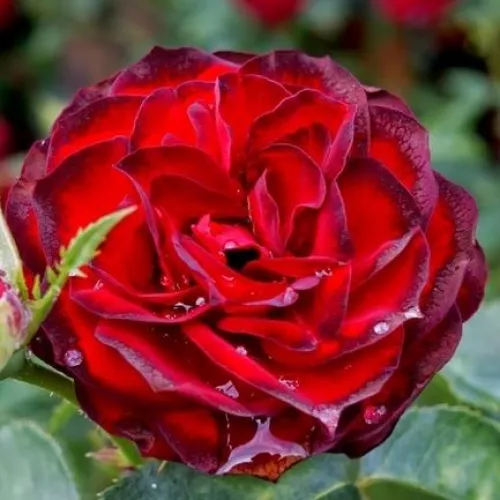
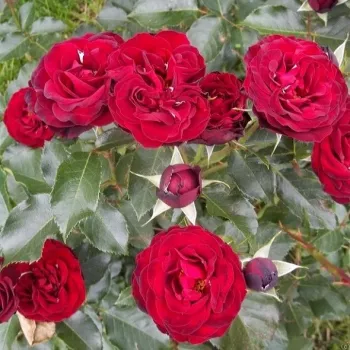
Uniform deep dark-red shade with a burgundy tone. - bedding floribunda rose - scentless rose - no noticeable fragrance
– Compact, bushy habit for tidy bedding displays
– Uniform dark-red blooms with velvety effect
– Abundant repeat flowering through the season
– Excellent resistance to major rose diseases
– Good heat and moderate drought tolerance Speisialta: Táirge préimhe “gold” le fadsaol iontaofa.
Long lifespan – Responsible plant selection
pharmaROSA® ORIGINAL 2-litre own-root potted rose
19,40 €
5(6991)
A Pesti Srácok Emléke – dark red bedding floribunda rose – Márk
If You would like a neat, reliable rose bed that looks after itself, A Pesti Srácok Emléke is a compact, bushy dark-red floribunda that fits beautifully into Irish family gardens. Its semi-double, cup-shaped clusters flower generously from early summer, then start again with an equally rich second flush, so Your front garden keeps its colour going without complicated deadheading. Bred for health, it shows strong resistance to common fungal diseases even in our damp, changeable weather, making it a dependable choice where long, wet spells are normal and soil can drain slowly after rainfall. On its own roots it settles in steadily, forming a durable shrub that comes back well after pruning and copes with the seasons year after year. In the first year it builds roots, in the second it fills out with more shoots, and by the third year it shows its full ornamental value, giving You confidence that the planting will mature gracefully. Its compact size suits small beds, low hedging and edging, or even a large patio container, so You can enjoy orderly, richly toned blooms close to the house. The dark, velvety red petals hold their shade well, only gently lightening in strong sun, keeping borders looking refined and composed, while the semi-double form offers moderate interest for visiting pollinators in a relaxed, cottage-style setting.
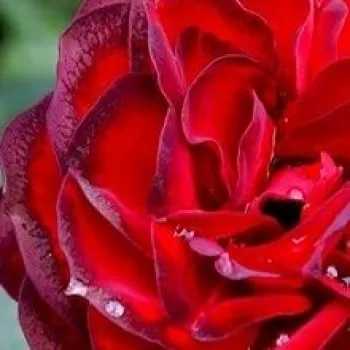
Freshly opened dark-red bloom of A pesti srácok emléke.
A pesti srácok emléke showing its dark red bloom before fading.
Mid-green, matte foliage of A pesti srácok emléke.
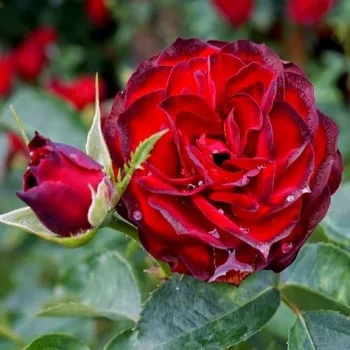
A pesti srácok emléke zárt bimbója
Use cases
Target area
Reason
Front garden bedding by the entrance
The compact, bushy habit and mid-height growth create a tidy, welcoming band of dark-red colour that does not overwhelm a smaller Irish front garden, ideal if You want a smart look without constant clipping or reshaping for beginners
Low-maintenance ornamental bed around the home
Strong resistance to black spot, powdery mildew and rust means fewer sprays and less worry in humid, changeable weather, so Your house-side beds stay leafy and presentable even through wet spells with slowly draining heavy soil, reassuring for busy-owners
Small group planting of 3–5 roses
Planted in a group at the recommended spacing, the uniform, deep dark-red blooms and repeat flowering habit build into a cohesive block of colour that looks intentional and well designed, suiting style-conscious
Easy-care border edging along paths
The modest height and 60–85 cm spread form a low, readable edge that gently defines paths and lawn without needing constant pruning, giving structure and year-on-year reliability in family gardens for homeowners
Long-lived rose feature in a family garden
As an own-root plant, it adapts to its spot, regenerates well from its base and ages evenly, so once established it can provide stable ornamental value for many years with only basic seasonal care, suiting long-term-planners
Urban gardens with warm, exposed aspects
Good tolerance of heat and moderate drought lets it cope with reflective hard surfaces and short dry spells, so city front gardens and driveways can stay colourful even when watering is irregular, convenient for urban-gardeners
Coastal balcony or patio in a large container
In a 40–50 litre container with good drainage, its compact, floribunda form and colour-holding flowers offer a strong focal point that stands up to wind and Atlantic air without demanding expert care, a calm choice for coastal-owners
Cottage-style mixed border with perennials
The semi-double, clustered blooms repeat well and offer moderate interest to bees, weaving naturally among cottage plants while keeping a neat outline, giving a gently romantic effect that still feels manageable for hobby-gardeners
Decorating ideas
Entrance Focus – Plant a trio near the front door with low euonymus edging to create a smart, dark-red welcome that stays compact and tidy – ideal for busy homeowners wanting simple kerb appeal.
Red Ribbon Border – Line a straight garden path with evenly spaced plants for a low, continuous band of velvety red, softened with lavender behind – perfect for those who like an orderly, classic look.
Cottage Patch – Mix with feather reed grass and soft pink perennials in a small bed to evoke a relaxed cottage feel while the rose keeps the structure neat – good for fans of romantic but easy-care plantings.
Patio Statement Pot – Grow one plant in a 40–50 litre terracotta container, underplanted with trailing thyme, for a rich red focal point that is easy to look after – suited to balcony and patio gardeners.
Family-Friendly Hedge – Create a low, flowering boundary along a lawn using a loose single-row hedge, combining with small-leaved euonymus for all-season greenery – great for families who want definition without hard pruning work.
Technical cultivar profile
Parameter
Data
Name and registration
Trade name A pesti srácok emléke; floribunda bedding rose in the Bed rose group; exhibition category shrub rose; premium gold merit rating on pharmarosa.ie.
Origin and breeding
Bred by Márk Gergely in Hungary around 2000 from ‘II. Rákóczi Ferenc emléke’ × ‘Ama’ (Kordes, 1955); introduced to the market in 2006 by PharmaRosa Ltd.
Growth and structure
Compact, bushy shrub 60–80 cm high and 60–85 cm wide; moderately dense, mid-green matt foliage with moderate prickliness; suits beds, borders and low hedging in family gardens.
Flower morphology
Semi-double, cup-shaped, medium-sized flowers (about 4–7 cm) borne in clusters; 13–25 petals per bloom; self-cleaning is moderate, so occasional deadheading helps maintain a neat display.
Colour and phenology
Uniform deep dark-red blooms with a burgundy tone and slightly velvety look; colour holds well, only gently lightening in strong sun; remontant, with a notably abundant second flowering period.
Fragrance and aroma
No noticeable scent; chosen primarily for colour, form and garden performance; partly pollinator-friendly as semi-double flowers offer partially accessible stamens that moderately attract visiting insects.
Rose hip characteristics
Moderate production of small, spherical red hips about 10–14 mm in diameter, adding subtle late-season interest without overwhelming the compact habit.
Resistance and hardiness
Shows high resistance to powdery mildew, black spot and rust; hardy to about −21 to −18 °C (H7, USDA 6b, Swedish zone 3); tolerates heat and moderate drought once established.
Horticultural recommendations
Prefers full sun and well-prepared soil; recommended spacing 40–75 cm depending on use; 4.0–4.6 plants/m² for mass planting; keep watered in dry spells and feed yearly for best repeat flowering.
A pesti srácok emléke offers compact, repeat dark-red flowering with strong disease resistance and heat tolerance, and as an own-root rose it builds into a durable, easy-care shrub for years of enjoyment, worth considering for your garden.
Detailed product attributes
Product Identification Data
Product Name:
A PESTI SRÁCOK EMLÉKE – dark red bedding floribunda rose - Márk
Product Type:
pharmaROSA® ORIGINAL - 2-litre own-root potted rose
Pollinator Attraction:
Semi-double, medium-large flowers with partially accessible stamens moderately attract pollinators, as the flower form and stamen accessibility influence their attractiveness.
Our product is a rose grown with unique pharmaROSA® cultivation technology!
2 litre, own-root, potted rose.
With shoots appropriate to the season.
With roots thoroughly interwoven through the growing medium.
Quality in line with the requirements of the E.N.A. (European Nurserystock Association).
In unique packaging that prevents damage.
Can be planted during frost-free periods.
True-to-type rose plant with an individual identifier.
The pharmaROSA® own-root potted rose is a well-rooted plant that supports reliable establishment when planted and cared for properly, so it can be planted whenever the soil is not frozen.
Stock: several varieties and several stages of development in a short stock section.Shoot system: intensive growth of fresh basal shoots on a young plant.Root system: presentation of the strong root system interwoven through the growing medium with the pot removed.Balance: mature plant where the development of the root system and the shoots is in harmony.
Information about the videos
The video series is not a “seasonal showcase”, but makes the essence of pharmaROSA® own-root production tangible: how the plant is built, what the root system is like and how the shoots renew themselves. The footage was therefore taken at different times, showing plants at different stages of development, so mixed leaf coverage or differing growth stages may appear in the videos. This is not a “sample” of the batch delivered, but an illustration of how the technology works. The current condition of the rose available to order — typical of the given period and similar to what you can expect to receive in the parcel — is shown at the top of the product page.
Pages for private customers Garden roses for the family garden, with minimal care → ORIGINAL® Premium garden roses – instant impact, a truly showpiece garden → EXTRA® Pages for professionals and private customers Roses for public spaces – large areas, sustainable maintenance → NATURAL® Roses for projects – hedge and row planting, fast implementation → RAPID® For professional partners only Production – propagation material for garden roses, wholesale → NEONATAL®
Company details
PharmaRosa Ltd. Company registration number: 01-09-717479 VAT number: 13075314-2-43 Plant health registration no.: HU130721 Bank account (IBAN): HU85117631891388688400000000 BIC (SWIFT): OTPVHUHB Bank name: OTP Bank Nyrt.