PERSEUS – yellow climbing rose – pharmaROSA®
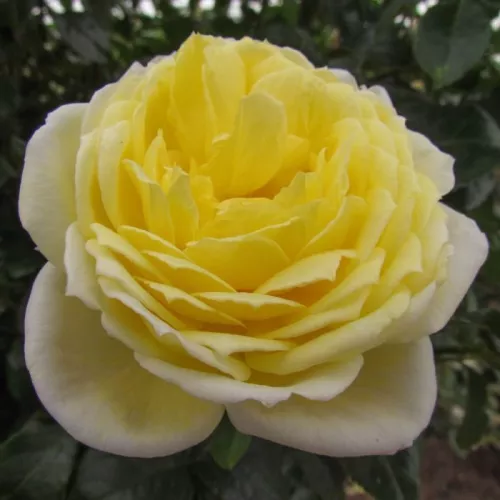
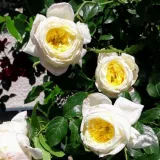
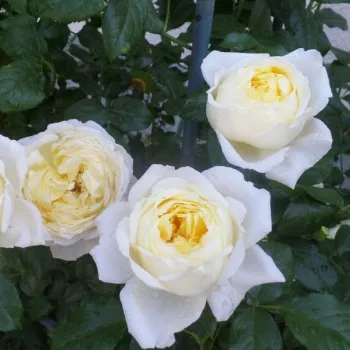
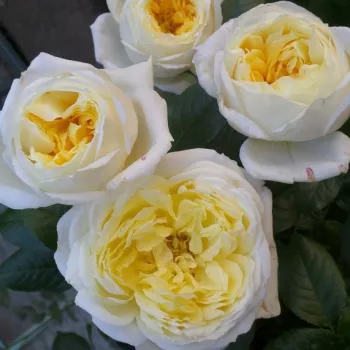
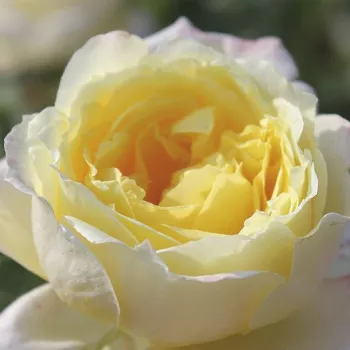
Perseus is a compact climbing rose that helps You keep front and back gardens looking neat and ordered without demanding complex care. Its bushy framework and dense, mid-green foliage give strong structure to fences, arches or small pergolas, while the cupped, double blooms open in a warm, lemon-yellow that gently softens to cream and almost white. This gradual colour change brings quiet interest from the first buds of summer right through repeat flushes, so a single rose can hold its own in a modest Irish garden. Perseus copes well where soils are heavy and winters are cool, provided You ensure sensible drainage in prolonged wet spells typical of Atlantic weather. As an own-root rose in a 2‑litre pot it is already well established, growing steadily in year one, building shoots and shape in year two, and showing its full ornamental potential by around year three, giving You a reliable, long-lived vertical accent that stays visually balanced over time.
Use cases
| Target area | Reason |
|---|
| Small garden arch or low pergola near the front door |
Perseus has a bushy, moderately tall climbing habit, ideal where You want height without an overpowering rose. It clothes supports well between 80–140 cm, creating a welcoming, tidy entrance feature that stays manageable for beginners |
| Family front-garden fence or railing |
The dense, slightly glossy foliage and clustered blooms form a soft screen that looks good even between flushes. Its moderate maintenance needs suit busy households who can manage basic pruning and the odd treatment but prefer straightforward, reliable plants for homeowners |
| Compact cottage-style bed with repeat colour |
Remontant flowering with an abundant second flush means colour keeps returning through the season. The lemon-yellow flowers that fade to cream blend easily with cottage favourites, offering ongoing charm without complicated deadheading regimes for relaxed gardeners |
| Accent rose in a mixed border with perennials |
The large, double, cupped blooms (26–39 petals) add a classic rose look that contrasts beautifully with lighter-textured companions. As the flowers brighten and then soften, the plant provides a changing focal point that complements perennials rather than competing with them |
| Neat side-garden run along a path or driveway |
Its controlled spread of 60–110 cm and clear spacing recommendations (50–90 cm) make planning simple in narrow spaces. You can achieve a formal repeating rhythm without advanced design skills, helping create clean lines and easy access for everyday use |
| Long-term structural planting in family gardens |
As an own-root climbing rose, Perseus develops its framework in place and regenerates from its own base, supporting a long lifespan with stable shape. Over the years it keeps a dependable presence, suiting those who prefer planting once and enjoying for years |
| Coastal or exposed Irish front gardens |
The sturdy, mid-height framework and dense foliage help it cope with breezier, Atlantic-influenced spots when given reasonable shelter, and it handles cool, damp conditions well if You provide drainage to avoid roots sitting in prolonged wet soil for urbanites |
| Large patio container or balcony feature |
Perseus can be grown in a generous 40–50 litre container with a trellis, where its moderate height and repeated flowering create a vertical accent without overwhelming the space, ideal for those wanting a statement rose on a balcony or terrace for small-space |
Decorating ideas
- Cottage Arch Glow – Train Perseus over a small metal arch and underplant with Calamintha nepeta ‘Blue Cloud Strain’ for a soft, lemon-and-lavender entrance that repeats flowering – ideal for relaxed cottage-garden lovers
- Front-Fence Rhythm – Space several plants evenly along a low fence, weaving stems through the rails to form a gentle yellow-and-cream screen – perfect for families who want order without harsh formality
- Patio Feature Frame – Grow Perseus in a 40–50 litre pot with a slim obelisk, and edge the container with low Gypsophila paniculata for a cloud-like base – suited to balcony and terrace gardeners
- Warm-Glow Border – Combine this rose with New Zealand flax ‘Tom Thumb’ and silvery foliage perennials to highlight the colour fade from lemon to cream – great for those seeking a subtle yet stylish focal point
- Calm Driveway Line – Plant a short run beside a drive, keeping each rose to its own support for an orderly, repeating feature that’s easy to prune – ideal for busy homeowners wanting smart kerb appeal
Technical cultivar profile
| Property | Data |
|---|
| Name and registration |
Perseus – yellow climbing rose, climber / large-flowered climber in the pharmaROSA® ORIGINAL range; trade name Perseus Climbing rose pharmaROSA®; the cultivar name is derived from a male given name. |
| Origin and breeding |
Discovered in France in 2007 and later introduced by PharmaRosa® Ltd. (Hungary). Parentage and breeding institution are not documented; selection focuses on garden performance rather than show exhibition use. |
| Growth and structure |
Compact, bushy climber with moderately thorny stems, 80–140 cm high and 60–110 cm wide. Dense, mid-green, slightly glossy foliage provides good coverage for small arches, fences and supports in family gardens. |
| Flower morphology |
Large, double, cupped blooms with 26–39 petals, produced mainly in clusters. Remontant habit with an abundant second flowering flush, providing repeated decorative value across the main growing season. |
| Colour and phenology |
Rich lemon-yellow flowers that radiate warmth, the colour fading through buttery yellow to cream and almost white. Buds open in sunlit yellow tones, with outer petals paling to create a softly two-toned effect over time. |
| Fragrance and aroma |
No reliable data available on fragrance character or strength. Perseus should be chosen primarily for its colour, flower form and structural presence rather than as a strongly scented garden rose. |
| Rose hip characteristics |
Produces moderate numbers of ellipsoidal rose hips, about 11–18 mm in diameter, coloured orange-red (RHS 40A). Decorative late-season accent where spent blooms are left on the plant. |
| Resistance and hardiness |
Hardy to approximately −21 to −18 °C (RHS H7, Swedish zone 3, USDA 6b). Disease resistance moderate overall: good resistance to black spot, with moderate susceptibility to powdery mildew and rust under high pressure. |
| Horticultural recommendations |
Best with regular moisture and feeding plus occasional pest and disease control. Recommended spacing: 50–55 cm for hedging or mass, 90 cm as specimen; 3.2–3.7 plants/m² depending on layout. Support and light training improve coverage. |
Perseus offers compact climbing height, repeat lemon-to-cream flowering and long-lived own-root resilience, giving You a reliable, low-fuss structural rose for family gardens and patios if You feel it suits your space.