BELVEDERE – pink historic sempervirens rose - Jacques
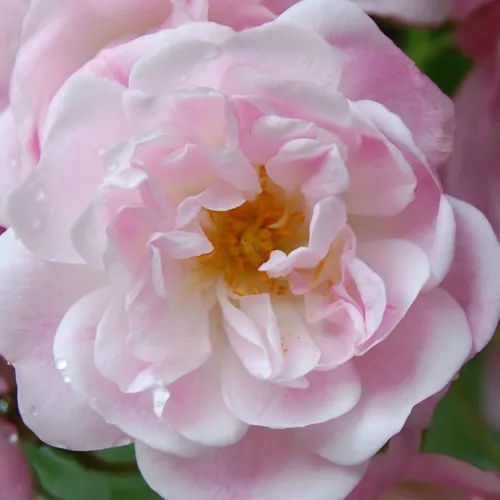
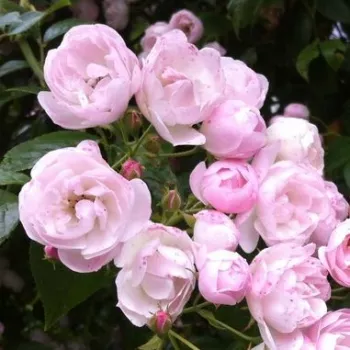
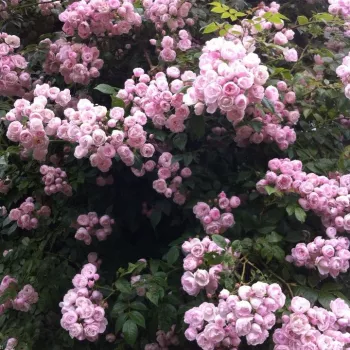
Belvedere is a romantic, historic rambler that transforms walls, arches and old trees into a softly flowering screen, creating an elegant focal point in smaller Irish family gardens. Its pastel pink clusters open from deep carmine buds, then gently fade to near-white, giving weeks of changing colour that feels naturally cottage-styled rather than formal. This long-lived, own-root rose settles in steadily, with roots in year one, strong framework in year two and full ornamental value from year three onwards, adapting well even where rainfall lingers on heavy soils and summers are cool. Once established, Belvedere forms a tall, dark green, glossy curtain of foliage with only light prickles, so it is easier to manage around paths and children. As a heritage variety with the RHS Award of Garden Merit, it offers reassuringly proven reliability and a naturally balanced growth habit. The slightly sweet, musky fragrance carries beautifully on still evenings, while the occasional small orange-red rose hips add seasonal winter interest and invite you to enjoy this rose all year round.
Use cases
| Target area |
Reason |
| Front-garden arch or pergola at the entrance |
Belvedere’s tall, climbing habit and dense, glossy foliage quickly create a welcoming tunnel of soft pink bloom above head height, turning the walk to your front door into a romantic feature for busy homeowners |
| Cottage-style boundary or wall training |
As a historical rambler, it lends authentic character when trained along stone or rendered walls, its once-a-year flush giving a memorable summer display that suits relaxed, traditional planting for lovers of old gardens |
| Screening between neighbouring gardens |
The vigorous, long shoots and slightly thorny, leafy canes form a tall living screen, softening fences and providing a more natural sense of privacy without needing complex pruning plans for privacy-seeking families |
| Large pergola or walk-through rose tunnel |
Recommended spacings allow you to cover substantial structures with fewer plants; once established the long canes arch and interweave, giving an immersive rose tunnel effect ideal for garden-experience enthusiasts |
| Feature planting over an old tree or stump |
The rambler growth lets you guide Belvedere up into mature trees or over unsightly stumps, replacing problem spots with a soft cascade of blossom that blends naturally into established gardens for creative problem-solvers |
| Low-maintenance romantic backdrop in mixed borders |
Planted behind shrubs, its height and pastel flowers form a soft backdrop to perennials and grasses, reducing the need for seasonal bedding and complex colour schemes for time-poor gardeners |
| Coastal and exposed rural sites with good drainage |
Robust hardiness and heritage vigour help it cope where moist winds and cool summers are common, making it a dependable choice where plants must tolerate lingering wetness and heavier soils for Atlantic-climate gardeners |
| Long-term, low-replacement family garden planting |
As an own-root, long-lived historical rose, Belvedere forms its own framework over time, readily regenerating from the base and reducing the need for future replacement in a settled family garden for long-view planners |
Decorating ideas
- Cottage Gateway – Train Belvedere over a simple wooden arch, underplanting with foxgloves and hardy geraniums for a relaxed, storybook entrance – ideal for lovers of informal country style
- Romantic Wall Veil – Fan its canes along a sunny house wall, combining with lavender, rosemary and soft grasses to blur hard lines – perfect for urban front gardens seeking softness
- Evening Perfume Walk – Cover a pergola near a seating area and pair with white hydrangeas and fragrant herbs to enjoy its musky scent on calm nights – suited to people who unwind outdoors after work
- Historic Courtyard – Let Belvedere drape over old stone, with pots of New Zealand flax ‘Tom Thumb’ and dwarf barberry for contrast – great for fans of period houses and heritage details
- Soft Privacy Screen – Use it as a flowering partition, weaving through a simple post-and-wire support behind a family patio, with low perennials in front – good for families wanting gentle seclusion
Technical cultivar profile
| Property |
Data |
| Name and registration |
Belvedere is a historical Hybrid Sempervirens rambler, also traded as Belvedere – pink historic sempervirens rose – Jacques, part of the Heritage rose collection, unregistered but recognised by the American Rose Society name. |
| Origin and breeding |
Bred by Henri Antoine A. Jacques in France around 1829 in the Château de Neuilly garden, from Rosa sempervirens crossed with an unknown parent, first distributed by Jacques in Europe and later introduced to Australia. |
| Awards and recognitions |
Holds the RHS Award of Garden Merit, confirming proven garden performance, stable characteristics and reliable ornamental value under typical conditions, making it a trusted choice for long-term planting schemes. |
| Growth and structure |
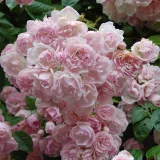
Strong, climbing growth with long, flexible canes reaching 600–850 cm high and 350–550 cm spread, slightly thorny but manageable, densely clothed in dark green, glossy foliage that forms an attractive year-round framework. |
| Flower morphology |
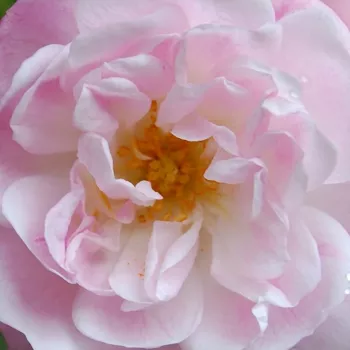
Produces medium-sized, double, cup-shaped flowers with 26–39 petals in loose clusters; non-remontant so it flowers once per season but in generous trusses that can almost cover the plant at peak bloom. |
| Colour and phenology |
Deep carmine-red buds open to powder-pink blooms, then fade through pale pastel tones to near-white, often with a silky whitish edge, giving a soft, shimmering effect that changes subtly as the flowers age in sunlight. |
| Fragrance and aroma |
Moderately strong, sweetly musky fragrance that carries well in still air; not primarily bred as a perfumery rose but offers a noticeable, pleasant scent that enhances seating areas, paths and evening garden spaces. |
| Rose hip characteristics |
Occasionally forms small, 8–12 mm ellipsoidal hips, orange-red in colour, adding subtle late-season interest; not typically harvested but can be left to decorate the plant and provide minor wildlife value in autumn. |
| Resistance and hardiness |
Hardy to approximately -26 to -23 °C (H7, USDA 5b, Swedish zone 4); disease resistance is medium, with potential for powdery mildew, black spot and rust in humid seasons, best managed with good air circulation and observant care. |
| Horticultural recommendations |
Suited to training on walls, pergolas and into trees; allow generous spacing of 4–6 m per plant, and support canes early. Maintain with light tying-in and selective pruning after flowering; occasional pest or disease control may be required. |
Belvedere offers romantic pastel flowers, impressive height for screening and a proven, award-backed performance on a durable own-root framework, making it a reassuring choice if you would like a dependable heritage climber in your garden.