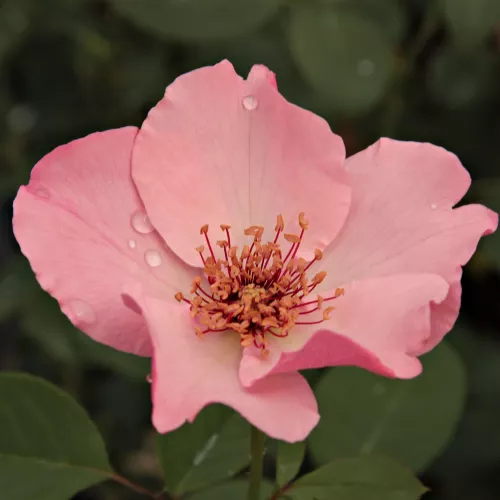
Soft, silky light-pink shade with a delicate silvery tone. - historic, tea rose - medium-strength, clearly scented rose - tea-scented, spicy
– Silky light-pink blooms with deep burgundy stamens
– Medium, clearly spicy tea fragrance
– Reliable remontant flowering with rich second flush
– Upright, medium-tall growth for elegant structure
– Good hardiness and moderate disease resistance Gné speisialta: Bláthanna aonphéiteoga oscailte a mheallann pailneoirí go héifeachtach.
Responsible gardening – Consistent quality
pharmaROSA® ORIGINAL 2-litre own-root potted rose
18,80 €
5(7599)
Dainty Bess – pink historic tea rose – Archer
If You love romantic cottage style but prefer a rose that is easy to live with, Dainty Bess brings graceful, single blooms in a soft silvery‑pink that look charming in any Irish front garden. This historic hybrid tea flowers repeatedly from early summer, its open flowers offering pollen to visiting bees while the tea‑spice fragrance drifts along a path or patio. On its own roots it forms a naturally balanced, medium‑sized bush with good health and a long lifespan, adapting well even where soils are heavy and need thoughtful drainage in wetter weather. Over the years it develops into a reliable, upright specimen that also yields elegant stems for the vase. In its first year it focuses on roots, in the second on stronger shoots, and by the third it shows its full ornamental value with graceful continuity.
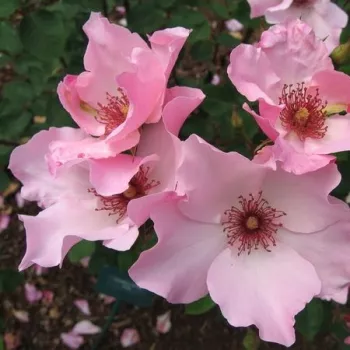
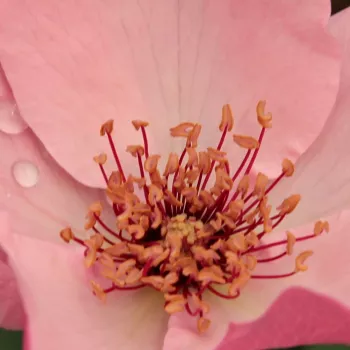
Dainty Bess in profile, showing its flat, single flower form.
Dainty Bess in fresh bloom, with pale silvery-pink petals and a deeper pink centre.
Use cases
Target area
Reason
Front garden focal point
Planted near the entrance or beside a path, its upright, medium-sized bush forms a tidy yet airy structure that stays in scale with typical Irish front gardens, giving You a graceful, reliable focal point as a low-effort choice for beginners
Sunny border with cottage style
In a mixed border with perennials such as clustered bellflower and airy verbena, the single silvery‑pink blooms and dark stamens add a romantic, old-fashioned note without looking fussy, ideal if You want charm rather than complicated pruning for busy homeowners
Small group planting (1–3 roses)
Spacing 90–100 cm apart lets each bush show its elegant outline while still reading as a harmonious group; as an own-root rose it knits into the border over time, giving a long-lived, stable feature that suits long-term planners and garden improvers
Cutting corner for home bouquets
The long, straight stems and exhibition-style single blooms are perfect for cutting, bringing the tea‑spice scent indoors; regular, light cutting encourages new flowering shoots, so You enjoy vases of roses without demanding specialist know‑how for home florists
Pollinator-friendly rose bed
Its open, lightly petalled flowers with exposed stamens are easy for bees and other beneficial insects to use, and the regular flushes keep nectar coming through summer, ideal if You want a pretty, wildlife‑friendly garden that still looks refined for nature lovers
Coastal or exposed family gardens
This upright historical hybrid tea copes well where gardens are breezy and soils can be heavy, as long as You ensure reasonably good drainage in wetter spells, matching Irish conditions where wind and wet can challenge fussier roses for coastal gardeners
Year‑round structure in mixed planting
The dark green foliage and moderate height give a clear structure that frames lower perennials and small shrubs; over the years the own-root plant builds a well-balanced framework, useful if You want the rose to grow naturally into the overall picture for design-conscious owners
Large containers on patio or balcony
In a minimum 40–50 litre container with quality compost, Dainty Bess makes a refined patio rose, offering repeat flushes and scent close to seating; its moderate size and upright habit keep it manageable for smaller spaces and low-fuss upkeep for apartment gardeners
Decorating ideas
Pathway Welcome – Plant Dainty Bess on either side of a front path with clustered bellflower at its feet for a soft pink-and-lilac welcome – ideal for homeowners who want charm at the door with simple care.
Cottage Border – Combine with white sagebrush and soft grasses for a light, airy cottage border where the single blooms and dark stamens stand out – perfect for fans of traditional country gardens.
Romantic Patio Pot – Grow it in a 40–50 litre terracotta container beside a bench, underplanted with trailing thyme, so You can enjoy the tea‑spice scent up close – suited to balcony and courtyard gardeners.
Cutting Nook – Dedicate a sunny corner to 3 bushes of Dainty Bess with verbena ‘Pink Spires’ behind, giving delicate stems for the vase all summer – great for those who love arranging home‑grown flowers.
Soft-Pink Accent – Use it as a single specimen against a dark fence or evergreen hedge so the pale silvery‑pink flowers glow in contrast – ideal for small gardens needing one refined statement plant.
Technical cultivar profile
Property
Data
Name and registration
Dainty Bess is a historical hybrid tea rose from the Heritage rose collection, registered and traded as Dainty Bess, with the same name recognised by the American Rose Society for exhibition use.
Origin and breeding
Bred by William Edward Basil Archer in the United Kingdom from ‘Ophelia’ × ‘Kitchener of Khartoum’, introduced in 1927 and distributed internationally, especially through Hazlewood Bros. in Australia.
Awards and recognitions
Honoured repeatedly by the Royal National Rose Society with Show and Trials certificates in 1930, 1931, 1934, 1936, 1937 and 1953, confirming its long-standing ornamental and exhibition value.
Growth and structure
Forms an upright, medium-height bush around 100–140 cm tall and 80–110 cm wide, with moderately thorny stems and dark green foliage of medium density, suitable for borders, hedging or specimen use.
Flower morphology
Single, flat blooms with 5–12 petals, usually borne singly on stems; large flower size with a graceful, open presentation, remontant habit providing an initial flush followed by generous repeat flowering.
Colour and phenology
Soft, silky light-pink with a delicate silvery tone; buds open pale silvery-pink, then fade to translucent, very pale pink with a fine silvery edge, creating a refined, shifting colour effect as blooms age.
Fragrance and aroma
Clearly scented with a medium-strength tea fragrance touched by gentle spice notes, noticeable both in the garden and when used as a cut flower, providing classic rose perfume without being overpowering.
Rose hip characteristics
Moderate production of ellipsoid, 10–14 mm orange-red hips which can add understated seasonal interest in late season if spent flowers are not removed, useful in wildlife-friendly or naturalistic plantings.
Resistance and hardiness
Hardy to approximately −26 to −23 °C (H7, USDA 5b) with moderate overall disease resistance; shows resistance to powdery mildew and black spot, while rust may appear occasionally and may need monitoring.
Horticultural recommendations
Prefers a sunny position with spacing from 80 to 150 cm depending on use; medium maintenance with occasional plant protection, well suited to borders, as a specimen, or as a refined cut-flower garden rose.
Dainty Bess offers repeat flowering, pollinator-friendly single blooms and classic fragrance on a long-lived own-root shrub that settles steadily into your garden, making it a graceful, low-fuss choice if You would like a reliable historic rose.
Foliage:
The cultivar's foliage is of medium density; the leaf surface texture is not clearly classifiable, and the colour is a dark green shade (RHS 137A).
Flower Colour:
Soft, silky light-pink shade with a delicate silvery tone.
Closed Bud:
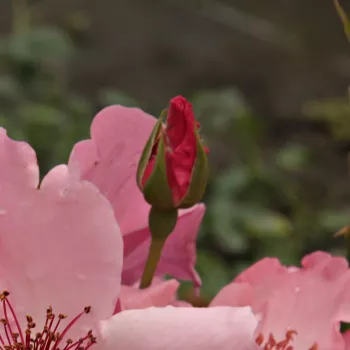
Light pink with a faint silvery veil on the outer side.
Freshly Opened Flower:
Pale silvery‑pink petals with a slightly deeper pink tone at the centre.
Full Bloom:
Uniform, soft light pink, accentuated by the vivid contrast of deep burgundy stamens.
Pre-Fading Flower:
The petals fade to a translucent, pale pink, with a silvery shimmer along their edges.
Colour Fading Description:
During opening the soft light pink gradually fades; before the bloom fades it becomes translucent, very pale pink with a silvery edge.
Pollinator Attraction:
Its open flowers, bearing 5–12 petals, and their accessible stamens attract pollinators, as simple or semi‑double forms with exposed stamens are more attractive than fully double blooms with concealed stamens.
Our product is a rose grown with unique pharmaROSA® cultivation technology!
2 litre, own-root, potted rose.
With shoots appropriate to the season.
With roots thoroughly interwoven through the growing medium.
Quality in line with the requirements of the E.N.A. (European Nurserystock Association).
In unique packaging that prevents damage.
Can be planted during frost-free periods.
True-to-type rose plant with an individual identifier.
The pharmaROSA® own-root potted rose is a well-rooted plant that supports reliable establishment when planted and cared for properly, so it can be planted whenever the soil is not frozen.
Stock: several varieties and several stages of development in a short stock section.Shoot system: intensive growth of fresh basal shoots on a young plant.Root system: presentation of the strong root system interwoven through the growing medium with the pot removed.Balance: mature plant where the development of the root system and the shoots is in harmony.
Information about the videos
The video series is not a “seasonal showcase”, but makes the essence of pharmaROSA® own-root production tangible: how the plant is built, what the root system is like and how the shoots renew themselves. The footage was therefore taken at different times, showing plants at different stages of development, so mixed leaf coverage or differing growth stages may appear in the videos. This is not a “sample” of the batch delivered, but an illustration of how the technology works. The current condition of the rose available to order — typical of the given period and similar to what you can expect to receive in the parcel — is shown at the top of the product page.
Pages for private customers Garden roses for the family garden, with minimal care → ORIGINAL® Premium garden roses – instant impact, a truly showpiece garden → EXTRA® Pages for professionals and private customers Roses for public spaces – large areas, sustainable maintenance → NATURAL® Roses for projects – hedge and row planting, fast implementation → RAPID® For professional partners only Production – propagation material for garden roses, wholesale → NEONATAL®
Company details
PharmaRosa Ltd. Company registration number: 01-09-717479 VAT number: 13075314-2-43 Plant health registration no.: HU130721 Bank account (IBAN): HU85117631891388688400000000 BIC (SWIFT): OTPVHUHB Bank name: OTP Bank Nyrt.