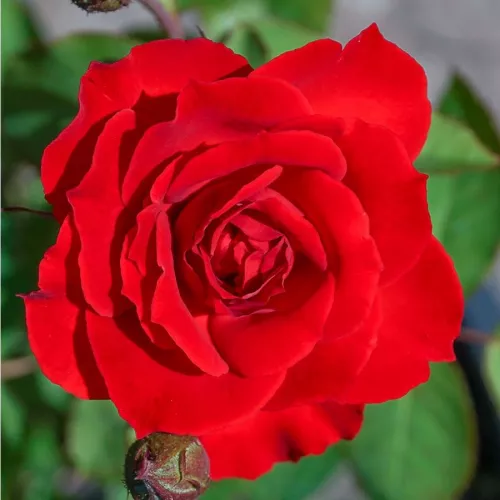
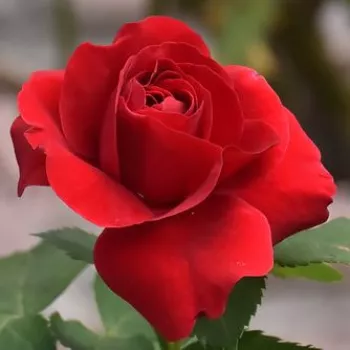
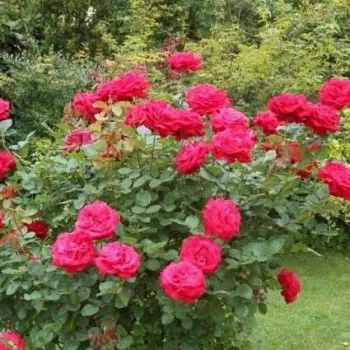
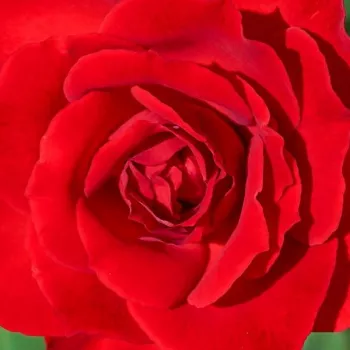
DAME DE COEUR – red hybrid tea rose
With its rich cherry-red blooms and neat upright habit, DAME DE COEUR brings quietly dramatic colour to smaller Irish gardens without demanding complex care. Large, high‑centred flowers appear on long, straight stems that are ideal for cutting, so You can enjoy classic rose beauty both outside and in a vase. This own‑root plant settles in steadily, forming a balanced bush that copes well with our damp seasons and the challenges of humidity and fungal pressure once You give it a sunny, well‑drained spot. Over time the plant’s own roots support a long lifespan and reliable regrowth after pruning or setbacks, meaning less worry about replacement. In the garden it reaches a comfortable height for the middle of a bed, with dense, dark foliage giving a tidy structure all season. Plant it as a single highlight or in a small group for a concentrated block of impact, pairing easily with perennials and cottage‑style companions. In a generous container it becomes a compact feature for paths or doorways, where its repeat flowering through summer rewards regular deadheading. After flowering, small orange‑red hips provide autumn interest, extending the ornamental season. Expect roots to establish strongly in year one, bushy growth and more stems in year two, and the full show of flowers from year three onwards.
Use cases
| Target area |
Reason |
| Front garden feature rose |
The upright, compact structure and dark, slightly glossy foliage create a naturally tidy look that suits smaller Irish front gardens, giving height without overwhelming the space, ideal if You prefer a neat, structured appearance as a beginner |
| Classic cut-flower row |
Large, solitary blooms on long, straight stems make this hybrid tea well suited to growing in a short cutting row, so You can bring armfuls of red roses indoors for vases and arrangements, appealing if You enjoy decorating Your home with home-grown flowers |
| Sunny mixed cottage bed |
Its vivid cherry-red flowers hold their colour well among softer pastels and traditional cottage-garden perennials, adding romantic depth without complicated care routines, ideal for relaxed borders where You want reliable summer colour |
| Small group planting in front of the house |
Planting three to five bushes together at the recommended spacing creates a bold, unified block of red that looks carefully planned with minimal effort, perfect if You want a strong visual impact from just a few well-chosen plants |
| Specimen rose near seating area |
As a single specimen by a bench or terrace, its repeat flowering and manageable height provide a focal point You can appreciate at close range, suiting those who like to sit out and enjoy the details of individual garden plants |
| Formal bed with edging perennials |
The regular, upright habit makes it easy to line up in a more formal flower bed, pairing cleanly with low edging plants like cheddar pinks for a simple but intentional design, useful if You prefer straightforward, repeatable garden layouts |
| Large patio container or courtyard tub |
In a 40–50 litre container with good drainage, this rose develops a well-shaped bush that gives height and colour on patios or balconies, especially where soil is poor, ideal for busy urban gardeners who value contained, manageable plantings |
| Seasonal interest bed with autumn accents |
After the main flowering, its modest crop of orange-red hips adds gentle autumn detail, blending nicely with late perennials and grasses, while the plant’s own roots support many seasons of return despite our wet, disease-prone climate |
Decorating ideas
- Cherry-red cottage trio – Plant three DAME DE COEUR in a loose triangle with cheddar pinks and low catmint for a romantic, cottage-style cluster – for homeowners who like soft but coordinated front gardens
- Doorway welcome rose – Place one rose in a 40–50 litre pot by the front door, underplanted with trailing ivy and white lobelia, to greet visitors with clear cherry-red blooms – for busy urban gardeners wanting instant impact
- Formal ruby ribbon – Line several plants in a straight border edged with clipped lavender for a structured, fragrant frame of red and purple – for those who enjoy simple, formal layouts that are easy to maintain
- Summer cutting corner – Dedicate a sunny corner bed to DAME DE COEUR with blazing star and Virginia obedient plant woven between for extra spikes and texture – for hobby florists who love cutting their own bouquets
- Autumn accent bed – Combine this rose with ornamental grasses and late perennials so its hips and remaining blooms carry colour into autumn – for gardeners wanting a long season of interest from a compact space
Technical cultivar profile
| Parameter |
Data |
| Name and registration |
Hybrid tea rose, registered cultivar name Dame de Coeur, trade name DAME DE COEUR – red tea-hybrid rose – Lens, ARS exhibition name Dame de Coeur, unregistered in official registers. |
| Origin and breeding |
Bred by Louis Lens, Lens Roses, Belgium, from the cross ‘Peace’ × ‘Independence’. Introduced by Lens Roses in 1958 and representing classic mid‑century hybrid tea breeding for garden and exhibition use. |
| Awards and recognitions |
Recognised in 1958 with a Silver Medal at Baden-Baden rose trials and granted a Trial Ground Certificate by the Royal National Rose Society in Great Britain, reflecting strong ornamental value at introduction. |
| Growth and structure |
Upright hybrid tea shrub reaching about 80–120 cm high and 50–70 cm wide. Moderately thorny canes, dense dark green foliage with slight gloss. Spent blooms usually persist and benefit from regular deadheading to keep plants tidy. |
| Flower morphology |
Large, double, cup-shaped to medium high‑centred blooms, typically solitary on stems. Around 26–39 petals, extra-large flower size, with good form for cutting. Remontant habit with an abundant second flush in suitable conditions. |
| Colour and phenology |
Vivid cherry-red with a slight velvety sheen, dark buds opening to radiant red tones. In strong sun the colour lightens, in cooler weather it stays deeper. Petals may develop pale pink edges as blooms age, offering subtle tonal variation. |
| Fragrance and aroma |
Fragrance is very weak and discreet, often barely perceptible in typical garden conditions. Mainly grown for flower form and colour rather than scent, making it suitable where strong perfume is not desired near windows or seating. |
| Rose hip characteristics |
Produces spherical orange-red hips 10–14 mm in diameter in moderate quantities after flowering, adding gentle autumn interest if spent blooms are not removed, though hips are not usually the main decorative feature of this cultivar. |
| Resistance and hardiness |
Hardy to approximately −32 to −29 °C (USDA zone 4b, RHS H7, Swedish zone 5). Disease resistance is modest, with notable susceptibility to powdery mildew and moderate sensitivity to black spot and rust in damp summers. |
| Horticultural recommendations |
Best in full sun with fertile, well-drained soil and regular watering during prolonged dry spells. Requires attentive plant protection in high disease-pressure areas and benefits from consistent deadheading and feeding to sustain flowering. |
Dame de Coeur offers vivid cherry-red flowers, a compact upright habit and dependable own-root longevity, giving You a long-lived, rewarding garden rose that fits neatly into everyday planting plans, if You decide it is right for Your space.