FRAU EVA SCHUBERT – pink rambler climbing rose - Tepelmann
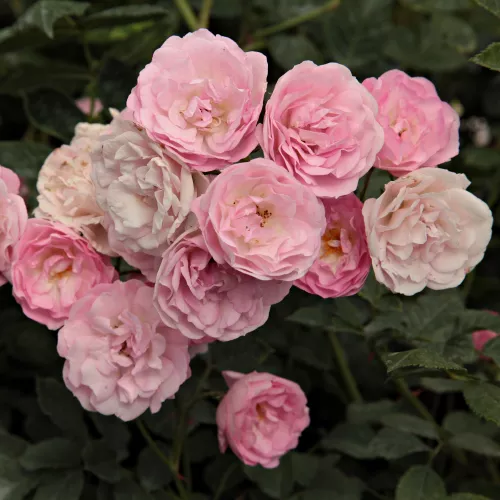
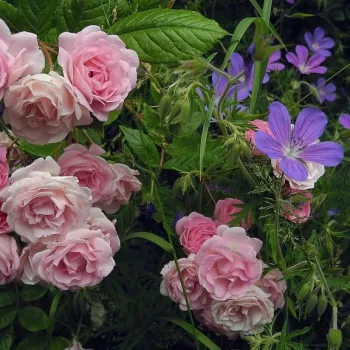
If You dream of a romantic climber in soft pink shades that looks naturally at home on an Irish cottage wall, Frau Eva Schubert offers a charming, vintage-style display with minimal fuss. This long-established rambler produces clouds of dainty pompon blooms in early summer, clothing arches, pergolas and fences densely from top to bottom. Its almost thornless stems are unusually user-friendly for training and tying in, so You can shape it easily even in tight front gardens. Once settled, the own-root plant grows into a stable, long-lived framework that regenerates well after pruning and supports a reliable show for years. In Ireland’s changeable, often damp weather with frequent fungal pressure, good air circulation and thoughtful positioning help it stay in character and looking graceful. Year by year it becomes more at home: first focusing on root growth, then building stronger shoots, and by about the third season delivering its full ornamental value with an elegant, arching habit and pastel colour play. Its once-a-season mass flowering is perfectly suited to creating a moment of garden theatre, then receding into a quietly structured green backdrop for the rest of the year.
Use cases
| Target area | Reason |
|---|
| Front-garden rose arch framing the entrance path |
Ideal where You want a big seasonal impact with one main flush of flowers, then neat green structure for the rest of the year; the once-blooming rambler habit gives a memorable early-summer show without constant deadheading, suiting occasional-gardening beginners |
| Pergola beside a patio seating area |
Long, flexible canes and dense, light green foliage quickly cover pergola rafters, creating a soft overhead canopy of pastel pink clusters that fade to creamy white and then leaf texture; near thornless growth makes it pleasant to tie and prune above head height, reassuring cautious home gardeners |
| Climbing feature on a sunny cottage wall |
Performs best in a bright, warm position where the wood can ripen and the once-a-year mass flowering can develop fully; own-root growth builds a permanent framework that gradually adapts to the wall’s microclimate, supporting a long-lived, traditional cottage look for nostalgic rose lovers |
| Light, romantic screen along a garden fence |
Its arching, moderately tall habit and dense foliage create a soft, green privacy veil rather than a heavy hedge; the pastel flowers and later small red hips add changing seasonal interest, giving a gentle backdrop for family gardens where children and pets share space with relaxed planting |
| Mixed border focal point with perennials |
The airy, cluster-flowered blooms weave gracefully among companion plants such as bellflowers and low sedums, helping to form a refined, naturalistic picture; once flowering is over, the tidy green structure supports surrounding perennials without demanding complex pruning from busy home owners |
| Pollinator-friendly summer highlight in a wildlife corner |
Semi-double flowers with partially open centres offer moderate nectar and pollen access just when early-summer pollinator activity is in full swing; their soft colour and gentle fragrance fit an informal, nature-harmonious design that appeals to wildlife-conscious hobby gardeners |
| Rustic feature in a small rural or coastal front garden |
Forms a light, wind-permeable cover on arches and fences, coping better with exposed Atlantic breezes that combine sea air with frequent rain and fungal pressure; its natural, slightly informal outline suits understated farm entrances and rural homes cared for by practical country residents |
| Large container (40–50 litre) near the house |
In a substantial pot with good drainage and regular watering, the own-root rambler establishes a manageable framework that can be trained up a trellis or obelisk; this keeps growth controlled yet expressive, ideal for patios or rented homes where flexible planting suits mobile urban tenants |
Decorating ideas
- Cottage Arch – Train Frau Eva Schubert over a simple metal or wooden arch, underplant with lavender and campanula for a pastel, country-style entrance – for lovers of romantic cottage gardens
- Pastel Pergola – Let the almost thornless canes drape over a pergola, pairing with white hydrangeas and soft grasses for a gentle, airy summer room outdoors – for families who relax and dine outside
- Fence Veil – Cover a plain timber fence with this light rambler, edging the border with rosemary and low sedums to add texture and year-round structure – for homeowners improving overlooked boundaries
- Rose Corner – Create a quiet reading nook by training the climber onto a corner trellis, adding a bench, pots of herbs and soft pink bedding plants – for busy people wanting a low-effort retreat
- Pot Trellis – Grow the rose in a 40–50 litre container with a tall obelisk, surrounding the base with seasonal bedding for changing colour – for small urban front gardens and balconies
Technical cultivar profile
| Property | Data |
|---|
| Name and registration |
Frau Eva Schubert is a pink rambler climbing rose from the Climbing rose collection; a garden exhibition rambler with no registered cultivar name, also known under the APS name Frau Eva Schubert. |
| Origin and breeding |
Bred by Hugo Tepelmann in Germany from Rosa multiflora × Rosa moschata and introduced in 1937; supplied as a pharmaROSA ORIGINAL 2-litre own-root plant, true-to-type and authenticity verified for Irish gardens. |
| Growth and structure |
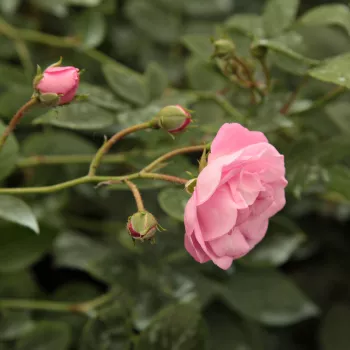
Strong, climbing rambler with arching, flexible shoots, reaching about 225–375 cm in height and 150–250 cm spread; dense, slightly glossy light green foliage on almost thornless stems allows easier training and handling. |
| Flower morphology |
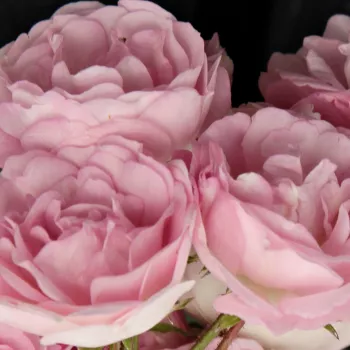
Semi-double, ball to pompon-shaped flowers, 0.5–1.5 inches across, borne in large clusters along the canes; 13–25 petals per bloom, with moderate self-cleaning so some spent clusters still benefit from light tidy-up. |
| Colour and phenology |
Light, soft pink flowers with porcelain tones; buds open mid-pink, then fade through creamy pale pink to almost whitish edges, especially in strong sun; non-remontant, providing one main but very showy early-summer flowering period. |
| Fragrance and aroma |
Fragrance is mild and restrained, giving a gentle, unobtrusive scent around arches and pergolas; semi-double blooms provide moderate attraction to pollinators, as stamens are only partly accessible among the petals. |
| Rose hip characteristics |
After flowering, forms moderately abundant, small spherical red hips, about 7–11 mm in diameter; these add a subtle autumn accent and seasonal interest without weighing down the flexible, arching canes. |
| Resistance and hardiness |
Hardy to about −21 to −18 °C (RHS H7, USDA 6b, Swedish Zone 3); disease resistance is weak, very susceptible to powdery mildew, black spot and rust, so consistent plant protection and good air movement are important. |
| Horticultural recommendations |
Best in full sun, in fresh, evenly moist but well-drained soil; avoid prolonged drought. Needs regular spraying and hygiene to manage fungal diseases. Space 140–220 cm depending on use; train on arches, pergolas, fences or walls. |
FRAU EVA SCHUBERT rewards You with a once-a-year cloud of soft pink clusters on flexible, almost thornless canes that are easy to train, and as an own-root climber it forms a long-lived framework for arches and walls, making it a thoughtful choice if You enjoy gentle summer display.