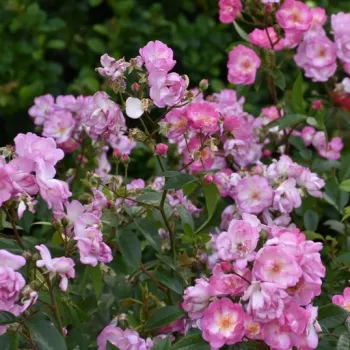
Gaard um Titzebierg – lilac-pink park rose – VELverd
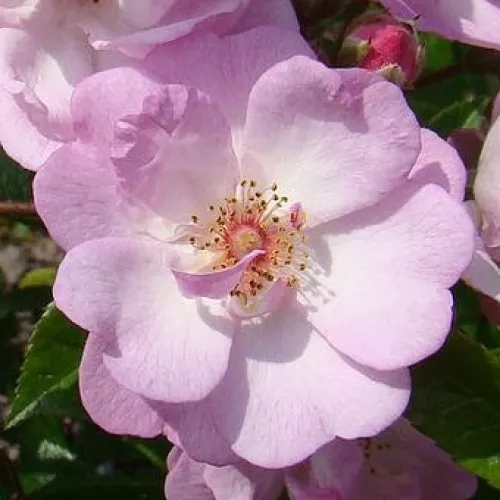
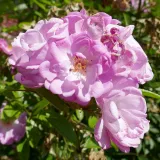
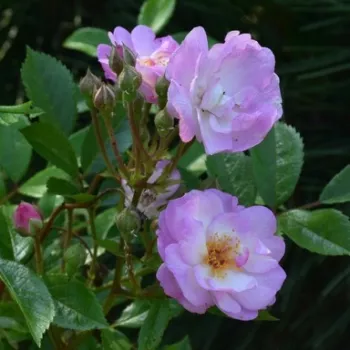
Gaard um Titzebierg is a romantic lilac-pink park rose that You can simply plant and enjoy as it settles into Your garden with reassuring ease. Its upright, gently arching shrub form and mid-green, slightly glossy foliage create a soft, natural structure that suits Irish front gardens and relaxed cottage borders. The semi-double clusters open from purplish buds to light lilac-pink flowers with a delicate white centre, then soften to silvery-pink, giving constantly changing colour. Repeat blooming through the season means plenty of flowers without complicated maintenance, while the honeyed, musky fragrance remains light and unobtrusive around places where children play or You sit to relax. Semi-double blooms with accessible stamens support bees, and in autumn the shrub carries many small orange hips that birds enjoy, extending interest well beyond summer. Its own-root character helps it adapt reliably to Irish soils and wet spells with good drainage, building a long-lived shrub that can be pruned back and will regenerate from its own wood. Expect a gentle development arc: in year one it concentrates on roots, in year two it gains height and flowering shoots, and by year three it reaches full ornamental value as a settled, reliable feature in Your family garden.
Use cases
| Target area | Reason |
|---|
| Feature shrub near the front door |
Its upright, softly rounded shrub form and mid-green foliage give a welcoming, well-kept look without formal clipping; ideal if You want a single rose that quietly holds its place for many years, suiting time-pressed homeowners |
| Small groups in mixed borders |
Clusters of semi-double lilac-pink flowers repeat well, weaving colour through perennials and grasses without leaving big gaps between flushes, so a group of 3–5 plants can carry a border from early summer into autumn for relaxed cottage-style beginners |
| Light, informal flowering hedge |
Planted at 90–100 cm spacing, the upright habit links into a soft, see-through hedge that marks a boundary yet still lets light through, ideal along paths or fences where You want floral screening with only simple yearly pruning for busy families |
| Pollinator-friendly corner of the garden |
Semi-double blooms with accessible stamens offer pollen for bees, while the mild, musky scent and modest flower size keep the effect gentle; You can blend it with catmint or Mexican daisy to support insects without creating a high-maintenance wildlife area for eco-conscious gardeners |
| Autumn interest near patios and seating |
After summer flowering, the shrub produces many small spherical orange hips that stand out against the foliage and attract birds, so even in cooler months there is movement and colour close to where You sit, appealing to wildlife-loving residents |
| Background structure in cottage-style beds |
The steady, vertical growth and moderate height provide a soft green framework for lower perennials and herbs, so the bed looks full and intentional through the year without You having to replant seasonal fillers, suiting traditional-style cottagers |
| Coastal and wet-climate gardens |
Its own-root shrub character establishes into a resilient framework that copes well with Irish moisture levels provided the planting spot avoids standing water, offering a long-term, low-fuss rose for exposed plots where soils are heavy but improved for newcomers |
| Large patio container or front-yard tub |
In a 40–50 litre container with good drainage, it forms a flowering focal point with repeat lilac-pink clusters and autumn hips; own-root growth lets it recover from pruning and repotting, giving years of service on balconies and paved spaces for urban dwellers |
Decorating ideas
- Cottage Border Glow – Combine Gaard um Titzebierg with low catmint and Mexican daisy to create a soft, lilac-pink haze along a path, ideal for those who like romantic, low-effort borders – hobby gardeners
- Front-Garden Welcome – Plant one shrub by the gate and two near the door with clipped box or lavender to frame the entrance in gentle colour and fragrance – busy homeowners
- Wildlife-Friendly Nook – Underplant with goldmoss stonecrop and add a small birdbath so summer flowers and autumn hips draw bees and birds into a compact corner – nature lovers
- Soft Screening Line – Use a loose row along a wire fence, weaving in airy grasses and hardy geraniums for movement, light privacy and year-round structure – suburban families
- Statement Patio Tub – Grow it in a 40–50 litre pot with trailing thyme and seasonal bedding around the base for an easy, long-flowering feature on a terrace – balcony and courtyard gardeners
Technical cultivar profile
| Trait | Data |
|---|
| Name and registration |
Shrub, Hybrid Musk park rose; registered as VELverd, marketed as Gaard um Titzebierg – lilac-pink park rose – Boudolf; ARS exhibition name Gaard um Titzebierg for shrub rose classes. |
| Origin and breeding |
Hybrid Musk background from the Rosa × moschata line, bred by Ann Velle Boudolf at Lens Roses, Belgium; introduced and registered in 2005, with initial distribution by Lens Roses and Pépinières Louis Lens SA. |
| Growth and structure |
Upright shrub reaching about 120–170 cm in height and 80–130 cm in spread, with moderately dense, slightly glossy mid-green foliage and sparse thorns, forming a soft yet well-defined garden presence. |
| Flower morphology |
Semi-double, cup-shaped, small flowers (about 0.5–1.5 inches) carried in clusters; 13–25 petals per bloom with good remontancy and an especially abundant second flush across the season. |
| Colour and phenology |
Buds open purplish-pink, shifting through light lilac-pink with a pale eye to soft silvery-pink as they age, often almost white in the centre; colour retention is very good, giving a gentle, pastel display. |
| Fragrance and aroma |
Mild, restrained scent with a honeyed, musky character that suits seating areas; fragrance present but not overpowering, adding a subtle layer of enjoyment on warm, still days. |
| Rose hip characteristics |
Produces numerous small, spherical orange hips about 6–9 mm in diameter in autumn; hips are decorative on the shrub and provide an additional food source that attracts garden birds. |
| Resistance and hardiness |
Hardy to about −21 to −18 °C (RHS H7, Swedish zone 3, USDA 6b); disease resistance is moderate for powdery mildew, black spot and rust, benefiting from reasonable airflow and basic preventative care. |
| Horticultural recommendations |
Best in sunny positions with soil improved for drainage; suitable as a specimen, in groups, hedging, along fences or in large containers, and can provide some cut flowers while offering pollinator-friendly, semi-double blooms. |
Gaard um Titzebierg offers repeat lilac-pink flowering, soft shrub structure and decorative hips, and as an own-root rose it builds a durable, regenerating framework in Your garden, making it a thoughtful choice to consider for Your next planting.