Cream‑white to ivory, semi‑double flower that, when fully open, uniformly fades to a clear pure white with strongly contrasting golden‑yellow stamens. - historic - rambler, climbing - trailing rose - strongly scented, easily noticeable rose - rich, spicy-
– Abundant cream‑white flowers with golden stamens
– Strong, spicy‑musk fragrance in summer
– Vigorous rambler for walls, trees and pergolas
– Excellent disease resistance, RHS AGM awarded
– Good heat and moderate drought tolerance Special feature: Showy autumn hips that feed garden birds.
Garden-friendly choice – Gentle landscaping
pharmaROSA® ORIGINAL 2-litre own-root potted rose
19,40 €
4(6292)
Rambling Rector – white historic rambler rose
If You would like a historic rambler that almost looks after itself yet fills Your garden with old-world charm, Rambling Rector is a superb choice. This vigorous but garden-friendly rose quickly forms a light, airy screen of creamy white to pure white blooms, then later hangs with masses of decorative hips, ideal where boundaries need softening in our damp, breeze-prone climate with heavy soils needing good drainage. Its richly scented flowers are a magnet for bees and other pollinators, while the plant’s reliable health makes it surprisingly easy even if You are new to roses. Once planted, the own-root shrub settles in steadily, building strong roots, then more flowering shoots, and by the third season it shows its full romantic character. With its RHS-recognised garden performance and long-lived habit, this rose rewards minimal care with an abundance of seasonal colour, fragrance and wildlife interest, bringing a relaxed country-garden feel to ordinary Irish family plots.
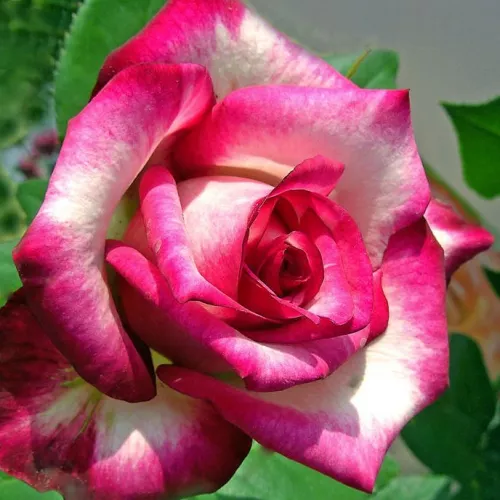
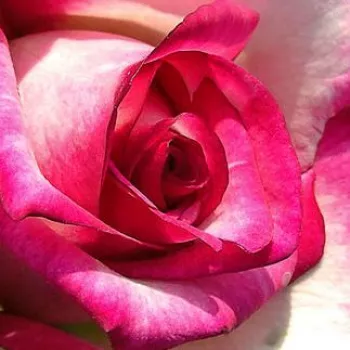
Rambling Rector in close-up, showing its strongly scented white blooms.
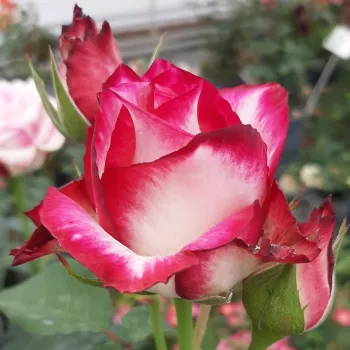
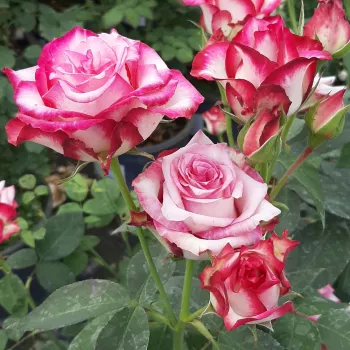
Rambling Rector at full bloom, with creamy white semi-double flowers and golden stamens.
Use cases
Target area
Reason
Covering walls and house gables
Vigorous, climbing growth makes it ideal for training along sunny or lightly shaded walls, giving a soft, cottage-style covering that needs little pruning once established, suiting busy gardeners who prefer dependable structure and seasonal drama for beginners
Pergolas, arches and arbours
Long, flexible canes can be guided over pergolas and arches to form a romantic, flower-laden tunnel in early summer, then a framework of hips later, offering year-round interest without intricate maintenance, particularly appreciated where Atlantic winds and wet spells demand tough yet graceful planting for homeowners
Training into mature trees
Traditional rambler growth allows it to be encouraged up into strong, established trees, where the clouds of white blooms tumble through the branches, creating a natural, woodland-edge effect with very little ongoing attention for cottage-garden
Screening sheds, oil tanks and unsightly corners
Its dense foliage and vigorous, climbing habit make a generous green screen that softens fences, sheds and service areas, giving privacy and hiding eyesores while still looking refined and intentional in everyday family gardens for urban
Wildlife-friendly and pollinator gardens
Semi-double, open flowers packed with easily reached pollen, followed by masses of small hips, provide excellent resources for bees and birds, fitting perfectly with relaxed, nature-friendly planting styles that many Irish gardeners now favour for nature-lovers
Low-input rose areas in larger gardens
High disease resistance and good drought tolerance mean it copes well in less intensively managed corners, where regular spraying or frequent watering are not realistic, still flowering abundantly and maintaining a tidy effect for busy
Part-shade side boundaries and north–east aspects
Tolerant of partial shade, it can brighten cooler boundaries where other roses struggle, its white flowers reflecting light and the strong fragrance carrying well even on dull days, helping You make use of awkward, less-sunny strips for practical
Large containers on patios or balconies
In a minimum 40–50 litre container with sturdy support, its arching canes can be trained up a obelisk or frame, giving dramatic early-summer flowering on patios or balconies, without needing intricate pruning knowledge for balcony-owners
Decorating ideas
Country-front-porch – Train Rambling Rector over a simple wooden arch by your front path, underplant with catmint and soft grasses for a relaxed Irish cottage welcome – ideal for homeowners wanting charm without fuss.
White-and-green-calm – Let it climb a pergola at the end of the garden, with pots of hydrangeas and ferns beneath for a cool, shaded seating corner – suited to busy families seeking a low-maintenance retreat.
Wildlife-lane – Run it along a back boundary fence, mixing with native shrubs and leaving the hips for birds, creating a soft wildlife corridor – perfect for nature-focused gardeners and rural plots.
Romantic-tree-drapes – Encourage canes into an established apple or hawthorn, then weave in a clematis for layered blossom – for gardeners who love a slightly wilder, storybook look with minimal upkeep.
Coastal-courtyard – In a large container with rosemary and lavender nearby, let it scramble over a trellis, bringing height and scent to sheltered coastal patios – great for small urban or seaside gardens with limited ground space.
Technical cultivar profile
Parameter
Data
Name and registration
Rambling Rector is a historic rambler from the Botanical rose group, sold as a climbing, trailing rose; it is an unregistered, heritage variety, marketed under the trade name Rambling Rector.
Origin and breeding
Discovered in Ireland before 1901, with unknown breeder and parentage; first distributed by Daisy Hill Nursery and now valued as a traditional Irish-linked rambler in historic and cottage-style gardens.
Growth and structure
Strong, climbing growth with long, flexible canes, dense light to mid-green matte foliage and moderate thorns; ideal for training over supports, through trees or along boundaries to create generous coverage.
Flower morphology
Semi-double, flat flowers with 13–25 petals, around 2.75–3.95 inches across, borne in large, airy clusters; not remontant, giving one impressive main flush that creates a striking early-summer display.
Colour and phenology
Cream-white to ivory buds open to pure white blooms with golden-yellow stamens; petals lighten slightly as they open, with no striping, and the overall effect is of bright, clean white curtains of flowers.
Fragrance and aroma
Strong, rich, spicy-musk perfume that carries well around the garden, especially in still, humid air; the scent combines classic rambling rose notes with a heady, nostalgic character much loved by enthusiasts.
Rose hip characteristics
Produces masses of small, spherical orange-red hips, 6–8 mm across, from late summer into autumn; hips hang decoratively on the canes and are a valuable natural food source for garden birds.
Resistance and hardiness
Very good overall disease resistance, with particular resilience to black spot, powdery mildew and rust; hardy to around -20 to -15 °C (RHS H6, USDA 6b), coping well with summer heat and moderate drought.
Horticultural recommendations
Best on supports such as walls, pergolas, arches or into trees, with ample space; suitable for partial shade, low-maintenance schemes and wildlife gardens, planted at generous spacing to show its natural form.
Rambling Rector offers strong fragrance, excellent disease resistance and generous seasonal screening on a long-lived own-root plant that settles in reliably over the years, so You can choose it with confidence for your garden.
Detailed product attributes
Product Identification Data
Product Name:
RAMBLING RECTOR – white historic rose
Product Type:
pharmaROSA® ORIGINAL - 2-litre own-root potted rose
Cultivar Name Meaning:
The name literally means "wandering parish priest" and presumably refers to the variety having been found in a parsonage garden and spread from there.
Self-Cleaning Description:
Masses of small red‑orange rose hips develop in place of the spent flowers and remain on the canes until autumn; due to the plant's large size and vigorous growth the spent clusters are generally not removed by hand.
Flower Colour:
Cream‑white to ivory, semi‑double flower that, when fully open, uniformly fades to a clear pure white with strongly contrasting golden‑yellow stamens.
Closed Bud:
The closed buds are creamy white and open into flowers that later fade to white; there is no detailed description of other shades or of the bud surface's sheen.
Freshly Opened Flower:
In the freshly opening stage the blooms are distinctly creamy white, with conspicuous golden-yellow stamens clearly visible in the centre; the outer and inner petals remain similarly shaded at this stage, without stripes or spots.
Full Bloom:
The fully open, semi-double, small flowers are cream‑white to white in shade, with a conspicuous deep yellow/golden stamen cluster in the centre; the petals are uniform in colour, without stripes or spots, and the outer and inner petals are of nearly iden
Pre-Fading Flower:
During opening the flowers gradually fade from an ivory-cream shade to pure white; just before fading the overall effect is more snow-white, the creamy tone barely perceptible, while the golden-yellow stamens remain clearly visible.
Colour Fading Description:
The petals fade moderately as they open: the initial ivory–cream shade lightens slightly to a pure white; beyond that there is no specific data on the colour's behaviour in strong sunlight.
Colour Retention Level:
The petals moderately fade as they open: the initial ivory–cream colour lightens slightly to a pure white; beyond this there is no specific data on the colour’s behaviour in strong sunlight.
Pollinator Attraction:
Semi-double, about 4 cm, cream‑white to white flowers have an open form with conspicuous, pollen‑rich golden‑yellow stamens, and their semi‑double shape together with readily accessible stamens increases attractiveness to pollinators, making them an excel
Heat and Drought Tolerance Description:
Tolerates summer heat well and can endure moderate drought under average garden conditions; however, during prolonged drought it requires irrigation.
Maintenance Requirements:
Maintenance requirement low; vigorous, healthy-growing variety with good overall disease resistance, so generally requires little plant protection.
Key Uses:
training over walls and fences, pergolas and arbours, arches, roses trained into trees, screening large areas and less attractive parts of buildings
Our product is a rose grown with unique pharmaROSA® cultivation technology!
2 litre, own-root, potted rose.
With shoots appropriate to the season.
With roots thoroughly interwoven through the growing medium.
Quality in line with the requirements of the E.N.A. (European Nurserystock Association).
In unique packaging that prevents damage.
Can be planted during frost-free periods.
True-to-type rose plant with an individual identifier.
The pharmaROSA® own-root potted rose is a well-rooted plant that supports reliable establishment when planted and cared for properly, so it can be planted whenever the soil is not frozen.
Stock: several varieties and several stages of development in a short stock section.Shoot system: intensive growth of fresh basal shoots on a young plant.Root system: presentation of the strong root system interwoven through the growing medium with the pot removed.Balance: mature plant where the development of the root system and the shoots is in harmony.
Information about the videos
The video series is not a “seasonal showcase”, but makes the essence of pharmaROSA® own-root production tangible: how the plant is built, what the root system is like and how the shoots renew themselves. The footage was therefore taken at different times, showing plants at different stages of development, so mixed leaf coverage or differing growth stages may appear in the videos. This is not a “sample” of the batch delivered, but an illustration of how the technology works. The current condition of the rose available to order — typical of the given period and similar to what you can expect to receive in the parcel — is shown at the top of the product page.
Pages for private customers Garden roses for the family garden, with minimal care → ORIGINAL® Premium garden roses – instant impact, a truly showpiece garden → EXTRA® Pages for professionals and private customers Roses for public spaces – large areas, sustainable maintenance → NATURAL® Roses for projects – hedge and row planting, fast implementation → RAPID® For professional partners only Production – propagation material for garden roses, wholesale → NEONATAL®
Company details
PharmaRosa Ltd. Company registration number: 01-09-717479 VAT number: 13075314-2-43 Plant health registration no.: HU130721 Bank account (IBAN): HU85117631891388688400000000 BIC (SWIFT): OTPVHUHB Bank name: OTP Bank Nyrt.