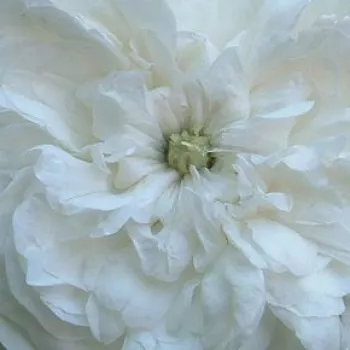
Madame Hardy – white historic centifolia rose
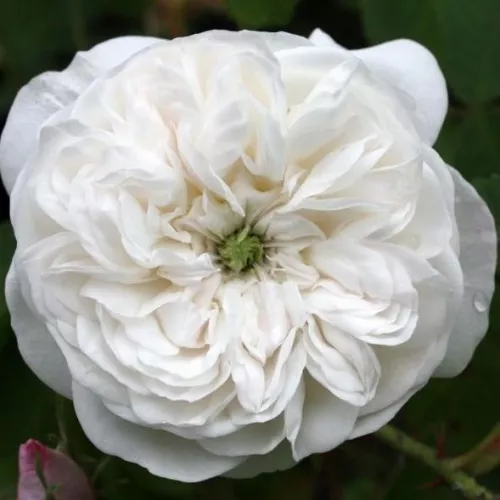
Bring the romance of an old French garden to your own front bed with Madame Hardy, a richly scented Damask shrub rose that rewards you with a cloud of pure white, rosette blooms in early summer. This historic centifolia type forms a dense, upright shrub that fits beautifully into small Irish family gardens, coping well with humid summers and the constant risk of rose disease in wetter areas. Its very strong, classic Damask fragrance creates a real sense of occasion around paths and seating areas, while the matt mid‑green foliage provides a calm, traditional backdrop for cottage‑style planting. As an own‑root rose it ages gracefully, building a long‑lived, stable shrub that can be lightly refreshed rather than replaced, ideal if You prefer low effort, reliable planting that settles in and stays, following the natural rhythm of year‑one roots, year‑two growth, and a fully satisfying display by year three.
Use cases
| Target area | Reason |
|---|
| Front garden focal shrub |
Forms a tall, dense, upright bush that instantly gives structure and privacy to an average front garden, while the once‑a‑year flush of white rosette blooms and powerful scent creates a memorable seasonal highlight for visitors and beginners |
| Cottage-style mixed border |
The historic Damask character, old‑rose rosette form and ivory‑to‑snow‑white flowers blend naturally with perennials and shrubs for a relaxed cottage feel, keeping the look traditional without demanding complicated pruning or specialist care for homeowners |
| Low‑maintenance family rose bed |
Good resistance to black spot, mildew and rust means less spraying and fewer worries in busy family gardens, even in areas with frequent rain and high humidity where fungal problems are common, reducing routine tasks for time‑pressed gardeners |
| Part‑shade side garden or passage |
Performs reliably in partial shade, so it suits side gardens, north‑east facing beds and spots that only get sun for part of the day, allowing You to green up awkward, less‑than‑perfect positions without complex planting plans, ideal for urban plots |
| Scented seating area or path edge |
The very strong, classic Damask perfume travels well on still evenings, making it perfect near a bench, doorway or garden path where You will actually notice and enjoy the fragrance as You pass, a reassuring choice for scent‑loving beginners |
| Long‑term specimen in a lawn or courtyard |
With its own‑root habit and robust shrub structure, this rose is well suited to standing alone as a specimen that will mature gradually, regenerate after harder pruning and stay attractive for many years, suiting long‑term planning by patient owners |
| Historic or heritage-style planting scheme |
Introduced in 1832 and honoured in the World Federation of Rose Societies Old Rose Hall of Fame, it is ideal for heritage borders, period front gardens and traditional properties where authenticity and a sense of continuity are valued by thoughtful buyers |
| Large container on patio or balcony |
Can be grown in a substantial 40–50 litre container using quality compost and regular watering, giving smaller urban spaces access to a full‑sized, scented historic shrub rose that can be repositioned as needed, practical for flexible city‑based residents |
Decorating ideas
- Cottage Entrance Frame – Plant Madame Hardy by the front path with lavender and rosemary to frame your doorway with white blooms and fragrance – ideal for owners who want a welcoming, traditional entrance without complex upkeep
- Shaded Side Retreat – Use along a part‑shaded boundary mixed with hostas and ferns, letting the rose provide height and scent while foliage plants cover the ground – perfect for gardeners making the most of tricky, low‑sun spaces
- Historic White Border – Combine this rose with white foxgloves, catmint and a smoke‑bush backdrop for a restrained white‑and‑green scheme – suitable for those seeking a calm, period look with minimal colour decisions to manage
- Scented Patio Corner – Grow one plant in a 40–50 litre pot with underplanting of trailing thyme and violas, then place near a favourite chair – a good option for balcony or terrace users wanting maximum fragrance in a compact area
- Lawn Centrepiece – Set a single shrub in the middle of a small lawn and circle it with low edging plants like hardy geraniums – ideal for families needing a clear, simple focal point that gives character without fussy design
Technical cultivar profile
| Parameter | Data |
|---|
| Name and registration |
Madame Hardy – historic Damask, centifolia‑type shrub rose, ARS exhibition name ‘Madame Hardy’; unregistered cultivar, part of the historic rose collection, widely grown under this commercial trade name. |
| Origin and breeding |
Bred by Julien‑Alexandre Hardy in France around 1831, likely a Damask seedling selection from Jardin du Luxembourg, Paris; introduced by Hardy in 1832 and since established as a classic old garden rose. |
| Awards and recognitions |
Selected for the World Federation of Rose Societies Old Rose Hall of Fame in 2006, recognising its long‑term garden value, enduring popularity and importance among historical shrub roses worldwide. |
| Growth and structure |
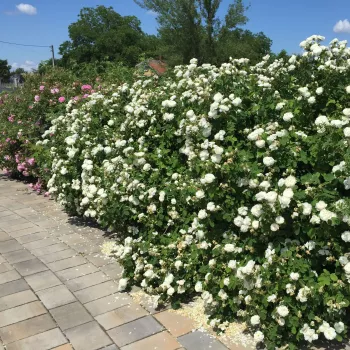
Vigorous, bushy, upright shrub 160–260 cm high and 150–250 cm wide, with dense foliage and strong prickliness; forms a full, leafy framework suitable for hedging, background planting and large specimen use. |
| Flower morphology |
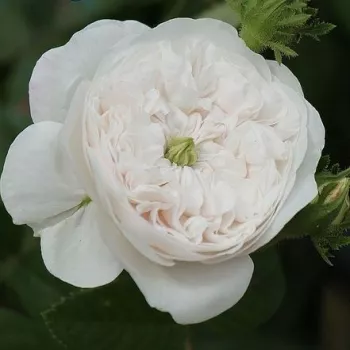
Medium‑sized, very full rosette blooms with more than 40 petals, carried mainly in corymbs; not remontant, giving one main, spectacular flowering period that covers the shrub in tightly packed, old‑fashioned flowers. |
| Colour and phenology |
Ivory to snow‑white flowers with a subtle green centre dot; colour generally holds well, though petals may scorch or brown slightly in hot weather, with the tone fading gently towards a soft greyish‑white as blooms age. |
| Fragrance and aroma |
Very strong, classic Damask scent with a garden‑filling character best appreciated near paths or seating; fragrance is one of the main ornamental features and a key reason for its continued use in traditional gardens. |
| Rose hip characteristics |
Rose hips form only occasionally due to the highly double bloom; where present they are ovoid, 12–18 mm in diameter, green in colour and generally of limited visual impact compared with the flowering display. |
| Resistance and hardiness |
Good overall disease resistance with noted tolerance to powdery mildew, black spot and rust; fully hardy to approximately –29 to –32 °C (RHS H7, USDA 4b, Swedish Zone 5), coping well with cold winters when established. |
| Horticultural recommendations |
Best in fertile, well‑drained soil with regular moisture; suitable for flowerbeds, hedging, specimen or park planting. Allow space of 120–220 cm depending on use; deadhead to tidy, prune after flowering, and water in prolonged drought. |
Madame Hardy offers richly scented white blooms, strong disease resistance and a long‑lived own‑root shrub that matures steadily into a reliable feature, making it a thoughtful choice if You would like a classic rose that simply works.