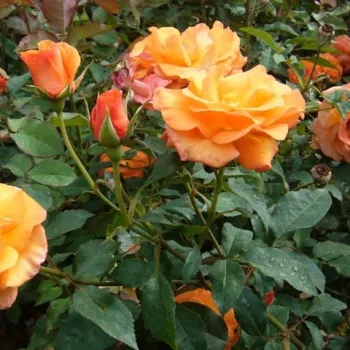
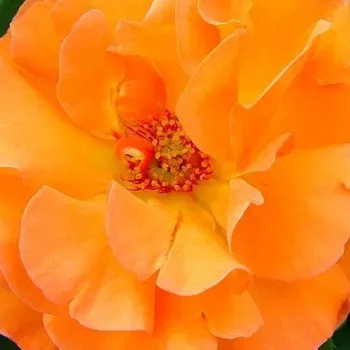
METANOÏA – orange climbing rose
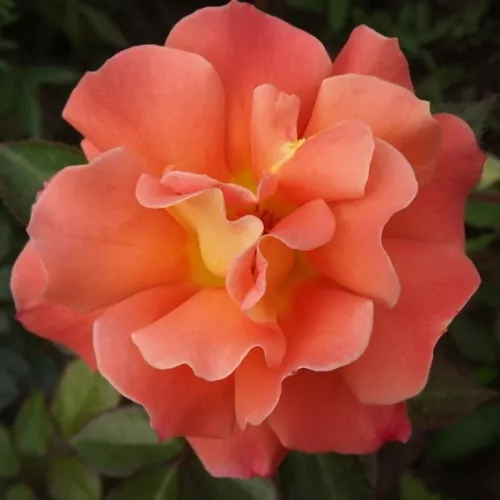
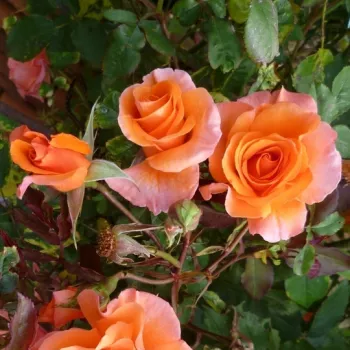
If You would like a romantic climbing rose that simply gets on with the job, Metanoïa gives You generous repeat flowering in a warm, coral‑orange palette without demanding complicated care. Its semi‑double, cupped blooms open in clusters, softening from deep coral to pastel peach and creamy, rosy‑tinted tones, creating changing colour interest right through the season. Growing on its own roots, it builds a naturally balanced framework over time, coping well with our damp Irish weather and heavier soils when You provide reasonable drainage and regular watering. Well suited to pergolas, arches, trellises or a sunny house wall, this medium‑maintenance climber reaches around 2,4–3,6 m, forming moderately dense, glossy dark foliage that stays attractive even between flushes of bloom. In year one it concentrates on roots, in year two it builds strong shoots, and by year three You can expect its full ornamental value as a long‑lived feature that quietly earns its place in your family garden.
Use cases
| Target area |
Reason |
| Front‑garden arch or pergola |
Ideal where you want a welcoming focal point near the entrance: its repeat‑flowering clusters cover an arch or pergola in soft orange and peach waves through summer without complex pruning, giving reliable impact for beginners |
| Sunny house wall or garage wall |
Its height range of roughly 2,4–3,6 m lets You fan it out on a warm wall, where glossy dark leaves and changing flower tones provide colour for much of the season while staying manageable for routine tying‑in and light trimming for homeowners |
| Fence or trellis for privacy |
Planted 1,4–1,5 m apart, Metanoïa forms a flower‑draped screen that softens boundaries; medium vigour and moderate prickles make it easier to train along wires or trellis, suiting those who want privacy with floral charm for family |
| Small group of 2–3 climbers |
A short run of 2–3 plants creates a coherent, long‑lived feature; own‑root growth means the framework thickens steadily year by year for stable flowering walls that cope well with our cool, humid seasons in Irish gardens for planners |
| Cottage‑style mixed border backdrop |
Used at the back of a border, its coral‑orange clusters and semi‑double petals pair beautifully with airy perennials like Mexican daisy, bringing romantic height without overwhelming the space, perfect for informal cottage‑style gardens for enthusiasts |
| Pergola with clematis companion |
Its cluster‑flowering habit and moderate foliage density leave space for clematis such as ‘Little Artist’ to weave through, giving layered colour; both enjoy a sunny, well‑drained site with regular watering during drier spells for creators |
| Climbing feature near seating area |
Placed by a terrace or bench, the mild, softly sweet fragrance and gentle colour changes from coral to peach create a relaxing atmosphere, while medium maintenance means occasional care is enough to keep it looking good for busy |
| Decorative screen in coastal‑influenced gardens |
Suited to Irish gardens that face brisk Atlantic winds and frequent rain yet offer shelter, it copes well when soil is improved for drainage and watering is steady, giving dependable flowering screens without demanding expert knowledge for starters |
Decorating ideas
- Welcoming Archway – Train Metanoïa over a metal or wooden arch at your gate, underplanting with Erigeron karvinskianus for a frothy, cottage‑style edge – ideal for homeowners who want a friendly, low‑fuss entrance.
- Sunlit Wall Scene – Fan the rose along a sunny south‑ or west‑facing wall, combining it with pots of lavender at the base to echo its warm tones – perfect for those seeking easy structure and summer colour around the house.
- Cottage Corner – Let Metanoïa climb a rustic trellis behind hosta and dwarf shade‑lilies, blending coral‑orange blooms with lush foliage – great for gardeners who enjoy romantic, slightly wild but manageable corners.
- Pergola Duo – Pair this climber with clematis ‘Little Artist’ on a pergola, mixing orange roses with small violet‑blue flowers for long‑season layering – suited to creative gardeners wanting effect without high upkeep.
- Relaxing Retreat – Place a bench beneath a span of Metanoïa and surround it with simple shrubs such as hydrangeas for a soft, peaceful seating nook – perfect for busy people who still want a pretty spot to unwind.
Technical cultivar profile
| Parameter |
Data |
| Name and registration |
Metanoïa – large‑flowered climbing rose. Trade name Metanoïa Climbing rose, ARS exhibition name Metanoïa. Climber, large‑flowered climber group; commercial type and group: climbing rose. |
| Origin and breeding |
Parentage and breeder data not available; breeding year around 2000. Initially distributed by Meilland International SA, France. Exact year of introduction and formal registration year not recorded. |
| Growth and structure |
Climbing rose with creeping, trainable habit, reaching approximately 2,4–3,6 m high and 1,1–1,7 m spread. Moderately dense, glossy dark green foliage; moderately thorny stems suitable for tying to supports. |
| Flower morphology |
Semi‑double, cupped blooms with 13–25 petals, medium size around 4–7 cm across. Produced in clusters on the stems, remontant with a plentiful second flowering period in suitable conditions. |
| Colour and phenology |
Deep coral‑orange buds opening to vibrant orange with a peachy sheen, then creamy peach with rosy edging. Colour fades gradually to soft pastel tones; repeat flowering extends seasonal interest in mild Irish climates. |
| Fragrance and aroma |
Mild, softly sweet fragrance of a classic garden‑rose character, noticeable at close range but not overpowering. Suitable near paths, seating, and entrances where a gentle, non‑intrusive scent is preferred. |
| Rose hip characteristics |
Hip production is usually limited by semi‑double flowers and pruning. When present, forms small ellipsoid orange‑red hips, about 6–10 mm diameter, which add modest late‑season interest for wildlife‑friendly gardens. |
| Resistance and hardiness |
Hardy to approximately −21 to −18 °C (RHS H7, USDA Zone 6b, Swedish Zone 3). Medium overall disease resistance; generally resistant to powdery mildew and blackspot, with moderate susceptibility to rust in some seasons. |
| Horticultural recommendations |
Best in full sun with well‑drained soil and regular watering during dry spells. Plant around 1,4–1,5 m apart for hedging or pergolas; 2,5 m as a solitary climber. Provide sturdy support and occasional pruning to shape and renew. |
METANOÏA – orange climbing rose rewards You with reliable repeat flowering, adaptable own‑root growth for long garden life, and attractive foliage on arches, walls or fences; a thoughtful choice if You prefer a rose that quietly performs.