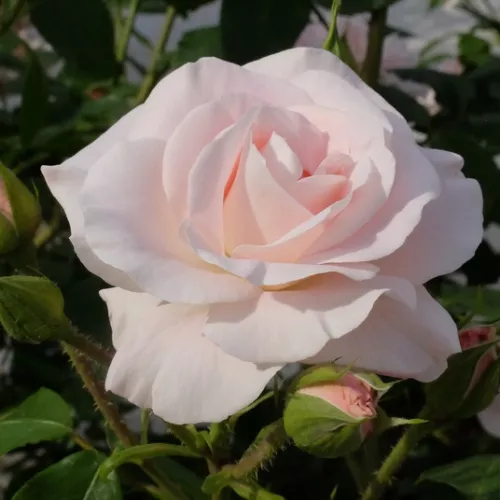
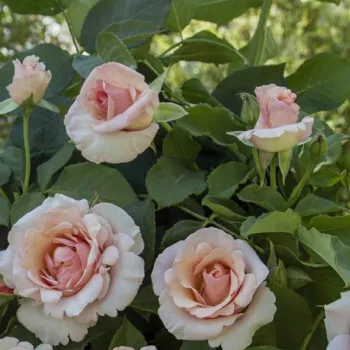
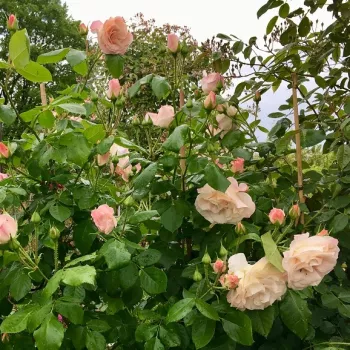
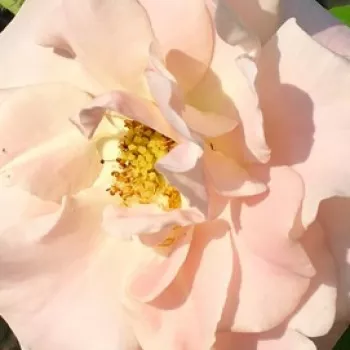
PAPA FRANCESCO – pale pink climbing rose – Ranchon
This pale pink climbing rose is designed for easy gardening in real Irish conditions, coping well even where soil can stay wet and heavy after frequent rain. You get soft, pastel blooms that repeat reliably through the season, clothing fences, arches or house walls with a romantic, cottage-garden feel. As an own-root climber it settles in for the long term, building a stable framework of canes that regenerates if pruned back or weather-damaged, giving you confidence to plant once and enjoy for years. The semi-double, cluster-flowered roses light up the garden from a distance and hold their colour well, while the moderately thorny, glossy light-green foliage creates a fresh backdrop, ideal in smaller family plots where you want neat structure without complex maintenance tricks. In a typical 1–3 year development arc – roots in the first year, stronger shoots in the second, and full ornamental value from year three – PAPA FRANCESCO grows steadily into its space and becomes a graceful, dependable feature by your front door or along a sunny boundary.
Use cases
| Target area |
Reason |
| Front-garden arch or pergola near the entrance |
Medium-height climber with pastel pink, cluster-flowered blooms that repeat steadily, giving a welcoming, romantic look without intense pruning schedules; suited to those wanting gentle colour around the front door, especially beginners |
| Family boundary fence or trellis divider |
Height up to about 3,8 m lets it cover average garden fences and simple trellis screens, forming a stable, long-lived green wall when tied in once or twice a year; ideal for busy homeowners seeking low-fuss privacy and structure, especially families |
| Small rose group on a sunny house wall |
Planting 1–3 along a south- or west-facing wall creates a soft, pastel curtain effect; own-root plants mature gradually, with roots first, then shoots, then full display, rewarding patient gardeners seeking dependable, long-term cover, especially planners |
| Cottage-style mixed border with perennials |
Semi-double flowers and light green, moderately dense foliage weave easily among cottage plants such as Brunnera or blue perennials, giving a relaxed look that still feels tidy; best for those favouring informal but manageable borders, especially romantics |
| Rose and clematis combination on an obelisk |
Moderately thorny canes and cluster-flowered heads pair well with light climbers like Clematis ‘Amber’, creating two-tier flowering on a single support without demanding expert training skills; perfect for creative gardeners wanting impact in small spaces, especially experimenters |
| Low-maintenance side path or driveway screening |
Medium disease resistance and modest maintenance needs suit side areas you pass daily but rarely have time to fuss over; tie in growth a couple of times a season and it forms a neat veil of blossom, great for time-poor urban residents, especially commuters |
| Coastal or exposed suburban garden |
Robust hardiness to about -21 °C and solid garden performance help it cope where Atlantic winds and damp, heavy soil can challenge fussier roses, making it a reassuring choice in many Irish seaside and open-plot settings for cautious, site-aware gardeners, especially coast-dwellers |
| Large container on patio or balcony |
Works in a 40–50 litre container with good drainage, where own-root growth builds a long-lived framework that can be renewed by pruning; ideal when you want a vertical accent of soft colour without redesigning beds, suiting balcony and terrace owners, especially renters |
Decorating ideas
- Soft entrance arch – Train PAPA FRANCESCO over a simple metal arch with Brunnera and spring bulbs at the base for a gentle, pastel welcome – ideal for homeowners wanting charm at the front gate.
- Cottage fence veil – Let it scramble along a timber fence with forget-me-nots and hardy geraniums underneath, creating a layered, informal cottage look – perfect for rural or village gardens.
- Pastel wall column – Fix sturdy wires on a sunny house wall and guide the canes vertically, adding lavender and rosemary below for scent and structure – great for compact urban plots.
- Romantic clematis duo – Combine with Clematis ‘Amber’ on a shared obelisk in a mixed border, echoing soft creams and pinks against its light foliage – suited to style-conscious hobby gardeners.
- Patio statement pot – Plant a single specimen in a 40–50 litre container with trailing thyme around the rim for a neat, vertical accent – useful for balcony and terrace gardeners short on bed space.
Technical cultivar profile
| Property |
Data |
| Name and registration |
PAPA FRANCESCO – pale pink climbing rose – Ranchon; trade name for a climber in the Climbing rose collection, exhibition category climbing rose, commercial type climber with no separate registered code published. |
| Origin and breeding |
Bred by Jacques Ranchon at Pépinières Paul Croix, Bourg-Argental, France, from a ‘Sourire d’Orchidée’ seedling; introduced and registered in 2016, representing a modern pastel-pink climbing rose selection. |
| Growth and structure |
Vigorous climbing habit reaching about 240–380 cm high with a 150–260 cm spread; moderately thorny canes and moderately dense, glossy light green foliage; best grown on supports such as arches, trellises or trained walls. |
| Flower morphology |
Semi-double, cup-shaped blooms with 13–25 petals, medium-sized at around 4–7 cm, produced in clusters; remontant character with an especially abundant second flush, supporting a long decorative period through the season. |
| Colour and phenology |
Soft pastel pink, uniform and pure in tone; buds almost white-pink deepen slightly at the tips, opening to silky pale flowers that retain excellent colour, fading gradually to a subdued pink on the petal edges as they age. |
| Fragrance and aroma |
Very weak, neutral fragrance with a clean character; not selected for scent, making it suited to spots where colour and structure matter more than perfume and where fragrance from companion plants can be emphasised instead. |
| Rose hip characteristics |
Produces only occasional spherical hips, typically 8–12 mm across, in orange-red tones; the crop is usually sparse because of the semi-double to double flowers, so hips add a subtle rather than dominant autumn feature. |
| Resistance and hardiness |
Medium resistance to powdery mildew, black spot and rust; hardy approximately to -21 to -18 °C (RHS H7, Swedish Zone 3, USDA 6b), making it suitable for most Irish conditions with sensible site choice and basic care. |
| Horticultural recommendations |
Space about 200 cm for mass planting, 190 cm in hedging, or 300 cm as a solitary; train on supports, tie in new growth annually, and prune to renew older canes; moderate care, with occasional pest and disease checks recommended. |
PAPA FRANCESCO offers reliable repeat flowering, graceful climbing height and steady, long-term performance from own-root plants that can regenerate over time, making it a reassuring choice if you would like a softly coloured, low-fuss rose in your garden.