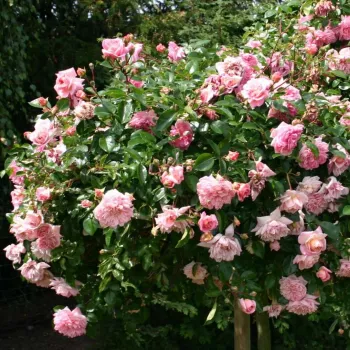
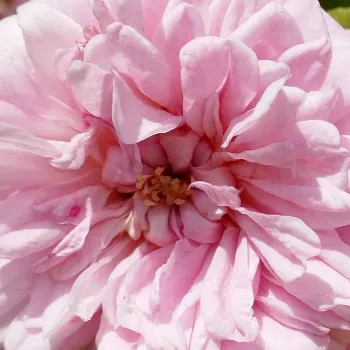
PAUL NOËL – salmon-pink rambler climbing rose - Tanne
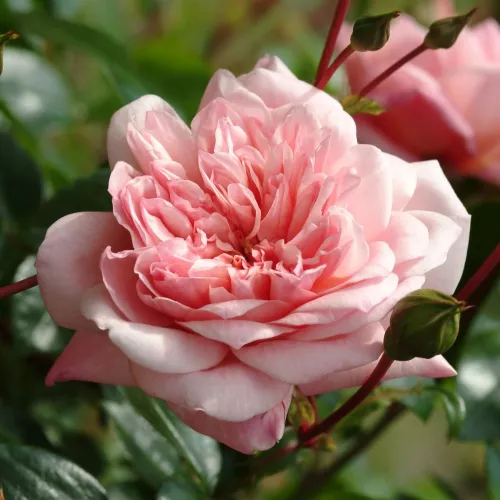
If You are dreaming of a romantic front garden that still feels easy to manage, PAUL NOËL is a softly coloured rambler that brings generous flowering with reassuring reliability. Its warm salmon-pink rosettes fade beautifully to pastel shades, so even as the blooms age, the overall effect remains elegant rather than untidy. This long-lived, own-root climber settles in steadily, forming its own balanced framework that copes well with Ireland’s rain and the challenges of heavier soil and humidity-driven fungal pressure. Once planted, it focuses first on strong roots, then on taller shoots, before showing its full ornamental value from around the third season – a gentle, natural development arc that suits relaxed home gardens. With moderate maintenance needs and medium disease resistance, it offers a good balance of health and flower power without demanding constant care. Its ability to thrive in partial shade makes it especially versatile around porches, north‑east facing walls or side passages where other climbers can struggle. Over time it will create a dense curtain of glossy foliage and fragrant clusters of flowers, adding a romantic backdrop to everyday family life while keeping gardening tasks pleasantly manageable.
Use cases
| Target area |
Reason |
| Front garden arch over a path |
Ideal for training over a simple metal or wooden arch where its climbing habit and long canes quickly create a welcoming tunnel of colour, giving a romantic cottage feel without complex pruning for the beginner-gardener |
| South or west-facing house wall |
Works well as a wall-trained rambler, using its height and spread to soften bare masonry; repeat flowering and good colour retention mean attractive displays even in strong light for the busy-homeowner |
| Partially shaded side passage or north-east wall |
Suitable for partial shade, so it can brighten those in‑between spaces where sun is limited, offering reliable growth and flowering where many roses perform poorly for the shade-challenged |
| Pergola or overhead seating area |
Its height and flexible climbing canes allow you to cover a pergola, giving dappled shade and strong fruity fragrance above seating, turning an ordinary corner into an evening retreat for the relaxed-gardener |
| Informal boundary fence in family gardens |
Can be trained along fences to form a loose flowering screen; dense foliage adds privacy while moderate maintenance needs keep care simple for a low-effort |
| Large rural cottage border with mixed shrubs |
Blends beautifully with classic cottage companions, and its long lifespan on own roots means it matures into a stable, enduring presence among shrubs and perennials for the long-term |
| Coastal or exposed suburban garden |
Builds a flexible, wind-tolerant framework that copes with Atlantic exposure and wet, heavy soil, suiting Irish plots where wind and moisture are everyday realities for the weather-aware |
| Statement specimen on a large obelisk or column |
When given space, it can be trained around a sturdy obelisk to create a tall, eye-catching column of fragrance and soft colour, providing high impact from a single planting for the design-conscious |
Decorating ideas
- Cottage Archway – Train PAUL NOËL over an entrance arch, underplanting with Alchemilla mollis and low catmint for a frothy, old-world look – ideal for romantic front-garden lovers
- Soft Wall Tapestry – Fan the canes across a sunny wall and weave Gypsophila repens at the base for a light, lacy understorey – perfect for homeowners wanting gentle colour without fuss
- Pergola Retreat – Let this rambler cloak a seating pergola, then add pots of lavender and rosemary nearby to echo the fragrance – suited to families who enjoy relaxed summer evenings outdoors
- Country Fence Screen – Combine PAUL NOËL along a fence with clumps of lady’s mantle and hardy geraniums to blur boundaries – great for rural cottage gardens aiming for soft, natural structure
- Feature Obelisk Accent – Plant it beside a sturdy obelisk in a large border, surrounding with pale hydrangeas for contrast – for gardeners who like a single, striking focal point
Technical cultivar profile
| Property |
Data |
| Name and registration |
Trade name PAUL NOËL – salmon-pink rambler climbing rose - Tanne; rambler-type climbing rose in the Climbing rose collection, ARS exhibition name Paul Noel, unregistered cultivar in official registers. |
| Origin and breeding |
Historic French rambler bred by Rémi Tanne around 1910, introduced 1912. Parentage Rosa wichuraiana × ‘Monsieur Tillier’, combining vigorous climbing growth with refined, old-fashioned bloom form. |
| Awards and recognitions |
Holds the Royal Horticultural Society’s Award of Garden Merit (AGM), indicating strong garden performance and reliability under typical conditions when grown with reasonable care and maintenance. |
| Growth and structure |
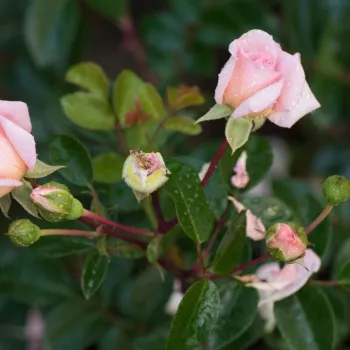
Strong, climbing habit reaching about 320–520 cm high and 280–450 cm wide. Forms long, flexible canes with dense, glossy mid-green foliage and moderate prickliness; best grown with firm support and training. |
| Flower morphology |
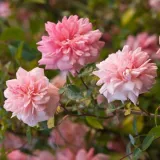
Double, rosette-shaped blooms with around 26–39 petals in medium-sized clusters. Corymbose inflorescences, giving showy trusses along the canes. Remontant with a good first flush and lighter repeat later in the season. |
| Colour and phenology |
Warm salmon-pink flowers with a soft yellow eye; buds medium-deep salmon pink. Blooms fade gently to pastel pink with creamy tones yet retain a harmonious, uniform effect even in strong sun over the flowering period. |
| Fragrance and aroma |
Strong, clearly noticeable scent with a fresh, fruity character. Best appreciated near paths, doors or seating areas where clusters of flowers can be enjoyed at close range in still conditions. |
| Rose hip characteristics |
Occasionally sets small, egg-shaped hips about 6–10 mm in diameter, colouring to orange-red; an additional ornamental feature late in the season if deadheading is not carried out. |
| Resistance and hardiness |
Hardy to about –26 to –23 °C (RHS H7; USDA zone 5b; Swedish zone 4). Disease resistance moderate, with some susceptibility to black spot, mildew and rust, particularly in damp, still conditions. |
| Horticultural recommendations |
Best on well-drained soil with regular watering in dry spells. Suitable for arches, walls, fences and pergolas; partial shade tolerant. For containers, use a minimum 40–50 litre pot and strong support for the climbing canes. |
PAUL NOËL combines romantic salmon-pink clusters, partial-shade versatility and an easy, long-lived own-root character that gradually forms a stable climber, making it a reassuring choice if You would like a dependable rose to grow with your garden.