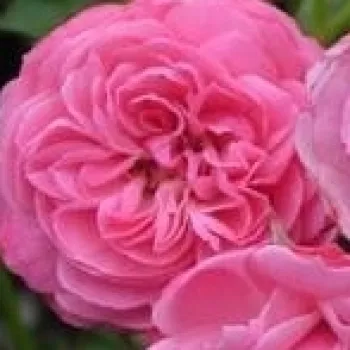
PIRONTINA – pink climbing rose – Pironti di Campagna
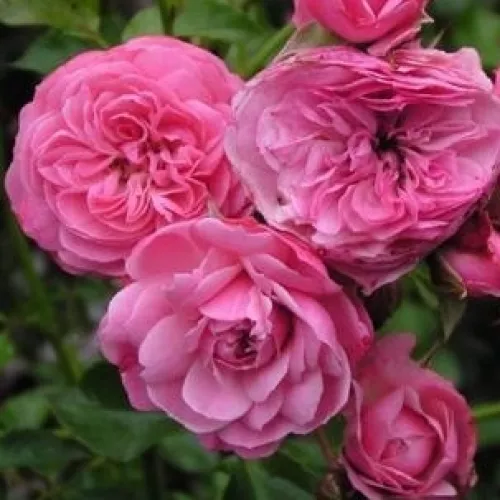
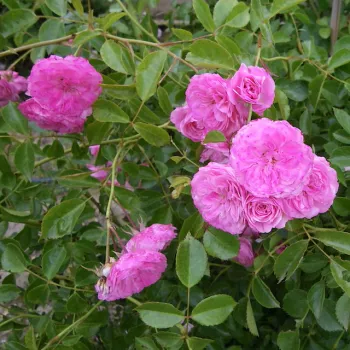
The Pirontina climbing rose is an easy-going choice when You want romantic pink flowers without complicated care. Its medium height and creeping habit make it simple to train along a fence, arch or low pergola, creating a soft cottage-garden feel even in small Irish plots. Clusters of very double, pompon blooms appear in waves through summer, giving reliable flowering that rewards You year after year. Dense, dark green foliage clothes the canes well, so even between flushes the plant looks elegant and tidy. As an own-root rose it knits slowly into the soil, forming a stable framework that copes well with our damp seasons and heavy clay once drainage is considered for roots. Given a sunny spot and basic pruning, it offers medium-disease-resistance, long-term structure and a graceful presence that matures steadily over time. In the first year it focuses on establishment, the second brings stronger shoots, and by the third season it reaches its full ornamental display.
Use cases
| Target area |
Reason |
| Front-garden arch or small pergola |
Ideal for training over a compact arch or pergola where space is limited but You still want height and impact; its moderate climbing vigour and controlled spread help create a romantic entrance without overwhelming the structure, even for a beginner gardener |
| Fence or railing in a family garden |
Works well along garden boundaries, where its dense foliage and medium-height canes form a soft, flowery screen; the own-root habit builds a durable framework over the years, offering long-term cover with only basic tying-in and seasonal pruning for a busy homeowner |
| Wall-trained rose near the house |
Suited to south- or west-facing house walls, where its repeat clusters of soft pink blooms bring colour close to windows and seating areas; the medium maintenance level is manageable if You are ready for simple tying and an occasional fungicide in a damp Irish summer |
| Rose pillar or obelisk feature |
Perfect for spiralling around a pillar or obelisk in a lawn or border; the creeping, pliable canes are easy to guide, giving a vertical focal point that develops over three seasons into a well-clothed, flower-laden column that still suits a casual hobbyist |
| Mixed cottage-style border with shrubs |
Combines attractively with shrubs such as hydrangeas and dogwoods, where its pastel pink flowers and dark leaves contrast with bolder foliage; the medium disease resistance is acceptable in mixed plantings when given good air circulation that supports the average Irish climate |
| Romantic seating corner or patio backdrop |
Use it behind a bench or seating nook, where the soft pink pompon flowers create a gentle, romantic backdrop without strong scent; reliable repeat bloom across the season means You enjoy colour on most summer days with relatively modest effort as a relaxed beginner |
| Small group planting for vertical rhythm |
Planting two or three plants along a path or boundary gives repeating vertical accents without feeling heavy; own-root growth ensures each plant develops its individual framework and recovers well from pruning, supporting longer-term design plans for a thoughtful planner |
| Large container with climbing support |
Can be grown in a substantial 40–50 litre container with a trellis or obelisk, offering vertical colour on balconies or paved front gardens; it settles steadily into the potting mix and responds well to regular watering and feeding, rewarding a space-conscious urban resident |
Decorating ideas
- Cottage Archway – Train Pirontina over a narrow metal arch and underplant with lavender and catmint for a soft, romantic entrance – ideal for lovers of informal cottage gardens.
- Soft Boundary Screen – Run it along a timber fence, interplanted with rosemary and hardy geraniums to blur hard lines and add colour at eye level – perfect for family gardens needing gentle privacy.
- Pastel Patio Corner – Grow one plant in a 50 litre pot with a slim obelisk, surrounded by terracotta containers of thyme and oregano – great for compact patios and balconies.
- Wall Rose Gallery – Space several plants along a sunny wall between windows, paired with pots of white hydrangeas below to frame the façade – suited to neat, low-maintenance front gardens.
- Seasonal Focal Bed – Use a central rose pillar of Pirontina in a round bed edged with euphorbia and low grasses, giving a gentle vertical highlight – attractive for those planning a simple feature border.
Technical cultivar profile
| Property |
Data |
| Name and registration |
Pirontina is a large-flowered climbing rose, trade name PIRONTINA – pink climbing rose – Pironti di Campagna. It belongs to the climbing rose collection and is accepted for exhibition under the name Pirontina. |
| Origin and breeding |
Bred by Duca Nicola Pironti di Campagna in Italy and introduced around 1975. Parentage is unknown and there is no confirmed breeding institution or initial distributor recorded for this cultivar. |
| Growth and structure |
Medium-vigorous climber with a creeping habit, reaching about 240–380 cm in height and 100–160 cm spread. Canes are moderately thorny and carry dense, glossy, dark green foliage suitable for training on supports. |
| Flower morphology |
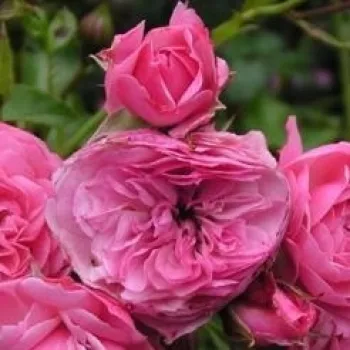
Very double, cluster-flowering blooms with more than 40 petals each. The flowers are medium-sized, roughly 1.5–2.75 inches across, with a rounded, globular to pompon form that suits romantic and traditional garden styles. |
| Colour and phenology |
Blooms are a moderately saturated soft pink, with buds opening from deeper pink to paler outer petals. Colour gently lightens towards pastel pink as flowers age, and the plant offers good repeat flowering with a generous second flush. |
| Fragrance and aroma |
This variety is classed as scentless, with no noticeable fragrance in garden use. Strongly double flowers have inaccessible stamens, so it functions mainly as an ornamental rather than a pollinator-supporting rose. |
| Rose hip characteristics |
Produces a moderate quantity of small, spherical red hips around 10–14 mm in diameter by autumn. These can add a modest decorative effect later in the season when the main flowering has eased. |
| Resistance and hardiness |
Hardy to approximately −21 to −18 °C, roughly USDA zone 6b and Swedish zone 3. Disease resistance is medium to powdery mildew, black spot and rust, benefiting from sunny, airy planting and basic protective care in wet seasons. |
| Horticultural recommendations |
Best in full sun, trained on arches, pergolas, fences or walls. Recommended spacing: about 150 cm for mass planting, 140 cm for hedging and 240 cm as a specimen; density roughly 0.4–0.5 plants per square metre depending on layout. |
PIRONTINA offers soft pink repeat flowering, manageable climbing growth and long-lived own-root resilience for a family garden, making it a reassuring choice if You want a dependable vertical rose feature.