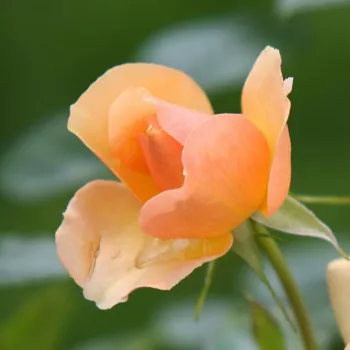
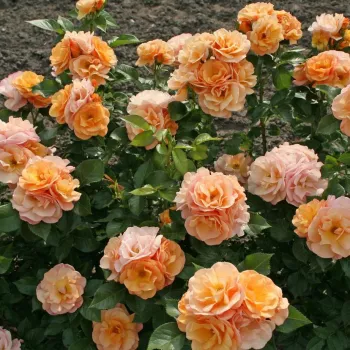
PORTOROŹ – orange bedding floribunda rose
If You would like a rose that simply settles in and gets on with flowering, PORTOROŹ is a dependable floribunda for Irish family gardens. Its semi-double blooms appear in generous clusters, bringing warm colour from early summer well into autumn, even when the weather turns unsettled and humid. The upright, moderately dense bush keeps a tidy outline without fussy pruning, so beds and borders stay looking orderly with little work. Flowers open in a bright mandarin orange that gently softens to peach and pastel tones, giving continuous interest rather than one flat shade. Bred by Kordes and ADR-awarded, it offers reassuring reliability and long-term garden value. As an own-root plant it matures steadily, with roots establishing first, then stronger shoots in year two, and full ornamental impact by year three for truly lasting plantings. In a larger container or flower bed it copes well with typical Irish rain and heavier soils, provided You give basic drainage care and reasonable feeding. Its mild, fruity fragrance and partially pollinator-friendly flowers suit relaxed cottage-style front gardens, while the glossy dark foliage provides a neat, structured backdrop for perennials and low-maintenance planting schemes.
Use cases
| Target area |
Reason |
| Front garden bed by the driveway or entrance path |
Upright, moderately dense growth and glossy foliage create a tidy, welcoming line of colour without demanding complex pruning or staking, ideal when You just want to keep the approach to the house smart with straightforward seasonal care for busy beginners |
| Small mixed border with perennials in a family garden |
Clustered, semi-double blooms repeat through the season, weaving warm orange and peach tones among perennials so the border looks lively from a few well-placed plants rather than intensive planting schemes, suiting those who prefer easy structure and simple deadheading for time-poor gardeners |
| Low cottage-style group planting near a seating area |
Planting 3–5 bushes together gives a soft, cottage feel with shifting shades from intense mandarin to pastel peach, while the fresh, fruity scent stays gentle and unobtrusive, offering relaxed charm for people who enjoy traditional looks without formal rose upkeep for romantic homeowners |
| Urban front garden with limited border space |
PORTOROŹ performs well in relatively narrow strips, its controlled height and spread keeping paths clear while still flowering reliably after basic feeding and watering, so even compact city plots gain long-flowering structure without needing a gardener on call for urban families |
| Coastal or exposed site with changeable weather |
The variety tolerates heat and moderate drought yet also manages in wetter, windier spells typical of maritime areas, provided the soil is reasonably free-draining, making it a practical choice where You need a rose that accepts Atlantic weather swings for Irish coastal gardeners |
| Large patio container or balcony tub |
In a 40–50 litre container with good compost and drainage, its upright habit and repeat-flowering clusters give a long season of colour on patios or balconies, while own-root resilience supports steady regrowth if cut back after winter for container enthusiasts |
| Low informal hedge along a garden boundary or path |
Planted at about 50–60 cm spacing, the upright plants knit into a low, colourful line that marks boundaries neatly; the moderate prickliness adds a gentle deterrent without being aggressive, useful where You want definition without hard fencing for practical homeowners |
| Easy-care rose and perennial combination bed |
Its ADR-level garden performance and moderate disease resistance provide reliable flowering under normal care, while own-root growth settles into the soil and climate over the years, giving a stable backbone for mixed plantings that evolve slowly rather than needing frequent replanting for long-term planners |
Decorating ideas
- Sunset welcome strip – Line the front path with PORTOROŹ and low lavender for a warm orange and lilac contrast that looks cared-for with minimal clipping – ideal for homeowners who want a smart entrance without detailed border design
- Cottage trio focal point – Plant three PORTOROŹ in a loose triangle with Gypsophila ‘Festival Pink Lady’ and soft grasses, creating a billowy, romantic focus that hides bare soil and reduces weeding – perfect for fans of relaxed cottage gardens
- Family play-friendly border – Combine this tidy floribunda with compact hydrangeas and hardy geraniums so children’s play areas are edged by colourful but forgiving plants needing only seasonal pruning – suited to busy families wanting low-fuss structure
- Coastal container glow – Use a single PORTOROŹ in a 40–50 litre terracotta pot with trailing thyme and ivy to bring steady colour to a breezy balcony – great for coastal or urban residents seeking reliable flowers in limited space
- Warm-toned slope planting – Dot groups of PORTOROŹ across a gentle bank with Crocosmia and purple coneflower to stabilise soil while providing late-summer fire tones – for gardeners who want an easy-care, naturalistic look on awkward ground
Technical cultivar profile
| Property |
Data |
| Name and registration |
Floribunda bedding rose, commercial group bed rose. Trade names PORTOROŹ, Heckenzauber, KORsisbenga. Registered cultivar name KORsisbenga, ARS exhibition name Portorož, bush rose type. |
| Origin and breeding |
Bred by Thomas Proll at W. Kordes, Germany; parentage not disclosed. Registered in 2012 and introduced in 2014, now positioned as a modern, easy-care garden floribunda for beds and borders. |
| Awards and recognitions |
Holds the ADR award from 2013, indicating strong garden performance under minimal spraying. Also listed with multiple international awards in award-winner categories, confirming reliable ornamental value. |
| Growth and structure |
Upright, bushy shrub reaching about 95–125 cm high and 60–85 cm wide. Moderately dense, dark green, glossy foliage. Moderately thorny shoots, suitable for beds, low hedging and structural planting in family gardens. |
| Flower morphology |
Semi-double, cup-shaped flowers with 17–25 petals, produced in clustered inflorescences. Large bloom size around 7–10 cm. Remontant habit with a generous second flush, offering repeated flowering through the main season. |
| Colour and phenology |
Bright warm orange with peach undertones; buds open deep orange-red, then mandarin-orange, maturing to peach-pink with salmon edges. Colour lightens in strong sun but retains good overall intensity and season-long decorative effect. |
| Fragrance and aroma |
Mild, fresh, fruity fragrance, noticeable at close range without overpowering nearby seating areas. Semi-double flowers are partially pollinator-friendly, offering some attraction but with limited access to nectar and pollen. |
| Rose hip characteristics |
Produces small rose hips in moderate quantities, typically 0–5 mm in diameter. Hips are not a strong ornamental feature but can add a light seed-fruit aspect if spent blooms are not removed. |
| Resistance and hardiness |
Hardy to about −21 to −18 °C (USDA zone 6b, RHS H7, Swedish zone 3). Moderate resistance to powdery mildew and black spot, good rust resistance. Tolerates heat well and withstands moderate drought with occasional deep watering. |
| Horticultural recommendations |
Suited to flower beds, borders, low hedges, urban green spaces and slopes. Prefers well-drained soil with regular moisture and feeding. Plant at 50–90 cm spacing; own-root, 2-litre plants establish steadily and respond well to light annual pruning. |
PORTOROŹ offers long-season orange flowering, a tidy upright habit and ADR-recognised reliability, while its own-root form supports steady regrowth and long life, making it a sound choice if You want a rose that simply performs.