ALEXANDER MACKENZIE – pink climbing rose – Svejda
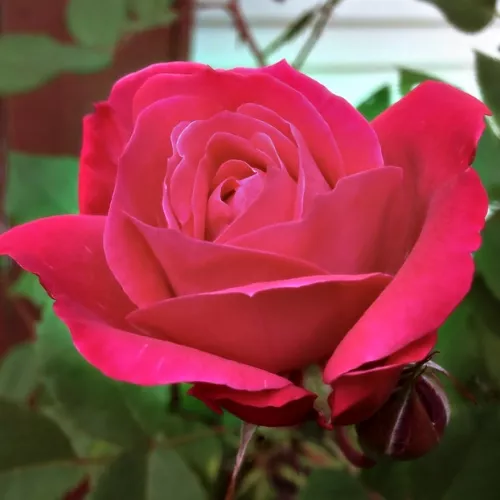
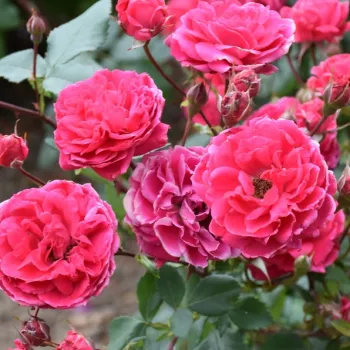
If You are looking for a reliable rose that simply settles in and performs in Irish gardens, Alexander MacKenzie offers a balanced mix of colour, structure, and long-term impact. This upright climber builds a dense, leafy framework that gives Your garden a clear shape along fences, pergolas or house walls, while its medium-sized, very double raspberry-pink blooms appear in generous clusters several times through the season. As an own-root plant it quietly develops a strong base that supports a long lifespan and easier regeneration after pruning or winter weather. It copes well with our moist conditions and heavier soils when You provide basic drainage, a routine that suits gardens where maintenance time is limited. In its first year it concentrates on roots, the second on stronger shoots, and by the third You can enjoy its full ornamental value as a settled, reliable feature.
Use cases
| Target area |
Reason |
| Front garden feature arch or porch entrance |
Ideal where You want a strong vertical accent that greets You with rich raspberry-pink clusters and glossy foliage, creating a welcoming frame around a doorway without needing complex design knowledge, perfect for the beginner gardener |
| Family garden boundary or screen |
Works well as a dense, upright screen along fences, building a leafy, structured backdrop that gives privacy and order while remaining compact enough for average Irish plots, well suited to the busy household |
| Small group planting in mixed shrub border |
Planted in a group of 3–5, it forms a coherent block of colour that anchors mixed borders and cottage-style schemes, giving an organised look while still feeling romantic, reassuring for the style-conscious owner |
| Sunny urban front garden against house wall |
Enjoys a bright, warm spot where the wall gives support and shelter, letting the rose flower generously above lower perennials while fitting into the limited depth of many city front gardens, convenient for the urban homeowner |
| Rural cottage garden along a path or low fence |
Its clusters of old-fashioned, fully double blooms echo classic cottage-garden roses, bringing fruitily scented colour along paths and picket fences, easy to combine with traditional perennials for the romantic gardener |
| Coastal or exposed site with wind-tolerant support |
Suitable where You can offer a solid support and basic drainage, as it copes steadily with breezier, damper conditions near the coast once established, a reassuring option for the seaside gardener |
| Large container on patio or balcony |
Can be grown in a 40–50 litre container with a sturdy obelisk or trellis, giving vertical interest and scented flowers on balconies or paved patios where in-ground planting is limited, attractive for the space-conscious gardener |
| Long-term garden plan and future-proof planting |
Own-root growth helps it build a stable, regenerating framework that responds well to renovation pruning over the years, supporting a future-proof garden structure that matures gracefully for the long-term planner |
Decorating ideas
- COTTAGE VERGE – Train along a low fence and underplant with Campanula portenschlagiana for tumbling blue at its feet – ideal for lovers of relaxed cottage charm
- URBAN ARCH – Grow over a simple metal arch with lavender edging to soften paving and front drives – suited to busy city homeowners wanting impact without fuss
- RUBY PATIO SCREEN – In a 40–50 litre pot on a trellis, pair with rosemary and thyme in matching containers – great for balcony or terrace gardeners seeking vertical colour
- STRUCTURED BORDER – Use as a tall backdrop in a mixed border with hydrangeas and lilyturf for a layered, ordered look – perfect for families wanting a neat, reliable framework
- COUNTRY WALKWAY – Line a path with repeated plants and interplant Japanese spurge as evergreen groundcover – appealing to rural owners planning a long-lived, coherent garden line
Technical cultivar profile
| Characteristic |
Data |
| Name and registration |
Alexander MacKenzie, trade name ALEXANDER MACKENZIE – pink climbing rose – Svejda; exhibition name A. Mackenzie; group: climber and shrub, climbing rose collection. |
| Origin and breeding |
Bred by Felicitas Svejda in Canada from ‘Queen Elizabeth’ × (‘Red Dawn’ × ‘Suzanne’); introduced and registered in 1985 by Agriculture and Agri-Food Canada, Ottawa. |
| Growth and structure |
Upright climbing to 180–300 cm in height and 150–250 cm spread, with dense, mid-green glossy foliage and moderate prickles; requires support on walls, fences, arches or pergolas. |
| Flower morphology |
Medium-sized, 1.5–2.75 inch blooms, very double with 40+ petals, globular to pompon form, borne in clusters; remontant with an abundant second flush in suitable conditions. |
| Colour and phenology |
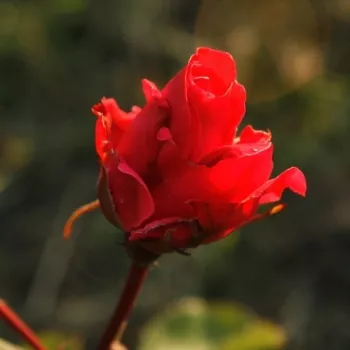
Intense raspberry-pink with scarlet overtones; buds dark carmine-crimson, flowers may lighten to pink in strong sun yet keep a rich, vibrant effect across repeated flowering waves. |
| Fragrance and aroma |
Medium-strength perfume with a clearly noticeable, delicately fruity character; noticeable at close range along paths, seating areas and entrances when in good, warm weather. |
| Rose hip characteristics |
Occasional ovoid hips, 15–25 mm, orange-red when ripe, adding modest late-season interest without significantly affecting the plant’s overall ornamental display. |
| Resistance and hardiness |
Very hardy to about −37 to −34 °C (USDA 3b, RHS H7, Swedish zone 6); disease-prone to mildew, black spot and rust, so regular preventative care and monitoring are recommended. |
| Horticultural recommendations |
Best in sunny sites with well-drained soil; allow 140–220 cm spacing; feed and water regularly, especially in dry spells, and prune to maintain a tidy framework and repeat flowering. |
ALEXANDER MACKENZIE offers rich raspberry-pink clusters, strong vertical structure and long-term reliability; as an own-root rose it settles into a durable framework that is easy to refresh over time, making it a thoughtful choice if You are planning ahead.