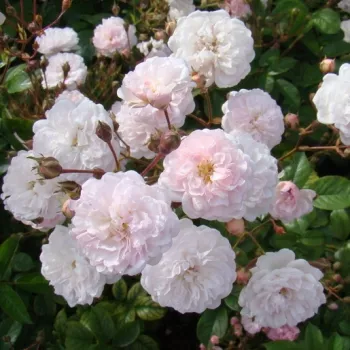
ANNELIES – pale pink park rose - Lens
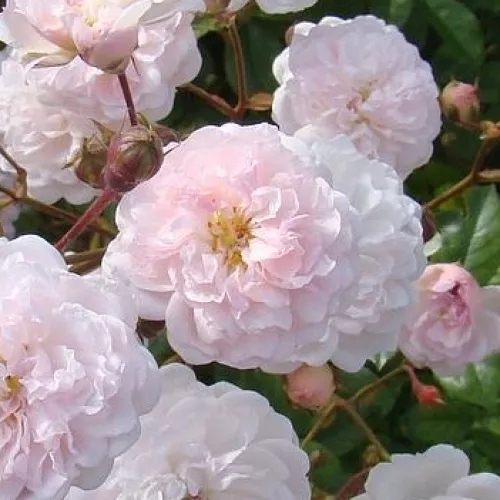
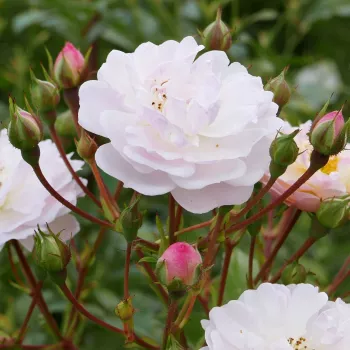
Delicate clusters of rosette blooms in soft powder pink give ANNELIES a romantic, cottage-garden look that fits effortlessly into Irish family gardens, even where humidity and mild, damp summers can challenge fussier roses. As a compact, upright shrub reaching around chest height, it is easy to place in front gardens, along paths or as a low, airy hedge. This park rose flowers reliably in generous flushes from early summer, its small, very double heads opening in clouds that fade gently to near-white, creating an elegant, pearly effect rather than garish colour. With discreet, elegant fragrance and moderately thorny stems, it works well where children and pets share the space, while its own-root nature builds a long-lived, resilient structure that can regenerate from the base after harsh winters or pruning. You receive a well-rooted, 2-litre plant that is simple to handle: plant it once, keep it watered and it responds steadily, the first year focusing on roots, the second on stronger shoots, and by the third rewarding you with its full ornamental presence.
Use cases
| Target area |
Reason |
| Front garden focal shrub near the entrance |
Compact, upright habit and pale, pearly pink blooms give a welcoming, tidy appearance without overwhelming a small space, making it ideal beside a gate, doorway or drive for homeowners who prefer a calming, understated rose display for the family |
| Low, informal hedge along a path or boundary |
Planted at 50 cm spacing, ANNELIES forms a light, flower-sprinkled hedge that gently defines paths or driveways while staying manageable in height, needing only one shaping trim a year, which suits busy garden owners seeking structure without constant clipping for the household |
| Romantic rose group in a cottage-style border |
In groups of 3–5 at about 55 cm spacing, the rounded bushes knit together into a soft, cloud-like mass of pale pink clusters, echoing traditional rural cottage borders and giving reliable summer colour even to less experienced gardeners wanting a classic look for the beginner |
| Water-conscious, future-proof mixed planting |
Moderate drought tolerance means it copes well once established if you mulch and water deeply, fitting into modern, water-aware gardens where you want roses that manage short dry spells without daily attention for the gardener |
| Coastal or exposed suburban garden bed |
Its sturdy shrub framework and balanced foliage help it stand up to breezier, Atlantic-influenced sites where damp air and wind are common, so you still enjoy flowers in seasons when more delicate roses might struggle in our soft, maritime weather for the neighbourhood |
| Large container on patio, balcony or doorstep |
In a minimum 40–50 litre container with good drainage, ANNELIES makes a neat, upright patio rose, bringing soft colour close to seating areas or front doors, ideal for those with paved gardens or rented homes wanting movable, low-fuss planting for the renter |
| Cut flowers for small indoor arrangements |
Its small, very double rosettes on branching stems can be cut in clusters, giving dainty, vintage-style bunches that last well in a vase, perfect for those who enjoy bringing a few stems indoors without needing a dedicated cutting garden for the home |
| Long-term, low-replacement planting scheme |
As an own-root shrub, ANNELIES builds strength year after year, reshooting from the base if cut back hard or after winter damage, reducing the need for replanting and ensuring a stable, maturing rose display that rewards patient, long-term planning for the owner |
Decorating ideas
- Soft cottage trio – Plant ANNELIES with foxgloves and white campanulas in a loose border to echo traditional country gardens – ideal for lovers of relaxed, romantic cottage style.
- Pastel front path – Line a short path with ANNELIES on one side and a low lavender edging on the other for gentle scent and structure – perfect for tidy, low-maintenance front gardens.
- Pearl and burgundy contrast – Combine ANNELIES with Berberis thunbergii ‘Red Rocket’ for deep red foliage behind pale pink blooms – suited to modern suburban plots needing year-round colour contrast.
- Prairie-inspired mix – Thread ANNELIES through clumps of Liatris spicata ‘Alba’ and airy ornamental grasses for a water-conscious, naturalistic effect – great for those wanting a lighter, future-proof planting.
- Romantic patio pot – Grow a single ANNELIES in a 50-litre container, underplant with trailing thyme and white lobelia for a soft, layered display – ideal for balconies, terraces and rented spaces.
Technical cultivar profile
| Parameter |
Data |
| Name and registration |
Registered as LENplero, marketed as ANNELIES – pale pink park rose - Lens; shrub, Hybrid Musk type within the Park – shrub rose group; ARS exhibition name ANNELIES for shows and catalogues. |
| Origin and breeding |
Bred by Louis Lens in Belgium and introduced in 2000 by Lens Roses Nursery; parentage is undocumented, but selection reflects classic Hybrid Musk shrub qualities and garden reliability for temperate European climates. |
| Awards and recognitions |
Rome – silver medal (2000), reflecting its balanced combination of flower form, shrub habit and garden performance in Mediterranean test conditions, with good ornamental value recognised by international rose trials. |
| Growth and structure |
Upright, compact shrub 120–170 cm high and 60–100 cm wide, with moderately dense, slightly glossy light green foliage and moderately thorny stems; suitable as a specimen, hedge or small climber on low supports. |
| Flower morphology |
Small, very double rosette blooms with more than 40 petals, borne in large clusters; remontant, with a generous second flush; individual flowers around 0.5–1.5 inches across, giving a finely textured, cloud-like effect. |
| Colour and phenology |
Delicate powder-pink buds open to pale pink blooms that lighten towards white; pearlescent sheen at petal edges, moderate colour retention, fading faster in strong sun; overall effect is softly pastel rather than strongly saturated. |
| Fragrance and aroma |
Very weak, discreet fragrance with a refined, elegant character; primarily grown for its visual appeal rather than strong scent, making it suitable near seating areas for those who prefer subtle, non-overpowering roses. |
| Rose hip characteristics |
Produces a moderate crop of spherical orange-red hips 6–10 mm in diameter in autumn, adding a light seasonal accent and potential interest for wildlife without dominating the shrub’s overall ornamental effect. |
| Resistance and hardiness |
Hardy to about −21 to −18 °C (RHS H7, USDA 6b, Swedish zone 3); moderate resistance to powdery mildew, black spot and rust; flowers in warm weather provided soil does not dry out for extended periods. |
| Horticultural recommendations |
Best in sunny spots with well-drained soil; space 55 cm for mass planting, 50 cm for hedges, 90 cm as a specimen; maintenance medium, with occasional pest and disease checks and regular watering during dry spells. |
ANNELIES offers soft pastel clusters on a compact shrub, suits hedges or containers, and as an own-root rose it matures into a long-lived, regenerating feature; consider it if you want dependable charm without complicated care.