APRICOT SILK – apricot tea-hybrid rose - Gregory
If You would like a reliable hybrid tea for an Irish family garden without complicated care, Apricot Silk is a friendly choice: its remontant habit brings reliable flushes of warm peach-pink blooms through the season, while generally healthy foliage copes well with our damp air and the challenges of a wet, heavy-soil climate. The medium-sized, goblet-shaped flowers are pleasantly fragrant, ideal for cutting for the house, and the sturdy upright habit makes it easy to place in beds, borders or a narrow front garden. As an own-root plant, it settles in steadily and offers a long-lived, regenerating bush that bounces back well after trimming or bad weather. With enough moisture and food it rewards straightforward care, forming a balanced, moderately vigorous shrub that fits neatly into mixed plantings. Over the first three years it builds strong roots, then bushy shoots, before showing its full ornamental value in bloom-rich summers, giving You confidence even if You are still a beginner gardener.
Use cases
| Target area |
Reason |
| Front garden focal rose |
The upright hybrid tea structure and medium height let Apricot Silk sit neatly by a path or doorway without overpowering a smaller Irish front garden, providing repeat peach blooms as a gentle, tidy welcome for the homeowner |
| Cutting row in a family garden |
Solitary goblet-shaped flowers on strong stems, a semi-double form and clearly noticeable fruity fragrance make this variety ideal for informal home cutting, so You can gather fresh stems for the kitchen table without needing a specialist cutting garden, suiting the practical beginner |
| Low-maintenance mixed border |
Generally good resistance to powdery mildew and black spot means Apricot Silk sits comfortably among perennials and shrubs with only occasional checks for rust, integrating well into mixed borders where You prefer low-spray, low-fuss care as a busy gardener |
| Edging and small groups along paths |
With a spread of around 50–70 cm and recommended spacing from 45–55 cm, small groups of 3–5 plants form an even, structured edging, giving a defined line of colour that stays manageable in average family plots and supports the tidy-garden-loving user |
| Own-root long-term rose plantings |
As an own-root rose, Apricot Silk forms its bush shape where it is planted, building durable framework growth that can regenerate from the base if pruned harder or weather-damaged, giving long-lived value for the cautious, investment-minded buyer |
| Pollinator-friendly romantic corner |
Semi-double, 13–25 petalled flowers offer accessible centres that moderately attract pollinators, allowing You to combine cottage-style romance with some ecological value, especially when paired with coneflowers or montbretia, pleasing the wildlife-aware householder |
| Irish heavy-soil beds with improved drainage |
Hardy to approximately -21 to -18 °C and comfortable in our humid conditions, this rose performs reliably where drainage has been improved in heavier Irish soils, coping with a cool, wet Atlantic-influenced season typical of many plots, reassuring the climate-conscious owner |
| Large containers on patios or balconies |
When planted in a generous 40–50 litre container with quality compost and steady watering, the upright habit and repeat flowering give a strong vertical accent on patios, small yards or coastal balconies, fitting the space-limited urban or seaside gardener |
Decorating ideas
- Cottage Border Blend – Combine Apricot Silk with purple coneflower and soft grasses for a romantic, slightly informal border that still stays easy to manage – ideal for cottage-style enthusiasts wanting charm without fuss
- Peach Entrance Pair – Plant two roses flanking a front path or gate, underplanted with lavender for scent and structure, to create a welcoming entrance that looks well-kept with simple pruning – suited to busy homeowners
- Cutting Strip – Run a short row of Apricot Silk behind a lawn edge, with Crocosmia for fiery contrast, so You can cut stems from the back while the front remains decorative – perfect for families who enjoy home-grown bouquets
- Soft Sunset Corner – In a sunny patio corner, mix this rose in a large container with trailing thyme and compact rosemary, echoing warm sunset tones and fragrance – good for small-space urban gardeners
- Pollinator Patch – Group Apricot Silk with Echinacea ‘Delicious Nougat’ and other nectar plants to form a gentle, wildlife-friendly focus that still looks neat – attractive for eco-conscious beginners wanting an easy first project
Technical cultivar profile
| Parameter |
Data |
| Name and registration |
Hybrid tea rose, registered as Apricot Silk, also marketed as Apricot Silk hybrid tea rose. Belongs to the Hybrid Tea group and exhibition hybrid tea category, suitable for both garden and show use. |
| Origin and breeding |
Bred by Charles Walter Gregory in the United Kingdom around 1965 from Souvenir de Jacques Verschuren × unknown seedling. Introduced and registered in 1970, initially distributed by Treloar Roses in Australia. |
| Growth and structure |
Upright, moderately vigorous bush reaching about 110–150 cm high and 50–70 cm wide. Foliage is moderately dense, dark green and glossy, with a medium level of prickles making it sturdy but still manageable in everyday garden care. |
| Flower morphology |
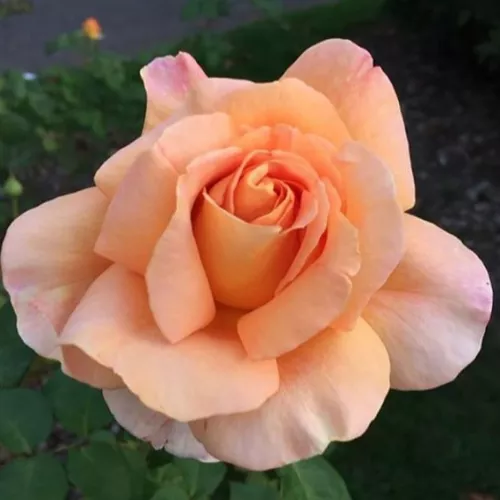
Semi-double, goblet to cup-shaped blooms with roughly 13–25 petals, borne mainly singly on stems. Medium flower size around 1.5–2.75 inches, with good repeat, producing abundant second flushes when properly fed and deadheaded. |
| Colour and phenology |
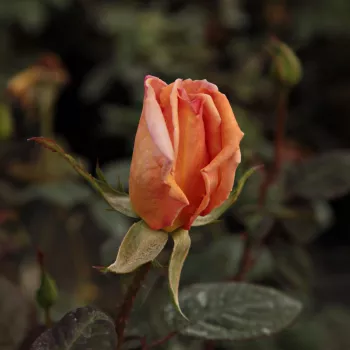
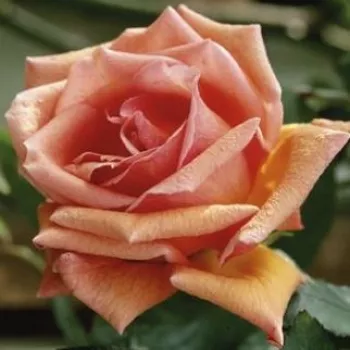
Warm peach-pink with a soft orange tone and silky sheen. Buds open deep peach-orange, then soften to pastel cream-tinged peach with a rosy veil as they age. Colour retention is moderate, with petals gradually lightening in full sun. |
| Fragrance and aroma |
Medium-strength, clearly noticeable fragrance with a softly sweet, fruity character. Scent is evident both in the garden and when stems are cut for indoor arrangements, adding sensory value without being overpowering in smaller spaces. |
| Rose hip characteristics |
Produces a moderate number of ovoid hips, about 13–17 mm in diameter. The hips ripen to a red-orange shade close to RHS 40A and can add a discreet late-season decorative element if spent flowers are left uncut on the plant. |
| Resistance and hardiness |
Rated hardy to approximately -21 to -18 °C (RHS H7, USDA zone 6b, Swedish zone 3). Generally resistant to powdery mildew and black spot, with medium sensitivity to rust, so occasional checks and timely treatment are recommended. |
| Horticultural recommendations |
Best in a sunny position with improved drainage, whether in beds, borders or 40–50 litre containers. Recommended spacing 45–90 cm depending on use, with 3.3–3.8 plants/m² for mass planting, plus regular feeding and deadheading for best repeat. |
Apricot Silk offers reliable repeat flowering, good garden health and long-term own-root resilience in an easy-to-manage hybrid tea form, making it a reassuring choice if You want a beautiful rose that simply fits into Your garden plans.