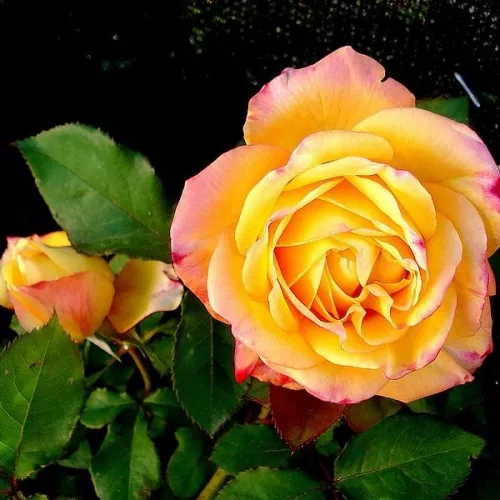
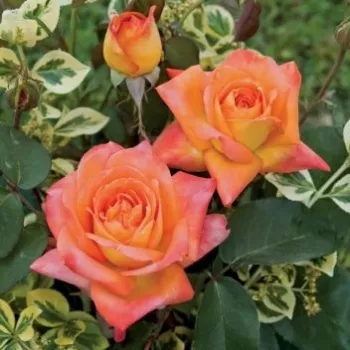
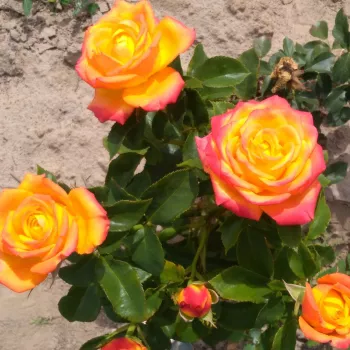
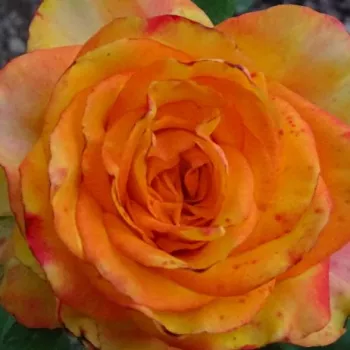
Bargira® Le Toscane – yellow‑pink hybrid tea rose
If You are looking for a rose that is both elegant and reliable, Bargira® Le Toscane is a refined hybrid tea that fits beautifully into Irish family gardens. Its high‑centred, cut‑rose style blooms open in shades of golden yellow, cream and raspberry‑pink, creating a romantic focal point in borders and front gardens. The flowers repeat steadily through the season, giving a long window of colour even in a humid climate where fungal diseases can be a concern. As an own‑root plant in the pharmaROSA® ORIGINAL 2‑litre range, it settles in gradually and builds a naturally balanced bush that matures year by year. In the first year it focuses on roots, in the second on healthy shoots, and by the third year it reaches its full ornamental value, rewarding Your initial patience with a long‑lived, investment-grade feature rose for beds, paths and patio containers.
Use cases
| Target area |
Reason |
| Front garden feature by the entrance |
Upright, well‑branched growth and showy hybrid tea blooms make a single plant or small group an eye‑catching welcome near Your front door, especially where You want a tidy, formal look without needing complicated pruning for beginners |
| Border or edging in a family garden |
With a 75–105 cm height and 50–70 cm spread, Bargira® forms a defined line along paths or lawn edges, giving clear structure and colourful flowers at eye level for children and adults who enjoy an orderly yet soft garden frame for homeowners |
| Small rose group as a specimen bed |
Planting 3–5 bushes at the recommended spacing creates a compact, elegant rose bed; the uniform habit and repeat flowering provide a neat, reliable display that quietly improves each season, suiting those who value gradual, visible progress for planners |
| Cutting patch for home bouquets |
The high‑centred, long‑stemmed blooms are ideal for cutting, letting You bring the Italian “Girandola” colour play indoors; regular cutting also encourages fresh flushes of flowers, perfect for people who like decorating the house from their own garden for stylists |
| Sunny patio container near seating |
In a 40–50 litre or larger container with good drainage, Bargira® performs as a compact patio rose; its dense, glossy foliage and bright flowers give a refined backdrop to outdoor dining areas, suiting busy urban gardeners who prefer contained, manageable plantings for balconies |
| Coastal or exposed but sheltered microclimates |
Once established on its own roots, Bargira® forms a sturdy framework that copes well where wind and wet weather put pressure on stems, especially in Irish gardens where frequent rain and fungal humidity test ornamental shrubs for coastlines |
| Mixed bed with perennials and grasses |
The bright yellow‑pink flowers and dark, glossy leaves contrast beautifully with softer companions such as African lily, St John’s wort and ornamental grasses, giving a long‑season focal point that anchors looser, naturalistic plantings for designers |
| Long‑term focal point in a dedicated rose bed |
As an own‑root, winter‑hardy hybrid tea, Bargira® develops into a stable, long‑lived bush that can be renovated by pruning if needed, making it a good choice where You want a decades‑long feature rose that rewards consistent basic care for enthusiasts |
Decorating ideas
- Formal Entrance Trio – Plant three Bargira® in a gentle arc by the front path, underplanted with low lavender for contrast; ideal for homeowners who like a classic, welcoming doorway.
- Cottage Strip Border – Combine Bargira® with St John’s wort and white obedient plant along a sunny fence for a soft, romantic edge; suited to rural cottage‑garden fans.
- Patio Statement Pot – Grow a single Bargira® in a 40–50 litre terracotta container with trailing thyme at the base; perfect for busy urban gardeners wanting instant elegance near seating.
- Cutting Corner – Dedicate a small bed of 3–5 Bargira® with Agapanthus behind for height, giving a steady supply of long‑stemmed blooms; great for people who love arranging their own bouquets.
- Mixed Texture Island – Place Bargira® at the centre of a lawn island, surrounded by ornamental grasses and low perennials for year‑round texture; ideal for those seeking a low‑clutter but stylish focal point.
Technical cultivar profile
| Parameter |
Data |
| Name and registration |
Hybrid tea rose from the Le Toscane collection. Registered cultivar name BARgira, marketed as Bargira® Le Toscane BARgira. Commercial type and group: hybrid tea rose suitable for garden and cutting. |
| Origin and breeding |
Bred by Enrico Barni in Pistoia, Italy, around 2014. Introduced by Roses Barni in the 2019/2020 catalogue. Parentage is not recorded, but selection focuses on exhibition form and garden performance. |
| Awards and recognitions |
Recipient of the Audience Award at Alterarosa, Avignon, in 2020, indicating strong public appeal for its flower form and colour play among contemporary hybrid tea introductions. |
| Growth and structure |
Upright, bushy habit, 75–105 cm high with 50–70 cm spread. Dense, glossy dark green foliage on barely thorny stems. Forms a compact, well‑filled bush suitable for borders, hedging and specimen planting. |
| Flower morphology |
Large, double, high‑centred hybrid tea blooms with 26–39 petals. Flowers are mostly solitary on stems, ideal for cutting. Buds are pointed and elegant, opening slowly to classic exhibition‑type flowers. |
| Colour and phenology |
Bright yellow flowers with pink‑edged transitions. Golden yellow centres fade to butter‑yellow cream, while pink edges soften as blooms mature. Colour retention is good, and the variety remontantly repeats with a strong second flush. |
| Fragrance and aroma |
No noticeable fragrance; considered unscented. Mainly valued for its visual effect rather than scent, making it suitable where colour and flower form are the primary design considerations rather than perfume. |
| Rose hip characteristics |
Rose hip formation is limited due to the double flowers. Occasionally forms small, ovoid, orange‑red hips about 10–14 mm, which may add a discreet decorative touch late in the season. |
| Resistance and hardiness |
Winter hardy to about −23 to −21 °C (RHS H7, USDA 6a, Swedish zone 3). Requires regular plant protection, being moderately susceptible to powdery mildew and black spot and very susceptible to rust in humid conditions. |
| Horticultural recommendations |
Best in full sun with fertile, well‑drained soil. Needs consistent watering in dry spells and a fungicide programme in humid areas. Recommended spacing 50–60 cm in mass plantings, 90 cm as a specimen; also suitable for large containers. |
Bargira® Le Toscane offers elegant cut‑rose blooms, compact structure and long‑term, own‑root reliability for Irish gardens, giving You a colourful, investment‑grade feature rose with manageable care if You wish to add a refined highlight.