BELLE DE CRÉCY – mauve-lilac historic Gallica rose - Roëser
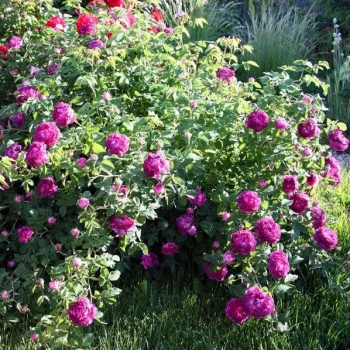
If You are dreaming of a romantic historic shrub for a small Irish garden, Belle de Crécy rewards You with mauve-lilac blooms, a luxurious old-rose scent and a naturally compact bush that fits neatly into borders and front gardens. This gallica classic flowers once with a rich wave of colour, perfect for a summer highlight that feels like a cottage garden in full storybook charm, even where soils are heavy and wet after Atlantic weather. Its gently arching, sparsely thorned stems and softly grey-green foliage give lasting structure, pairing beautifully with perennials and ornamental grasses in low-maintenance mixed plantings. As an own-root shrub in the pharmaROSA® ORIGINAL 2‑litre pot, it is already well established: year one concentrates on roots, year two on leafy growth, and by year three You can enjoy its full ornamental value settling reliably into Your long-term garden picture.
Use cases
| Target area |
Reason |
| Front garden focal shrub |
Belle de Crécy’s once‑a‑year flowering creates a memorable summer highlight at the entrance to Your home, with rich, old-fashioned blooms that give strong visual impact even in a single plant, ideal for homeowners seeking simplicity |
| Small mixed flowerbed near the house |
Its compact, upright habit slots easily into modest beds beside windows or paths, leaving space for herbaceous partners while still offering a premium historic rose presence, well suited to busy urban gardeners seeking character |
| Romantic cottage-style border |
The mauve-lilac, colour-shifting flowers and grey-green foliage echo traditional country gardens and combine beautifully with lupins and coneflowers for a soft, nostalgic look, appealing to rural cottage owners who appreciate atmosphere |
| Low-hedge line along a path or driveway |
Planted at 90–100 cm spacing, its suckering, upright growth can form a loose, flowering hedge that gently frames paths or driveways, suiting gardeners who value a defined garden structure with charm |
| Specimen rose for historic collections |
As a classic French gallica from 1829, it works well as a standalone specimen in a lawn or rose collection, where its once‑off, richly scented display can be fully appreciated by enthusiasts who enjoy heritage |
| Feature in clay-based beds with improved drainage |
Once established on its own roots, the shrub copes reliably with Irish conditions shaped by frequent rain and heavier soils, provided basic drainage is ensured, reassuring gardeners in wetter regions who appreciate resilience |
| Partially shaded side garden |
Its tolerance of partial shade allows planting where sun is reduced for part of the day, such as side passages or north-east corners, making it a good choice for compact plots where space and light are shared by neighbours |
| Large patio container planting (40–50 litre minimum) |
In a generous container, its modest height and arching stems provide a refined historic accent for paved areas, best in a 40–50 litre pot with regular watering and feeding, ideal for balcony or terrace owners wanting elegance |
Decorating ideas
- Cottage Classic – Combine Belle de Crécy with Lupinus ‘Gallery Pink’ and loose grasses for a soft cottage border – perfect for rural homes seeking traditional romance
- Front-Door Welcome – Position one shrub by the path with lavender or rosemary edging to give visitors a fragrant, historic welcome – ideal for small urban front gardens
- Evening Scent Nook – Plant near a bench with white hydrangeas and silvery foliage perennials to enjoy the strong fragrance on summer evenings – suited to relaxation-focused homeowners
- Historic Feature Bed – Create a small oval bed with Belle de Crécy in the centre, underplanted with low catmint and soft pink annuals – attractive for enthusiasts of old garden roses
- Textured Summer Drift – Mix Belle de Crécy with Echinacea ‘Delicious Nougat’ and Panicum ‘Sangria’ for a layered, textural look – great for design-conscious gardeners wanting gentle movement
Technical cultivar profile
| Parameter |
Data |
| Name and registration |
Trade name Belle de Crécy, historic gallica shrub rose from the Historic rose collection; ARS exhibition name Belle de Crecy; unregistered variety, authenticity verified for pharmarosa.ie. |
| Origin and breeding |
Historic French cultivar bred by Pierre Jean Louis Roëser; breeding year listed as 1836, introduced around 1829; parentage unknown, typical of early gallica heritage roses. |
| Growth and structure |
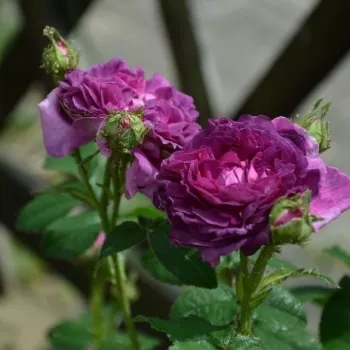
Medium shrub 75–125 cm in height and spread, upright with slightly arching, suckering growth; moderately dense, matte grey-green foliage and relatively sparse prickles along the stems. |
| Flower morphology |
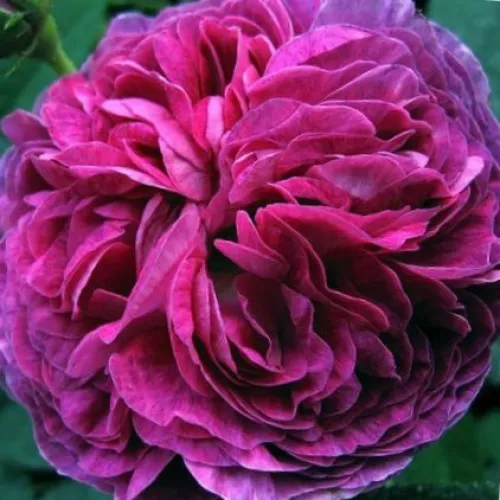
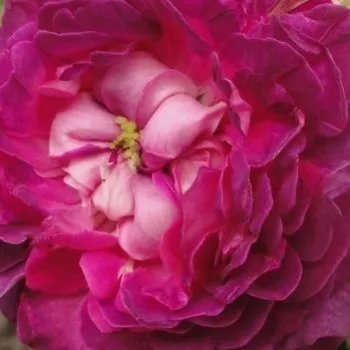
Medium-sized, very double, rosette-shaped flowers with over 40 petals, produced mainly in corymbose clusters; a classic old-rose form that blooms once per season in a concentrated flush. |
| Colour and phenology |
Buds open deep crimson-pink, passing through vivid pink-purple to mauve-lilac tones with silvery reverse; colour eventually softens to greyish mauve, giving multitone effects over the flowering period. |
| Fragrance and aroma |
Strong, long-lasting fragrance with a full old-rose character; classic perfume-style scent noticeable at a short distance, especially effective when several blooms open together in early summer. |
| Rose hip characteristics |
Due to very double flowers, hips are few; where formed, small spherical orange-red hips 11–18 mm across, offering modest late-season interest but not a primary ornamental feature. |
| Resistance and hardiness |
Extremely hardy to about −32 to −29 °C (USDA 4b, RHS H7); disease resistance weak, with sensitivity to rust and moderate issues with black spot and mildew, so regular protective care is advisable. |
| Horticultural recommendations |
Best in well-prepared soil with good drainage; water in dry spells and feed annually. Suits flowerbeds, hedges, parks and specimen use; tolerates partial shade and benefits from deadheading and occasional thinning. |
BELLE DE CRÉCY offers richly scented historic blooms, a compact shrub form and reliable long-term performance from its own-root strength, making it a thoughtful choice if You would like a romantic, enduring rose for Your garden.