Cardinal Hume – lilac‑purple park rose – Harkness
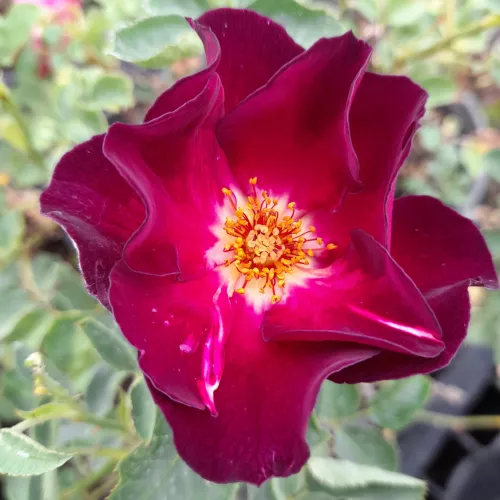
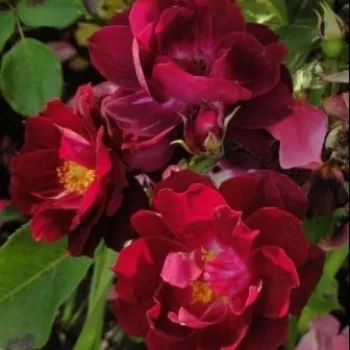
If You love a richly coloured shrub that works hard with little fuss, Cardinal Hume is for You: a bushy, slightly spreading park rose that flowers repeatedly in velvety purple clusters and copes well with Ireland’s rain and heavier soil where drainage is improved. Its medium, cup‑shaped blooms age through romantic smoky tones, bringing character to front gardens and cottage borders without demanding expert care. On its own roots it builds a naturally balanced shrub that regenerates steadily and lives long, giving You a reliable, low‑effort hedge or specimen. Good disease resistance and partial‑shade tolerance keep maintenance simple, while its muscat‑like fragrance adds evening charm near paths and patios. In year one it concentrates on roots, year two on bushy growth, and by year three it reveals its full ornamental beauty in Your garden.
Use cases
| Target area |
Reason |
| Front garden feature shrub |
Forms a dense, bushy, slightly spreading shrub with glossy dark foliage and clusters of medium blooms, giving strong structure and colour close to the house with little shaping needed for the time-poor homeowner |
| Low‑maintenance ornamental bed near the house |
Good disease resistance and moderate self‑cleaning mean fewer spraying and deadheading rounds, so beds stay presentable on busy weeks when You only have time for light tidy‑ups, ideal for the relaxed beginner |
| Informal flowering hedge along a boundary |
At 80–130 cm high and up to 200 cm spread, it knits into a flowering, slightly defensive hedge at the recommended spacings, giving privacy and colour with simple annual pruning for the practical garden‑planning family |
| Part‑shaded side garden or north‑east aspect |
Performs reliably in partial shade, so You can bring rich lilac‑purple flowers and scent into side passages or corners that only get sun for part of the day, reassuring the space‑conscious urban gardener |
| Small group planting (1–3 shrubs) in mixed border |
Own‑root growth lets each shrub adapt to its exact spot, creating a long‑lived, balanced group that weaves naturally among perennials and grasses, suiting the patient, long‑term‑thinking planner |
| Flower bed in wet, heavier Irish soils |
Once established in a well‑prepared bed with improved drainage, it copes well with our damp conditions and typical heavier ground, offering dependable flowering without elaborate soil works for the practical Irish gardener |
| Large patio container or cottage‑style courtyard |
Works well in a substantial 40–50 litre container, where its repeat flowering and rich colour dress a doorway or terrace; own‑root resilience supports long service life in pots for the style‑conscious patio owner |
| Season‑spanning colour anchor in family garden |
Remontant flowering with an abundant second flush gives colour from early summer well into autumn, so even a single shrub keeps the garden lively across the school holidays for the busy, time‑poor parent |
Decorating ideas
- Cottage Corner – Plant 2–3 shrubs with lavender and catmint for a soft, rural look around a seating area – suited to lovers of relaxed cottage gardens
- Front‑Door Welcome – Grow one shrub in a 40–50 litre pot with trailing thyme at the rim to frame your entrance – ideal for small urban front gardens
- Twining Companions – Combine in a mixed border with Clematis ‘Fairy Slippers’ and airy grasses to let mauve tones mingle vertically – perfect for creative hobby gardeners
- Evening Path – Line a short path with a loose hedge and underplant with white flowering perennials to catch the eye at dusk – great for those who enjoy after‑work garden strolls
- Colour Anchor – Use as a central shrub among pale hydrangeas and soft pink roses to give depth and season‑long focus – best for gardeners planning long‑term structure
Technical cultivar profile
| Property |
Data |
| Name and registration |
Cardinal Hume – shrub rose for beds and parks. Registered as HARregale, with American Rose Society exhibition name Cardinal Hume, in the Park – shrub rose commercial group. |
| Origin and breeding |
Bred by Jack Harkness, R. Harkness & Co. Ltd., United Kingdom. Complex parentage including Rosa californica and cultivars ‘Orange Sensation’, ‘Allgold’ and ‘Frank Naylor’. Introduced and registered in 1984. |
| Awards and recognitions |
Holds an RNRS Certificate of Merit (1984), reflecting proven garden performance and ornamental value under trial conditions, supporting its use as a reliable shrub rose in family gardens and public plantings. |
| Growth and structure |
Bushy, slightly spreading shrub, about 80–130 cm high and 120–200 cm wide. Dense, dark green, slightly glossy foliage with moderate prickles. Suited to hedges, groups, or as a flowering specimen. |
| Flower morphology |
Double, cup‑shaped, medium‑sized blooms (1.5–2.75 in), carried in clusters. Petal count 26–39, providing a full, romantic appearance. Remontant, with a notably abundant second flush later in the season. |
| Colour and phenology |
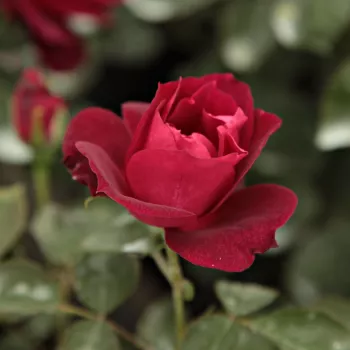
Buds open rich reddish crimson, becoming dark mauve‑purple with smoky tones, then fading toward dull purplish brown with silvery lilac highlights. Colour remains deeper in cool weather, fading faster in warmth. |
| Fragrance and aroma |
Medium strength, clearly noticeable scent with a soft, muscat‑like character. Best appreciated near paths, seats or entrances where air movement and proximity allow You to enjoy the fragrance regularly. |
| Rose hip characteristics |
Occasional small, spherical, scarlet hips, around 8–13 mm in diameter. Not a heavy fruiting variety, but hips can add a modest decorative touch in late season if spent flowers are left untrimmed. |
| Resistance and hardiness |
Good resistance to powdery mildew, black spot and rust. Hardy to about −21 to −18 °C (RHS H7, USDA 6b, Swedish zone 3). Moderate heat and drought tolerance; water during extended dry spells. |
| Horticultural recommendations |
Ideal for beds, hedges, specimens and urban green spaces. Plant at 130–210 cm spacing, 0.5–0.6 plants/m² for massing. Tolerates partial shade. Keep moisture steady and soil well drained for best performance. |
Cardinal Hume offers richly coloured repeat flowering, good disease resistance and long‑lived own‑root reliability, making it an easy, rewarding choice if You would like a dependable shrub rose in your garden.