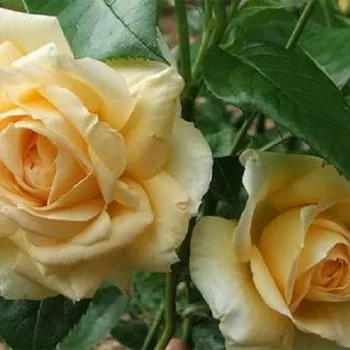
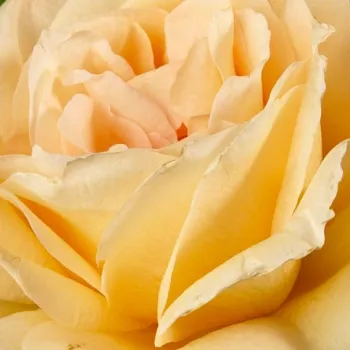
CASANOVA – pale yellow hybrid tea rose - McGredy
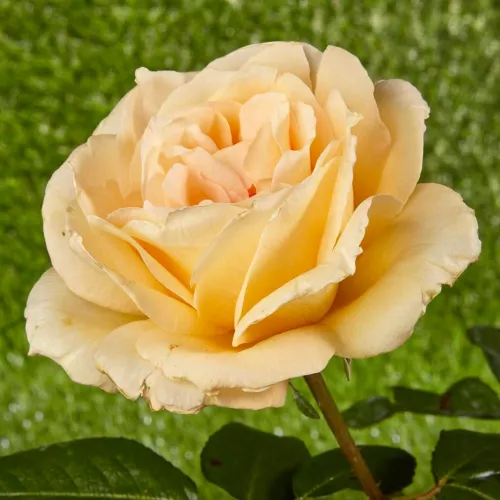
If You would like a reliable, romantic rose without complicated gardening, CASANOVA offers a gently scented, elegantly shaped bloom on an upright, easy-care bush that will fit perfectly into an average Irish family garden. Its hybrid-tea, high-centred flowers open in a soft, pale lemon shade ideal for front gardens, while its good disease resistance makes everyday care pleasantly simple. This own-root plant is bred for a long garden life, naturally regenerating from the base so its decorative value stays stable over the years, even in typical Irish humidity and frequent showers. Given adequate watering and feeding, it establishes with little fuss and rewards You with reliable rebloom, offering a welcoming, neat look by paths, drives and cottage-style beds. CASANOVA prefers sunny positions sheltered from strong, drying winds, and works beautifully as a specimen or in small groups of 1–5 plants, delivering cuttable stems for the house. In year one it focuses on roots, in year two it builds strong shoots, and from year three You can enjoy its full ornamental effect with a calm, classic presence.
Use cases
| Target area |
Reason |
| Front garden focal point near the entrance |
Upright, hybrid-tea habit and high-centred blooms create a classic, tidy focal point beside a path or doorway, giving a welcoming look that stays well proportioned for smaller Irish front gardens, suiting the expectations of the house-proud gardener |
| Small cottage-style rose group (1–3 plants) |
Planted in a tight group, the pastel pale-yellow colour knits naturally into cottage-style planting with perennials and herbs, while its reliable rebloom keeps the bed flowering through summer for the romantic traditionalist |
| Low-maintenance family flower bed by the patio |
Good resistance to major rose diseases means less spraying and fewer interventions, so You can keep a family seating area attractive with straightforward pruning and feeding, ideal for the busy homeowner |
| Cutting patch for home bouquets |
Long, straight stems with pointed, exhibition-type buds are excellent for cutting; the medium, sweet fragrance and elegant form bring that florist-style look indoors for the home bouquet enthusiast |
| Single specimen in lawn or gravel |
Used as a solitary accent at 75 cm spacing, Casanova’s upright, sparingly thorned canes and pale blooms create a calm, sculptural effect that is easy to mow or weed around, suiting the minimal-care designer |
| Mixed border with herbs and low groundcovers |
The soft lemon-cream flowers combine beautifully with thyme, parsley or small-leaved euonymus, while its own-root longevity supports a planting that matures gracefully for the patient garden planner |
| Sunny, sheltered coastal front garden |
Performs well where the climate is softened by Atlantic influence and regular rain, coping reliably with moisture and typical Irish fungal pressure when given reasonable drainage, reassuring the climate-conscious gardener |
| Large container on terrace or balcony (40–50 litres) |
In a generous 40–50 litre pot with quality compost and steady watering, its manageable height and repeat-flowering habit give long-season colour close to the house, perfect for the space-saving urbanite |
Decorating ideas
- Cottage Welcome Trio – Plant 3 Casanova in a curved bed with creeping thyme and parsley by the front gate for a soft, kitchen-garden feel – ideal for lovers of informal, lived-in cottage entrances
- Lemon-Cream Accent – Use a single Casanova rising from pale gravel, framed by low euonymus, to create a calm, modern focal point – perfect for neat, low-upkeep front gardens
- Patio Scent Corner – In a 40–50 litre container, pair Casanova with trailing thyme and a small lavender for gentle fragrance around outdoor seating – suited to compact terraces and balconies
- Classic Cut-Flower Row – Line a sunny border with evenly spaced Casanova plants to supply elegant buds for vases all summer – great for home florists who like orderly, productive beds
- Soft Pastel Mix – Combine Casanova with white hydrangeas and blue catmint in a mixed border for a cool, romantic palette – appealing to gardeners who love harmonious, easygoing colour schemes
Technical cultivar profile
| Property |
Data |
| Name and registration |
Hybrid tea rose marketed as Casanova – pale yellow hybrid tea rose – McGredy; ARS exhibition name Casanova; unregistered cultivar, verified authenticity for pharmaROSA ORIGINAL own-root production. |
| Origin and breeding |
Bred by Samuel Darragh McGredy IV in England in 1957, introduced 1964 in the United Kingdom; a hybrid tea from cross Queen Elizabeth × Perfecta, distributed originally by Fisons Horticulture Ltd. |
| Awards and recognitions |
Received a Geneva Certificate of Merit at the 1963 Geneva Rose Trials, reflecting its ornamental value and garden performance in independent European rose evaluations. |
| Growth and structure |
Upright, bushy hybrid tea reaching about 100–140 cm in height and 55–85 cm spread; sparsely thorned shoots, medium-density light green foliage; faded blooms persist and benefit from regular deadheading. |
| Flower morphology |
Large, double flowers with approximately 26–39 petals; solitary, high-centred, pointed buds in classic cut-rose style; repeat-flowering with a notably generous second flush in suitable conditions. |
| Colour and phenology |
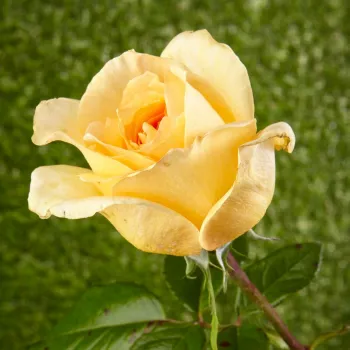
Warm straw-yellow buds opening to pastel creamy-yellow, full bloom pale lemon-cream with paler outer petals; colour may fade towards cream-white in strong sun; overall a soft, uniform pastel effect. |
| Fragrance and aroma |
Medium-strength, clearly sweet fragrance typical of classic garden hybrid teas; noticeable at close range on still days, adding value for cutting and for positioning near paths, doors or seating areas. |
| Rose hip characteristics |
Double flower form limits hip set; where pollinated it can produce occasional small, ovoid orange-red hips about 10–14 mm in diameter, usually of minor ornamental impact in normal garden use. |
| Resistance and hardiness |
Classed as resistant to powdery mildew, black spot and rust when grown with basic care; hardy to approximately −21 to −18 °C, comparable to RHS H7, USDA zone 6b and Swedish zone 3 conditions. |
| Horticultural recommendations |
Best in sunny sites with well-drained soil and regular moisture; dislikes prolonged drought or extreme heat. Space 40–75 cm depending on use, allow 4–4.6 plants/m² for mass planting or hedging. |
CASANOVA offers pastel pale-yellow hybrid tea blooms, good disease resistance and dependable rebloom on a long-lived own-root bush that settles into your garden with minimal fuss, making it a reassuring choice if You are considering a new rose.