DUC DE CAMBRIDGE – purple historic Damask rose - Laffay
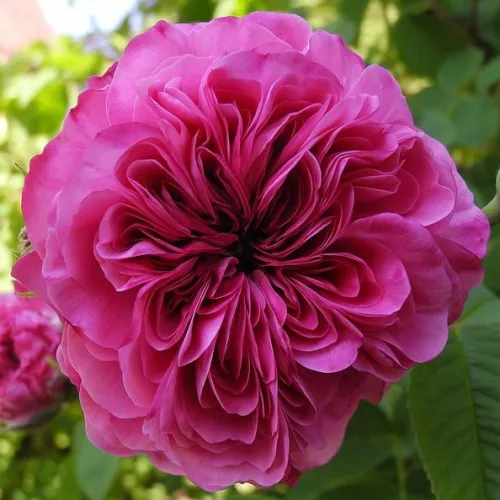
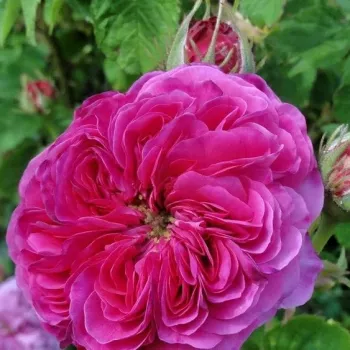
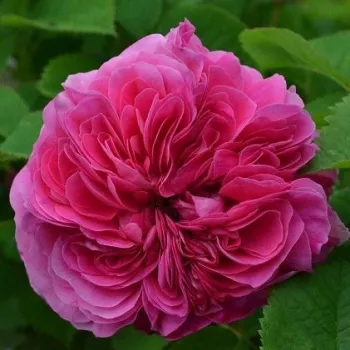
This richly scented historic rose has been grown in gardens since 1840, bringing a sense of romantic heritage charm to smaller Irish front gardens and cottage-style beds. As a tall, bushy Damask shrub, it forms an impressive vertical structure with dense, olive-green foliage that makes a soft backdrop for perennials or low hedging. In early summer it produces a generous flush of very full, rosette blooms in a deep crimson-lilac colour that softens to silvery mauve-lilac as they age, creating a painterly play of tones on each branch. The flowers carry a very strong, garden-filling Damask fragrance that You will notice each time You step outside or open a window. Own-root cultivation means the bush gradually builds a stable lifespan, renewing from its own base rather than a graft, so it copes calmly with pruning mistakes and years of use. During the first year it concentrates on roots, in the second on strong shoots, and by the third year it settles into full ornamental value as a mature shrub. It is well suited to Irish conditions where persistent rain and heavy clay need thoughtful drainage, rewarding simple, regular care with long-lived, reliable beauty around Your home.
Use cases
| Target area | Reason |
|---|
| Front garden focal shrub |
Duc de Cambridge’s tall, bushy habit and dense foliage give an immediate sense of structure at the front of the house, forming a graceful, upright anchor beside a gate, bay window or path turn, well suited to homeowners |
| Small scented garden near seating |
The very strong Damask fragrance easily fills a small seating area or patio, so a single shrub placed near a bench or terrace door delivers a luxurious perfume experience with minimal effort for beginners |
| Cottage-style mixed border |
Once-flowering, very full rosette blooms combine beautifully with relaxed perennials; underplant with lavender, catmint or glaucous sedge to echo its historic charm in informal, romantic borders for cottage-garden |
| Informal flowering hedge |
Planted at hedge spacing, its bushy growth, medium care needs and moderate disease resistance form a loose, seasonal flowering screen that offers privacy and character without demanding intensive upkeep from busy |
| Specimen rose in lawn or gravel |
As a solitary specimen, its historic stature and shifting crimson-lilac colours draw the eye from early summer onwards, bringing classic rose character even to simple lawns or gravel areas, ideal for collectors |
| Historic rose collection bed |
Introduced in 1840 and bred by Jean Laffay, this Damask shrub fits naturally into themed historic or heritage rose plantings where period authenticity and long-term continuity matter to enthusiasts |
| Part-shaded side garden |
Its tolerance of partial shade lets You use it where sun is limited for part of the day, such as side passages or north-west aspects, still giving an early-summer flush of bloom for urban |
| Clay-soil family garden bed |
In typical Irish gardens with heavier soils, it establishes well if You ensure good drainage around the planting hole, then rewards straightforward seasonal care with years of stable growth for families |
Decorating ideas
- COTTAGE GATEWAY – Plant Duc de Cambridge either side of a front gate with aubrieta spilling over low stone or brick, creating a welcoming, old-world entrance – for lovers of traditional cottage style
- PERFUMED PATIO CORNER – Use one shrub in a 40–50 litre container with soft grasses like Carex flacca ‘Blue Zinger’ at the base to enjoy intense scent on a small terrace – for balcony and patio gardeners
- ROMANTIC MIXED BORDER – Combine its tall purple-lilac rosettes with pale foxgloves, catmint and hydrangeas for layered summer interest and height – for those refreshing an existing border
- HISTORIC FEATURE BED – Place it as the centrepiece of a circular bed edged with lavender and thyme, highlighting its 1840 heritage in a simple, easy-care layout – for history-minded rose fans
- SOFT SCREEN HEDGE – Create a loose, flowering boundary by repeating plants at hedge spacing, underplanted with Artemisia ‘Oriental Limelight’ for foliage contrast – for families wanting privacy with character
Technical cultivar profile
| Feature | Data |
|---|
| Name and registration |
Duc de Cambridge is a historical Damask shrub rose from the Historic rose collection; trade name Duc de Cambridge Historic rose Laffay, unregistered but verified for cultivar authenticity. |
| Origin and breeding |
Bred in France by Jean Laffay and introduced around 1840, this old garden rose has unknown parentage and is offered today as an own-root, nursery-propagated historic cultivar. |
| Growth and structure |
Tall, bushy shrub 200–300 cm high and 140–220 cm wide with dense, matte olive-green foliage and numerous prickles; forms a substantial, upright presence suitable for hedging or specimen use. |
| Flower morphology |
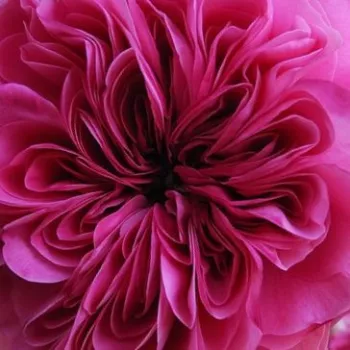
Medium-sized, very full rosette blooms with more than 40 petals, borne mostly singly; once-flowering in early season, fading moderately and self-cleaning as many petals fall and some hips develop. |
| Colour and phenology |
Deep, cool-toned crimson-lilac flowers; buds dark crimson red, opening to rich purple with brighter lilac-pink inner petals, then fading to mauve-lilac with a silvery sheen, colour lightening slightly in strong sun. |
| Fragrance and aroma |
Very strong, garden-filling classic Damask fragrance, ideal for scented gardens and seating areas; intensity is typically highest in the main early-summer flowering period under cool, still conditions. |
| Rose hip characteristics |
Produces hips only occasionally due to very double flowers; where formed, they are pear-shaped, red–orange and around 16–24 mm, adding a modest ornamental accent in late season. |
| Resistance and hardiness |
Hardy to about –32 to –29 °C (RHS H7, Swedish zone 5, USDA 4b) with moderate resistance to powdery mildew, black spot and rust; appreciates good air flow and regular hygiene in damp climates. |
| Horticultural recommendations |
Suitable for parks, specimen planting, scented gardens and informal hedges; prefers sun to partial shade, spacing 105–190 cm; choose a minimum 40–50 litre container for long-term pot culture. |
Duc de Cambridge offers a tall, bushy historic presence with powerful fragrance and enduring colour, and as an own-root shrub it settles into a long-lived, reliable feature in your garden, so you may choose it with confidence.