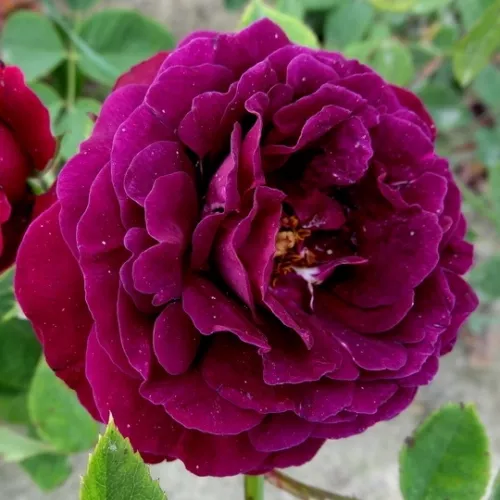
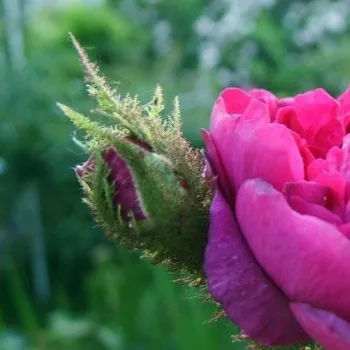
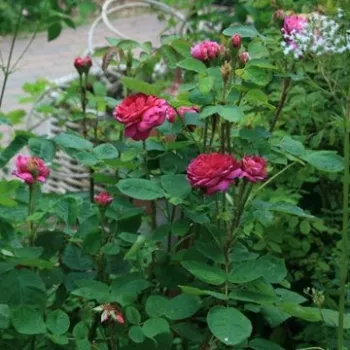
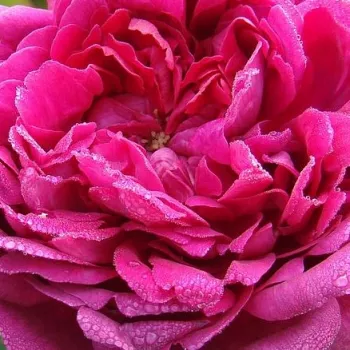
EUGÉNIE GUINOISSEAU – crimson-red historic moss rose
If You dream of a romantic cottage-style rose that simply settles in and performs without fuss, EUGÉNIE GUINOISSEAU is a characterful historic moss rose that brings richly scented blooms and nostalgic charm to Irish family gardens. Its tall, upright structure makes it ideal for the back of a border or along a boundary, where the dense, dark foliage sets off the changing crimson and lavender colour of its very double flowers. Once planted, this own-root shrub gradually builds a long-lived, resilient bush that copes well with our damp air and frequent showers, even when fungal pressure is higher near the coast. Over its first few seasons it forms a sturdy framework and deep root system, rewarding You with season-spanning flowering and a sense of calm, steady progress in the garden. Think of it as a patient, living heirloom: in year one it focuses on roots, year two on new shoots, and by year three it reveals its full ornamental value.
Use cases
| Target area |
Reason |
| Back-of-border anchor in a family flower bed |
The tall, upright habit and dense foliage give reliable height and structure without needing complex pruning, creating a soft, traditional backdrop that works well in average-sized Irish gardens for the busy homeowner. |
| Fragrant seating-area rose near a patio or terrace |
Large, very double, raspberry-crimson flowers with a powerful sweet, berry-like scent make this an excellent choice beside seating, where You can enjoy the perfume on summer evenings even if You are not an experienced gardener yourself. |
| Small mixed hedge or boundary line |
Planted at hedge spacing, its vigorous growth, dense leaf cover and thorny stems knit into an informal, seasonally flowering barrier that adds privacy and classic charm while still remaining manageable for a typical garden owner. |
| Romantic cottage-style front garden |
Historic moss character and richly changing flower colours bring instant period feel to gateways and front paths, fitting beautifully with Irish cottage inspiration and offering a satisfying result without complicated design skills for the casual gardener. |
| Feature shrub among late-summer perennials |
Clustered blooms and season-spanning repeat flowering harmonise with asters, coreopsis and other border plants, so one shrub can hold its own as a focal point while the planting around it matures, suiting patient but time-pressed gardeners. |
| Long-term “heirloom” rose for established gardens |
As an own-root, historical shrub from 1864, it forms its own framework and can regenerate from the base over the years, giving stable shape and ornamental value that rewards those who want lasting plantings rather than quick effects. |
| Clay-based, moisture-retentive garden beds |
Its hardy, moderately disease-tolerant nature copes well with typical Irish moisture levels and the kind of damp spells that increase fungal problems, provided drainage is reasonable and care is consistent for the average beginner. |
| Specimen rose in a large container by the front door |
When planted in a 40–50 litre pot with good drainage, its upright form and repeat-flowering character deliver traditional rose beauty to porches or balconies, while own-root resilience offers peace of mind to the occasional gardener. |
Decorating ideas
- Cottage Backdrop – Plant EUGÉNIE GUINOISSEAU behind lavender and catmint for a layered, scented border that frames lawns and play areas – ideal for families wanting romance without intensive maintenance.
- Front-Garden Welcome – Place one shrub on each side of the path, underplanted with low geraniums, to create a soft, historic entrance – perfect for small urban front gardens that need character quickly.
- Period Patio Corner – Grow it in a large 40–50 litre clay pot with thyme and trailing lobelia around the rim to enjoy colour and perfume beside your chairs – good for busy people who mostly garden at weekends.
- Soft Boundary Hedge – Combine several plants in a loose row with threadleaf coreopsis and dwarf asters weaving through for a gentle, wildlife-friendly property edge – suited to rural cottage and country-lane settings.
- Summer Feature Bed – Use a single specimen at the centre of a circular bed, edged with low box or heuchera, to give a simple but striking focal point – helpful for beginners wanting one clear, reliable highlight.
Technical cultivar profile
| Property |
Data |
| Name and registration |
Heritage moss rose marketed as EUGÉNIE GUINOISSEAU – a historical, unregistered cultivar from the Guinoisseau-Flon line, offered here as an own-root, authentic pharmaROSA ORIGINAL plant. |
| Origin and breeding |
French historical moss rose bred by Bertrand Guinoisseau-Flon and introduced around 1864; exact parentage and initial distributor are unknown, as is formal registration data. |
| Awards and recognitions |
No specific show medals or formal competitions are recorded, but it enjoys ongoing appreciation among heritage rose collectors for its distinctive moss character and richly coloured, scented flowers. |
| Growth and structure |
Upright shrub reaching about 150–220 cm in height with a 90–150 cm spread; can form a substantial, bushy framework with dense, glossy dark green foliage and characteristic heavy prickling on stems. |
| Flower morphology |
Large, cup-shaped clusters of very double blooms with more than 40 petals per flower; classified as a remontant moss rose, with an initial main flush followed by a lighter, secondary flowering period. |
| Colour and phenology |
Buds open vivid cherry to raspberry red, deepen to crimson with purplish tones, then gradually fade through lavender-lilac to a silvery veil, giving a continuously changing colour display through the season. |
| Fragrance and aroma |
Strongly scented variety with a powerful, sweet, berry-like perfume typical of old roses; best appreciated near paths, doors or seating where the rich fragrance can be enjoyed at close quarters. |
| Rose hip characteristics |
Rose hips form only sparsely due to the very double blooms; where present they are small, red, ellipsoid hips approximately 11–17 mm in diameter, adding a discreet touch of late-season interest. |
| Resistance and hardiness |
Hardy to about -21 to -18 °C (H7, USDA 6b); overall disease resistance moderate, with good black spot resistance but some susceptibility to powdery mildew and rust in less favourable conditions. |
| Horticultural recommendations |
Best with regular moisture, feeding and occasional preventive care; allow space per recommended spacing for hedging or specimen use, and ensure well-drained soil, especially on heavier Irish clays. |
EUGÉNIE GUINOISSEAU gives richly scented, season-long crimson flowers on a tall, structural shrub, combining historic charm with long-lived own-root reliability; a thoughtful choice if You would like a dependable rose for the years ahead.