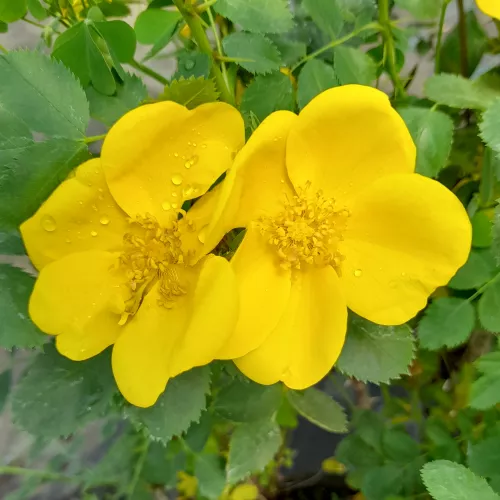
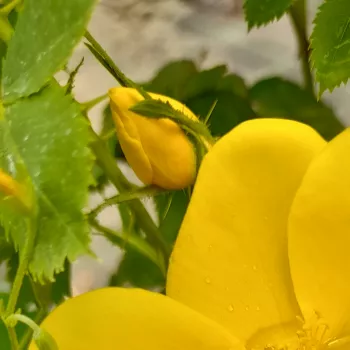
FOETIDA – yellow wild rose
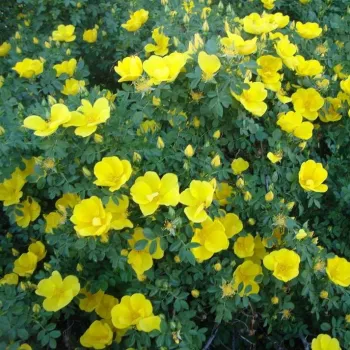
If You dream of a wild yet tidy feature rose that thrives in real Irish conditions, FOETIDA – yellow wild rose offers an easy way to enjoy botanical character without complicated care. This historic species forms a natural, arching hedge or specimen with dark, healthy foliage and warm golden-yellow blooms that cleanly drop their petals. Its naturally disease-resistant nature means little spraying or fuss, even where summers are damp and soils are heavy but reasonably drained. Once planted, this long-lived shrub settles in as an own-root rose, building a strong framework that can be lightly pruned and left to mature. Over time it rewards You with a robust structure, occasional decorative hips and a subtly spicy fragrance, giving Your front or back garden a quietly romantic, cottage-style presence that asks very little in return.
Use cases
| Target area |
Reason |
| Low-maintenance family hedge along a boundary or driveway |
Forms a tall, arching shrub with good height and spread, creating a soft, informal hedge that needs only occasional thinning rather than precise clipping, ideal for busy gardeners who still want structure and seasonal colour for the whole-family |
| Specimen shrub in a front garden or cottage-style bed |
The natural, bushy habit and dark foliage make a strong backdrop for its golden-yellow flowers, giving all-season presence in a single plant that anchors small beds without needing complex combinations, suiting the style-conscious |
| Sunny mixed border with shrubs and perennials |
Prefers a full-sun position and copes well with heat and moderate drought, so it slots easily into mixed borders with other sun-lovers, keeping its shape and foliage quality during warm spells, reassuring the time-poor |
| Informal screen for seating areas or garden corners |
Its erect, arching branches and medium thorniness create a gentle visual barrier without feeling harsh or formal, offering a sense of enclosure and privacy while remaining decorative, helpful for the privacy-minded |
| Easy-care rose feature in heavier Irish garden soils |
Once established, the vigorous root system and species toughness allow it to handle wetter conditions better than many modern roses, provided the planting area is reasonably well drained, giving confidence to the cautious |
| Long-lived structural rose in low-intervention plantings |
As an own-root botanical rose, it slowly builds a durable woody framework that responds well to occasional renewal pruning, offering decades of garden presence with minimal replacement or replanting for the forward-planner |
| Wild-style edge or boundary in larger family gardens |
The once-a-year flush of simple, self-cleaning flowers followed by seasonal interest from hips supports a looser, naturalistic planting style that suits informal lawns and wilder edges, appreciated by the nature-lover |
| Background shrub for heritage or period-themed gardens |
Introduced to European gardens in the 16th century, its historic wild-rose character and spicy scent make it ideal behind traditional perennials, creating an authentic period feel that appeals to the heritage-enthusiast |
Decorating ideas
- Golden Cottage Backdrop – Plant FOETIDA behind clumps of white Verbena hastata ‘White Spires’ and soft grasses to create a glowing, old-world backdrop – ideal for fans of relaxed cottage gardens and period charm
- Sunny Front-Garden Welcome – Use as a single specimen near the front door, underplanted with fragrant sweet alyssum for a low white carpet that highlights the golden blooms – perfect for homeowners wanting easy kerb appeal
- Wild Meadow Edge – Line a boundary with spaced plants of FOETIDA and weave in loosely planted perennials for a soft, hedgerow feel – suited to those who like naturalistic, low-fuss planting
- Heritage Focal Corner – Place one shrub at the corner of a lawn with a simple ring of spring bulbs around the base to let the rose star in early summer – good for small gardens needing one strong focal point
- Sun-Baked Scented Nook – Position FOETIDA near a sunny seating area, pairing it with drought-tolerant companions like rosemary to enjoy its spicy aroma on warm days – ideal for people who relax outdoors after work
Technical cultivar profile
| Parameter |
Data |
| Name and registration |
Trade name FOETIDA – yellow wild rose; botanical wild rose sold as Rosa foetida. Collection: Botanical rose, exhibition category botanical/historical species. No separate registered cultivar name is recorded. |
| Origin and breeding |
Wild species originating from the Caucasus–Iran region. In European cultivation since 1583, first distributed more widely through Exotic Nursery (USA). Breeding company, breeder name and exact breeding year are not documented. |
| Growth and structure |
Erect, arching bushy shrub reaching about 160–240 cm high and 120–190 cm wide. Foliage moderately dense, dark green. Moderately thorny stems. Suitable for use as a free-growing hedge, specimen shrub or structural landscape plant. |
| Flower morphology |
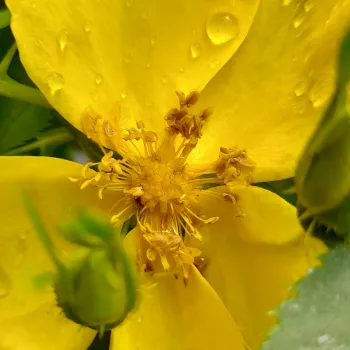
Single, flat flowers with 5–12 petals, medium-sized at about 1.5–2.75 inches. Blooms once per season rather than repeating. Solitary flowers on the stems, with good self-cleaning so most petals fall naturally after flowering. |
| Colour and phenology |
Deep, radiant golden-yellow blooms with a warm tone, deeper in the bud. Freshly opened flowers are lustrous golden yellow, then fade to straw-yellow with a creamy undertone, especially quickly in hot weather. Overall colour retention is moderate. |
| Fragrance and aroma |
Medium-strength, distinctive spicy scent, noticeable at close distance. The name foetida refers to the characteristic foliage aroma. Fragrance is more pronounced in warm, still weather and adds atmosphere near seating or paths. |
| Rose hip characteristics |
Produces some decorative hips after flowering; generally occasional spherical red hips, around 10–14 mm in diameter. Hip set may vary between seasons and sites but can add subtle late-season interest in suitable conditions. |
| Resistance and hardiness |
Very hardy species rose, typically tolerating around -40 to -37 °C (USDA zone 3a, Swedish zon 6, RHS H7). Good heat and moderate drought tolerance. High resistance to powdery mildew, black spot and rust under normal garden conditions. |
| Horticultural recommendations |
Best in full sun. Recommended spacing: about 105 cm for mass plantings, 90 cm for hedge use, 165 cm as a specimen. Plant 0.9–1 plant/m² depending on layout. Low maintenance; minimal pruning and little disease intervention usually required. |
FOETIDA – yellow wild rose offers naturally low-maintenance structure, strong disease resistance and a long-lived own-root shrub that settles in for decades of easy enjoyment, so You can plant it with confidence and simply let it mature at its own pace.