FRAGRANT LOVE® – raspberry-red hybrid tea rose - Barni
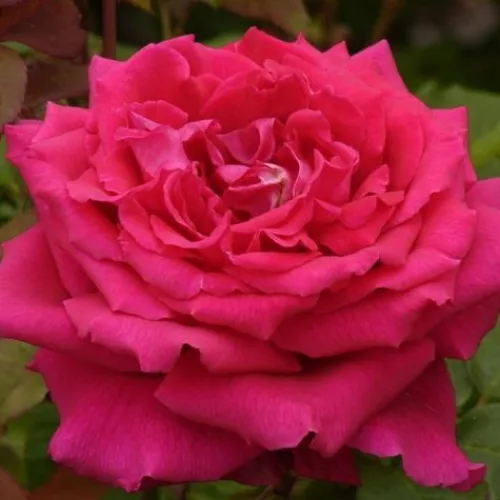
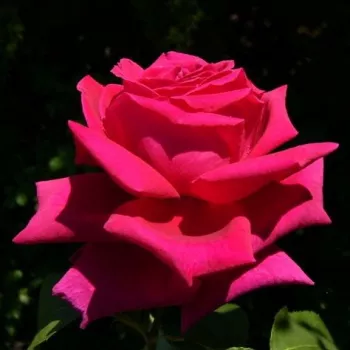
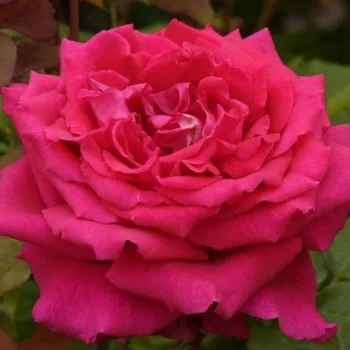
If You dream of a romantic, richly coloured rose that simply gets on with the job in Irish conditions, FRAGRANT LOVE® is a classic hybrid tea that feels both modern and reassuringly traditional. Its velvety raspberry-red blooms appear on upright stems perfect for cutting, with a reliable repeat flush that keeps beds and front gardens flowering through the summer. The very strong scent gives You armfuls of perfumed stems for the house, while the dense dark green foliage offers a neat, finished look even between flushes. Bred for resistance, it copes well with damp, fungus-prone weather and our typically heavy soils when drainage is sensibly managed in wetter spots. As an own-root rose it settles into the soil and matures steadily over the years, forming a balanced, long-lived shrub that can be rejuvenated if ever cut back harder. In year one it quietly builds roots, in year two it pushes stronger shoots, and by year three it shows its full ornamental value in the garden.
Use cases
| Target area | Reason |
|---|
| Front garden focal point by the entrance |
Upright, tidy growth and dense foliage create an immediate sense of structure beside a path or doorway, while the classic raspberry-red blooms give a welcoming, romantic feel without needing complicated pruning for the beginner |
| Small group of roses in a family flower bed |
Planted in groups of three to five at the recommended spacing, the even height and repeat flowering knit into a full, long-lived clump that suits average-sized Irish gardens and stays manageable for the homeowner |
| Cutting patch near the patio or veg plot |
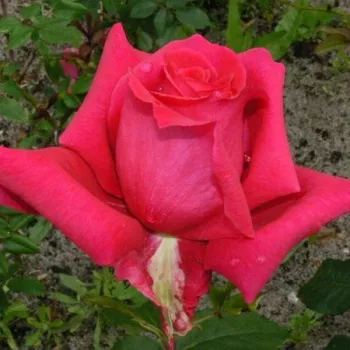
Long, straight stems with large, double, solitary blooms make this variety ideal for cutting; the very strong, lingering fragrance means a few stems perfume a room, rewarding the occasional snip by the busy gardener |
| Feature rose in a mixed cottage-style border |
The rich raspberry-red colour holds well without bleaching, allowing FRAGRANT LOVE® to anchor pastel perennials and traditional cottage plants while still looking fresh after summer showers for the relaxed cottage-gardener |
| Bed planting in exposed or damp-prone areas |
Good disease resistance and hardiness mean the foliage stays healthy even in humid, fungus-prone weather, making it a sound choice where wind and rain funnel through the garden for the coastal-front-garden owner |
| Specimen rose in a large container |
Its upright habit and sizeable flowers suit a single-rose statement in a 40–50 litre pot, where the strong fragrance can be enjoyed up close on a balcony or terrace by the space-conscious urbanite |
| Structured edging along paths or driveways |
Regular spacing at 50–60 cm creates a low, elegant line of roses; the uniform height and form make it easy to read the planting from the street, suiting the tidy-minded front-garden planner |
| Long-term planting in family gardens |
As an own-root plant it forms its permanent framework on site, recovering well from harder pruning and developing into a stable, long-lived shrub that rewards patient care over many years for the forward-looking planner |
Decorating ideas
- Cottage harmony – Combine FRAGRANT LOVE® with hardy geraniums and clustered bellflower for soft, romantic edging in front gardens – ideal for cottage-style enthusiasts
- Raspberry focus – Use three roses together with low rock cress and a simple gravel mulch to create a vivid, low-maintenance focal point – perfect for busy homeowners
- Perfumed path – Line a short path with evenly spaced plants and underplant with lavender for scent at ankle and nose height – great for evening walkers
- Patio bouquet – Grow one plant in a 40–50 litre terracotta pot with trailing thyme at the rim for a movable, fragrant bouquet – suited to balcony and terrace users
- Classic cut-flower bed – Dedicate a sunny strip to FRAGRANT LOVE® with a backdrop of hydrangeas to supply a steady stream of rich, scented stems – appealing to home flower arrangers
Technical cultivar profile
| Parameter | Data |
|---|
| Name and registration |
Hybrid tea rose, exhibition tea hybrid; registered as SELbar 0114, marketed as FRAGRANT LOVE® hybrid tea rose SELbar 0114, with American Rose Society exhibition name Fragrant Love. |
| Origin and breeding |
Bred by Vittorio Barni in Pistoia, Italy (Rose Barni Nursery), breeding year 1979, introduced commercially in 1982 by Rose Barni; parentage is not recorded or remains unknown. |
| Growth and structure |
Upright hybrid tea shrub reaching about 85–115 cm in height and 55–85 cm in spread, with dense dark green, slightly glossy foliage and moderate thorniness, forming a well-filled, vertical garden presence. |
| Flower morphology |
Large, double, cup-shaped blooms with 26–30 petals, usually borne singly on stems; flowers are of exhibition hybrid tea type and repeat freely, with a generous second flush in suitable conditions. |
| Colour and phenology |
Velvety raspberry-red to mid-red blooms with subtle pink depth; colour holds very well, lightening only slightly in strong sun, and shows best depth and richness in cooler weather at the start and end of summer. |
| Fragrance and aroma |
Very strong, long-lasting fragrance characteristic of scented hybrid teas; exact scent notes are not recorded, but the intensity makes it suitable for fragrant beds and cut flowers where perfume is a priority. |
| Rose hip characteristics |
Occasionally forms small decorative hips; spherical, red, around 12–16 mm in diameter, appearing mainly where spent blooms are not removed and adding a modest late-season accent. |
| Resistance and hardiness |
Shows good overall disease resistance, with documented resistance to powdery mildew, black spot and rust; winter hardy to approximately −21 to −18 °C (USDA zone 6b, RHS H7, Swedish zone 3). |
| Horticultural recommendations |
Best in sunny sites with reasonable drainage; spacing 50–90 cm depending on use, 2.8–3.2 plants/m² for mass planting. Low maintenance with occasional deadheading and watering in moderate drought; suited to beds and cutting. |
FRAGRANT LOVE® offers richly coloured, very fragrant blooms on a healthy, low-maintenance shrub that performs in borders, containers and cutting beds, while its own-root nature supports long life and easy rejuvenation, making it a sound choice to consider.