INDIGOLETTA – purple climbing rose - Laak
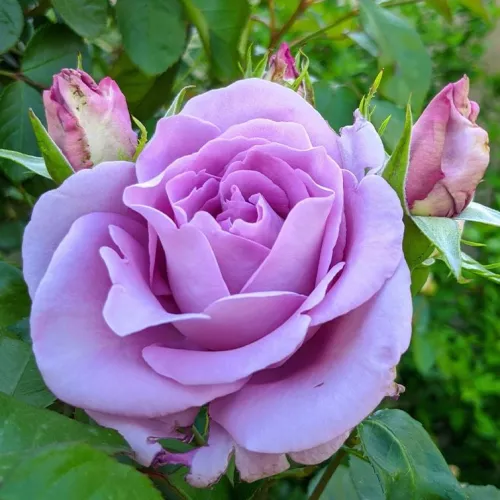
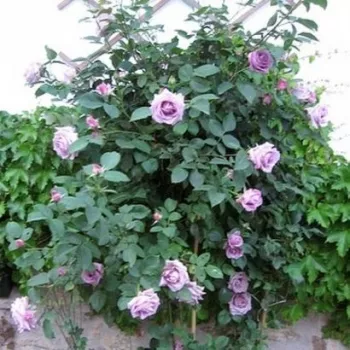
If You dream of a romantic climber that is reliable yet uncomplicated, Indigoletta is a striking choice for Irish family gardens. Its large, lilac‑purple blooms with a silvery sheen bring a uniquely colourful accent to front walls, arches and cottage‑style entrances, while a sweet, spicy perfume creates a richly scented backdrop for your everyday outdoor life. This own‑root climber builds a long‑lived, stable framework that stays vigorous and regenerates well after pruning, so You enjoy a lasting display rather than a short‑term show. Dense, slightly glossy foliage clothes fences and pergolas with a lush green screen, making small gardens feel more secluded. It copes steadily with our wet, cool summers and variable sunshine, handling humidity and rain so You do not need complicated routines. Because it tolerates shade for part of the day, it suits narrow side passages and east‑ or west‑facing walls that never get full sun all the time. Plant once, support it securely and, with basic feeding and deadheading, You can watch it settle in: roots in year one, strong shoots by year two, and full coverage and flowering by year three.
Use cases
| Target area |
Reason |
| Front‑garden arch or pergola by the entrance |
Indigoletta’s distinctive purple blooms and strong fragrance make a welcoming feature over gate arches or simple metal pergolas, giving You that romantic “arrival” feeling without needing advanced rose‑training skills, ideal for the busy yet style‑conscious homeowner |
| House wall or fence in partial shade |
This climber flowers reliably even where the sun reaches only part of the day, suiting typical Irish side walls or narrow driveways where tall buildings or hedges limit light, and handling damp, changeable weather with good poise, reassuring the cautious beginner |
| Small cottage‑style rose group of 1–3 plants |
Planted as a small group along a picket fence or low wall, its uniform climbing habit and dense foliage create a coherent cottage‑garden look that matures gradually over three seasons, giving clear progress for the patient but time‑pressed gardener |
| Family seating area or patio backdrop |
The strong, sweet‑spicy scent carries well around a terrace or seating corner, so even a single plant on a trellis can perfume evening meals and weekend coffees, a rewarding choice for fragrance‑loving families |
| Screening an unattractive boundary or shed wall |
Dark green, plentiful foliage and tall climbing growth help disguise plain fencing, oil tanks or shed walls, providing a softer, more private boundary line with relatively few plants, which suits space‑conscious urban gardeners |
| Coastal or exposed front gardens with damp winds |
Once established on its support, the sturdy framework and medium disease resilience deal well with typical Irish Atlantic moisture and breeze, offering dependable cover and colour for practical, weather‑aware owners |
| Container rose on balcony or small patio (large pot) |
In a 40–50 litre container with a strong obelisk or trellis, Indigoletta forms a vertical accent without taking much floor space, bringing colour and scent to balconies or rented patios, ideal for space‑limited urban residents |
| Mixed border with perennials and shrubs |
Its climbing habit and long flowering season add height and continuity of colour among shrubs, lavender or hydrangeas, while own‑root strength supports a long lifespan, making it a sound structural choice for long‑term planting planners |
Decorating ideas
- Cottage gateway – Train Indigoletta over a simple wooden arch, underplant with lavender and catmint for soft purple waves – perfect for lovers of relaxed rural entrances
- Romantic terrace screen – Grow it against a trellis behind your seating area, teamed with potted hydrangeas in large tubs – ideal for those who want fragrance and privacy together
- Colour‑themed fence – Combine along a fence with Verbena hastata ‘Blue Spires’ and white campanulas for a cool purple‑and‑white ribbon – great for fans of coordinated colour schemes
- Vertical balcony garden – In a 40–50 litre container with a slim obelisk, pair it with trailing thyme and dwarf grasses – suited to balcony owners seeking maximum impact in minimal space
- Evening scent corner – Place by a west‑facing bench with pale hostas and ferns beneath to catch the last light – designed for people who unwind outdoors after work
Technical cultivar profile
| Parameter |
Data |
| Name and registration |
Large‑Flowered climber registered as Azubis, marketed as Indigoletta climbing rose Azubis; American Rose Society exhibition name Indigoletta; part of the pharmaROSA ORIGINAL 2‑litre own‑root range. |
| Origin and breeding |
Shoot mutation of Mainzer Fastnacht, bred by G. L. M. Van de Laak in Lottum, Netherlands; breeding and registration in 1981, introduced commercially in 1985 by Verschuren & Sons. |
| Growth and structure |
Vigorous climbing habit reaching about 240–360 cm high and 100–170 cm wide; moderately thorny canes with dense, slightly glossy dark green foliage, forming a well‑covered vertical framework over supports. |
| Flower morphology |
Large, double, cupped blooms, typically 26–39 petals and mostly solitary; repeat‑flowering through the season, with a lighter second flush; self‑cleaning is weak, so deadheading of spent flowers is recommended. |
| Colour and phenology |
Deep violet‑purple flowers with a bluish tone and silvery sheen; buds open from dark crimson‑purple to deep lilac‑blue, maturing to pale lavender‑lilac; colour holds best in cool or semi‑shaded conditions, lightening in strong sun. |
| Fragrance and aroma |
Strong, distinctly fragrant rose with a sweet, spicy character noticeable even at a short distance; best appreciated near paths, doors or seating areas where passing air currents can carry the scent. |
| Rose hip characteristics |
Rose‑hip production is generally low due to the double flower form; where present, hips are small, red, ellipsoid, about 8–12 mm in diameter, adding modest late‑season interest. |
| Resistance and hardiness |
Medium resistance to black spot, powdery mildew and rust; benefits from basic preventative care in humid sites. Winter hardy to about −23 to −21 °C (RHS H7, USDA zone 6a, Swedish zone 3) when well established. |
| Horticultural recommendations |
Suited to pergolas, walls, fences and trellises with 140–225 cm spacing; allow 0.4–0.5 plants/m² for massing. Prefers good drainage, regular watering and feeding; partial shade tolerant but requires a firm support and routine tying in. |
INDIGOLETTA offers uniquely coloured, strongly scented blooms on a long‑lived climbing framework, giving reliable vertical colour with relatively simple care from an own‑root plant; it is a thoughtful choice if You want a lasting feature to enjoy.