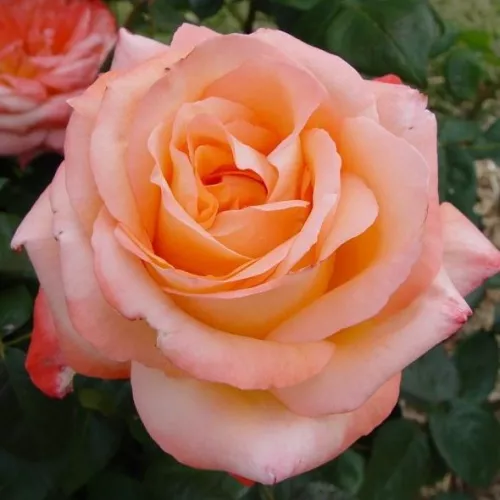
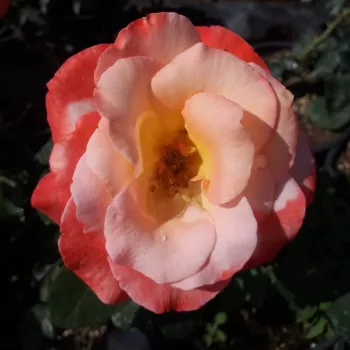
Soft peachy-yellow base colour with a pale pinkish hue. - hybrid tea rose - medium-strength, clearly noticeable scented rose - fresh, fruity character
– Soft peach blooms with elegant high centres
– Medium, clearly noticeable fresh fruity scent
– Upright, tall growth for striking garden structure
– Good resistance to powdery mildew and black spot
– Suitable for borders, standards and cut flowers Gné speisialta: Remontant, with abundant second flowering for long display.
Refined garden style – Featuring real photographs
pharmaROSA® ORIGINAL 2-litre own-root potted rose
19,40 €
3.5(5520)
JOYFULNESS – apricot hybrid tea rose – Tantau
If You dream of a welcoming front garden that simply behaves, Joyfulness is an elegant hybrid tea that settles in calmly and keeps its shape without fuss. Its soft apricot tones and medium-height, upright habit make it ideal beside paths, low hedges or cottage-style beds where You want order and romance at the same time. The blooms carry a clearly noticeable, fresh, fruity scent, so a few stems by the door or patio feel quietly luxurious. Own-root growth means the plant matures steadily into a long-lived, reliable bush, regenerating well after pruning and coping dependably with Ireland’s humid weather and the need for decent drainage. Over time You will see year-one root building, year-two stronger shoots and, by year three, the full ornamental display that makes this rose feel truly at home.
Joyfulness shows its soft peach blooms in full flower.
Joyfulness shows a double bloom with 26–39 petals and a distinct medium-high centre.
Joyfulness in closed bud, showing its warm yellowish-peach tone with a faint rosy blush.
Use cases
Target area
Reason
Front garden focal point
Joyfulness forms an upright, medium-height bush that stands out without overpowering a typical Irish front garden, giving You a clear focal point that still feels balanced and easy to place for beginners
Low-maintenance family border
Moderate disease resistance and own-root durability mean fewer worries about replanting; with basic deadheading and feeding it offers reliable flowers through the season, suiting households that prefer simple, occasional tasks for busy-owners
Cutting bed for home bouquets
As a classic hybrid tea with shapely, medium-high-centred blooms and long, straight stems, Joyfulness is ideal for cutting, letting You bring its fresh fragrance and refined form indoors regularly with minimal extra effort for home-arrangers
Sunny cottage-style mixed border
The pastel peach flowers blend gently with perennials and grasses, and the sparsely thorned stems are easier to manage near paths, giving a romantic look that still works in practical, walk-through cottage borders for style-conscious
Standard (lollipop) rose near entrance
Grafted as a standard, its upright habit and repeat flowering create a formal yet welcoming effect by doors or driveways, offering structure and colour with only seasonal pruning and feeding for neat-gardeners
Coastal or exposed suburban garden
Hardy to typical Irish winters and steady under Atlantic breezes, Joyfulness copes well when planted in well-drained soil that sheds winter wet, giving reassuring continuity in sites where wind and rain can challenge roses for coastal-owners
Large patio container (40–50 litres minimum)
In a deep, 40–50 litre pot with good drainage and regular watering, Joyfulness becomes a long-lived patio feature, its own-root system filling the container gradually for a stable, repeat-flowering presence beside seating for terrace-users
Small group planting of 3 roses
Planted in a triangle at the recommended spacing, three Joyfulness bushes knit into a soft, pastel block of colour that is easy to keep tidy with light pruning and occasional feeding, ideal if You want a simple, unified look for first-timers
Decorating ideas
Classic Cottage Welcome – Plant Joyfulness by the front path with lavender and lamb’s ear to create a soft, scented entrance that looks refined yet informal – ideal for fans of traditional cottage gardens
Pastel Patio Retreat – Grow one rose in a 40–50 litre container with white hydrangeas and silver-leaved herbs nearby for a calm, low-fuss seating area – perfect for balcony and terrace users
Elegant Front-Hedge Line – Use a row of Joyfulness along a driveway, underplanted with Carex morrowii for neat, year-round structure – suited to homeowners wanting order with gentle colour
Romantic Cutting Corner – Dedicate a sunny border section to Joyfulness with airy grasses and cosmos so You can cut fragrant stems for the house – great for those who love home-made bouquets
Refined Mixed Border – Combine Joyfulness with Japanese euonymus and soft pink perennials for a polished but easy-care look that works in small suburban plots – ideal for busy families seeking simple elegance
Technical cultivar profile
Characteristic
Data
Name and registration
Hybrid tea rose Joyfulness, registered as TANsinnroh, commercial hybrid tea type and ARS exhibition hybrid tea; part of the Hybrid tea rose collection and sold as JOYFULNESS – apricot tea-hybrid rose - Tantau.
Origin and breeding
Bred by Mathias Tantau Jr. in Germany in 1961, with unknown parentage; registered in 1984 and introduced after 1984 by Rosen Tantau, who also acted as the initial distributor of this cultivar.
Growth and structure
Medium to tall, upright bush reaching about 120–160 cm in height and 100–140 cm in spread, with moderately dense, dark green, slightly glossy foliage and sparsely thorned stems for easier handling and pruning.
Flower morphology
Double, cupped, distinctly medium-high-centred blooms with 26–39 petals, usually borne singly on stems; small flower size around 0.5–1.5 inches, repeating well with a strong second flush after the main flowering.
Colour and phenology
Soft peachy-yellow base with a pale pinkish tone; buds warm yellowish-peach with rosy blush, opening to creamy peach with an inner orange glow, then fading towards creamy straw-yellow margins and a soft pink-tinged centre in strong light.
Fragrance and aroma
Medium-strength, clearly noticeable perfume with a fresh, fruity character; easily appreciated at close range on the plant or in the vase, adding sensory value for seating areas, entrances and home-cut flower arrangements.
Rose hip characteristics
Hip set is usually limited because of the double flowers and regular deadheading; when allowed to form, hips are ellipsoid, 12–16 mm across and red, adding modest late-season interest in more naturalistic plantings.
Resistance and hardiness
Hardy to approximately -21 to -18 °C (H7, USDA 6b, Swedish zone 3); moderate overall disease resistance with good resistance to powdery mildew and black spot, and moderate rust sensitivity, performing reliably with standard care.
Horticultural recommendations
Best in sunny positions with free-draining soil; plant at 95–110 cm spacing for hedges or borders, wider for specimens. Needs regular deadheading, feeding and watering in dry spells; suitable for borders, standards and cut flower use.
JOYFULNESS offers soft apricot blooms, a fresh fruity scent and dependable, repeat flowering on a long-lived own-root bush that settles steadily into Irish gardens, so You can plant it with confidence and enjoy it at Your own pace.
Detailed product attributes
Product Identification Data
Product Name:
JOYFULNESS – apricot tea-hybrid rose - Tantau
Product Type:
pharmaROSA® ORIGINAL - 2-litre own-root potted rose
Pollinator Attraction:
Double (26–39 petals) blooms make it relatively unattractive to pollinators, because the double flower form and reduced stamen accessibility limit their ability to reach pollen and nectar.
Pollinator-Friendly Rating:
Double flowers with 26–39 petals that partly conceal the stamens, so their appeal to pollinators is limited; primarily an ornamental variety.
Rose Hip Notes:
Hip formation is expected to be limited due to the double flowers and regular pruning; hips are mostly 12–16 mm in diameter, ellipsoid in shape and red.
Our product is a rose grown with unique pharmaROSA® cultivation technology!
2 litre, own-root, potted rose.
With shoots appropriate to the season.
With roots thoroughly interwoven through the growing medium.
Quality in line with the requirements of the E.N.A. (European Nurserystock Association).
In unique packaging that prevents damage.
Can be planted during frost-free periods.
True-to-type rose plant with an individual identifier.
The pharmaROSA® own-root potted rose is a well-rooted plant that supports reliable establishment when planted and cared for properly, so it can be planted whenever the soil is not frozen.
Stock: several varieties and several stages of development in a short stock section.Shoot system: intensive growth of fresh basal shoots on a young plant.Root system: presentation of the strong root system interwoven through the growing medium with the pot removed.Balance: mature plant where the development of the root system and the shoots is in harmony.
Information about the videos
The video series is not a “seasonal showcase”, but makes the essence of pharmaROSA® own-root production tangible: how the plant is built, what the root system is like and how the shoots renew themselves. The footage was therefore taken at different times, showing plants at different stages of development, so mixed leaf coverage or differing growth stages may appear in the videos. This is not a “sample” of the batch delivered, but an illustration of how the technology works. The current condition of the rose available to order — typical of the given period and similar to what you can expect to receive in the parcel — is shown at the top of the product page.
Pages for private customers Garden roses for the family garden, with minimal care → ORIGINAL® Premium garden roses – instant impact, a truly showpiece garden → EXTRA® Pages for professionals and private customers Roses for public spaces – large areas, sustainable maintenance → NATURAL® Roses for projects – hedge and row planting, fast implementation → RAPID® For professional partners only Production – propagation material for garden roses, wholesale → NEONATAL®
Company details
PharmaRosa Ltd. Company registration number: 01-09-717479 VAT number: 13075314-2-43 Plant health registration no.: HU130721 Bank account (IBAN): HU85117631891388688400000000 BIC (SWIFT): OTPVHUHB Bank name: OTP Bank Nyrt.