KENENDURE – yellow flowerbed floribunda rose - Kenny
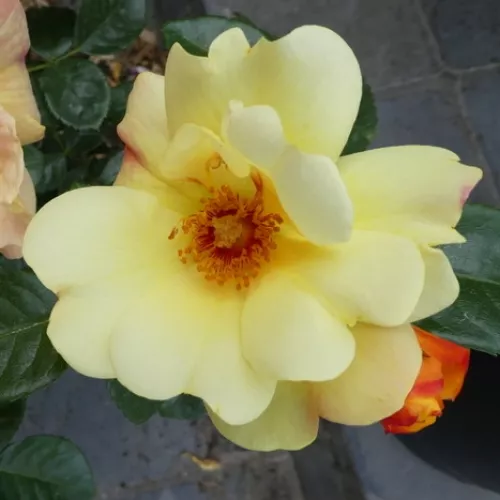
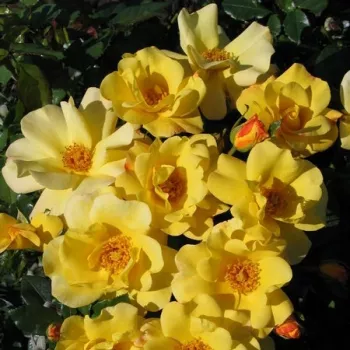
Kenendure is a compact, bedding floribunda that brings clusters of clear, sun‑yellow blooms to borders, front gardens and path edges without taking over your space. Its bushy, mid‑green foliage makes a neat, low hedge and frames the constantly renewing flushes of flowers from early summer well into autumn. The simple, open blooms are easy for bees to visit, adding gentle, natural movement to your garden. You can rely on its remontant character for repeat colour, while its compact habit suits smaller Irish gardens and tidy, low‑maintenance beds. As an own‑root rose, it develops a stable, long‑lived framework that can regenerate from its base and settle gradually into your soil. In the first year it concentrates on building roots, in the second on stronger shoots, and by the third it reaches full ornamental value. Kenendure copes well where you need to think about heavier soils and how they handle rainfall, making it a practical choice for many Irish family plots.
Use cases
| Target area |
Reason |
| Front garden bed by the entrance |
Clusters of bright yellow flowers give a cheerful welcome and a tidy, compact outline that fits easily into smaller front gardens; the neat shape is simple to maintain with light pruning only, ideal if you prefer low-effort upkeep as a beginner |
| Low flowering hedge along a path or driveway |
The dense foliage and 60–85 cm height create a defined, low hedge that guides the eye and softens hard edges without blocking light; regular spacing quickly knits into a continuous ribbon of colour, suiting homeowners who want structure without complex clipping as a gardener |
| Small mixed border with perennials |
Kenendure’s compact spread leaves room for companion plants while its repeated yellow flushes link together different flowering times; it anchors borders without overgrowing nearby perennials, giving an easy focal point for those designing simple, balanced beds as a homeowner |
| Urban patio or balcony in a large container |
In a 40–50 litre pot, this bushy floribunda forms a rounded shrub with regular colour on terraces and balconies; its manageable size and tidy habit make watering and light feeding the main tasks, comfortable for busy people who still want roses close by as a city-dweller |
| Cottage-style grouping of 3–5 roses |
Planting a small group gives a soft, airy look with open flowers that suit informal cottage gardens; the repeated blooming keeps colour going between traditional perennials, fitting those who like a romantic feel but want a straightforward planting plan as a cottage-gardener |
| Bed in heavier Irish soils with improved drainage |
Once planted into soil where drainage has been sensibly prepared, the own-root shrubs build a stable framework and cope well with typical Irish wet spells and heavier ground conditions, supporting gardeners who must think about how their clay handles rainfall as a planner |
| Pollinator-accent corner near a seating area |
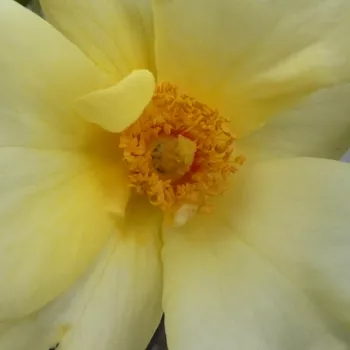
The single, stamen-showing flowers invite moderate pollinator activity, adding life and movement close to benches or terraces; this gentle wildlife interest comes without messy deadheading demands, appealing to those who enjoy nature watching in a relaxed way as a observer |
| Long-term family garden planting |
As an own-root rose, Kenendure forms its permanent shape in place and can regenerate from the base if cut back, giving a reliable, long-lived presence that matures alongside the garden, suiting families who want plantings that grow on steadily over the years as a investor |
Decorating ideas
- Sunlit Cottage Edge – Line a front path with Kenendure and low dwarf yarrow for a soft, cottage-style yellow border – ideal for lovers of romantic, rural-inspired gardens
- Golden Entrance Mix – Combine Kenendure with rosemary and small evergreen shrubs by the front door for year-round structure and summer colour – perfect for busy homeowners wanting a smart welcome
- Compact Family Border – Use a trio of Kenendure in a shallow bed with spring bulbs and low grasses for easy, season-long interest – good for families creating a simple first garden
- Coastal Patio Pot – Plant one Kenendure in a 40–50 litre container with trailing herbs on a sheltered terrace for a bright, manageable feature – suited to coastal and town balconies
- Urban Relax Corner – Place Kenendure with hydrangeas and shade-tolerant perennials near a seating area for gentle colour and foliage contrast – appealing to those who want a calm, low-fuss retreat
Technical cultivar profile
| Parameter |
Data |
| Name and registration |
Floribunda bedding rose, registered as Kenendure; trade name Kenendure Bedding rose Kenendure. Part of the Bedding rose collection, classed as an exhibition floribunda and shrub rose type for garden use. |
| Origin and breeding |
Bred by Irish breeder David Kenny from ('Baby Love' × 'Flower Carpet') × ('Golden Wedding' × 'Bright Smile'); bred in Ireland in 2008 and introduced and registered in 2009 for ornamental bedding use. |
| Awards and recognitions |
Bronze rating at The Hague (2009), Certificate of Merit Belfast (2010), first prize Hradec Králové (2012) and Gold Standard Rose Trials Gold Standard rating in the UK in 2012. |
| Growth and structure |
Compact, bushy shrub 60–85 cm high with 40–55 cm spread, dense mid-green slightly glossy foliage and moderate prickles; suitable for planting at 35–75 cm spacing depending on hedge, group or specimen use. |
| Flower morphology |
Single to semi-double, flat flowers with 5–12 petals, medium-sized at about 4–7 cm across, produced in clusters; remontant flowering pattern with plentiful second flushes through the main season in suitable conditions. |
| Colour and phenology |
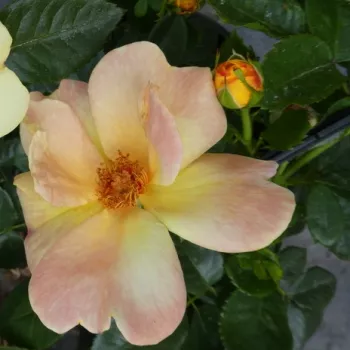
Bright sun-yellow buds open to glossy, intense yellow blooms that gradually fade to soft pastel yellow with occasional pinkish tinges at petal edges, maintaining good colour retention across successive flushes. |
| Fragrance and aroma |
Fragrance is very weak and generally barely noticeable, making this variety suitable where strong scent is not required or where it will be combined with more powerfully scented roses or other fragrant companion plants. |
| Rose hip characteristics |
Limited hip set expected; small 9–12 mm, spherical, orange-red hips may appear after flowering, adding discreet seasonal interest without heavily affecting the plant’s overall ornamental performance. |
| Resistance and hardiness |
Hardy to around −15 to −12 °C (RHS H6, Swedish zone 2, USDA 7b). Disease resistance is moderate to weak, with medium susceptibility to powdery mildew and black spot and very sensitive reactions to rust, requiring regular protection. |
| Horticultural recommendations |
Best in well-drained, improved soil with regular feeding and consistent moisture; own-root plants suit long-term garden use. Due to disease sensitivity, plan a preventative spray programme, good air circulation and tidy hygiene. |
Kenendure gives compact, repeat yellow flowering, a neat shape for small beds and long-term reliability from its own-root growth; consider it if you would like a bright, structured rose that will settle in for years.