KIMONO – salmon-pink bedding floribunda rose - de Ruiter
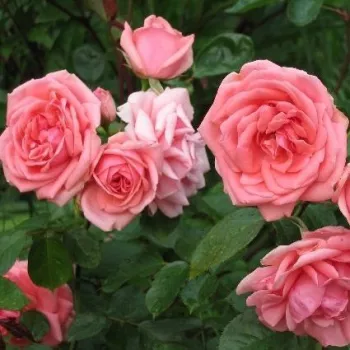
If You are looking for a rose that quietly performs in our changeable, damp Irish weather, Kimono is a dependable, almost thornless floribunda that gives neat, bushy structure and generous clusters of warm salmon‑pink blooms. Its medium height and tidy habit make it ideal for front gardens and smaller beds where You want colour without fuss, while its reliable flowering and compact shape help keep the whole planting looking orderly. As an own‑root rose it builds strength year by year, supporting a genuinely long garden life with steady ornamental value and easy recovery if cut back hard. In the first year it focuses on strong roots, in the second on fuller shoots, and by the third it reaches its real show of flowers and shape. With good disease resistance and suitability for partial shade, maintenance stays low – just basic feeding, watering and occasional deadheading. Plant it where heavy soil can be improved for better drainage, and it will reward You with soft, romantic colour that blends beautifully into cottage‑style borders and family‑friendly beds.
Use cases
| Target area | Reason |
|---|
| Front garden bedding strip |
Kimono’s bushy, upright structure and medium height create a tidy, welcoming line of colour along drives or paths without overwhelming the space, perfect when You want a neat look in a typical family front garden for the busy homeowner |
| Small rose group (1–5 plants) near the house |
Planted in a small group, its cluster-flowered, repeat-blooming habit gives a long season of soft salmon-pink, so even a simple planting feels full and romantic with very little work, which suits beginners who just want reliable flowers for the relaxed gardener |
| Low-maintenance family border with mixed perennials |
Good resistance to common fungal problems means fewer treatments, and its moderately dense, glossy foliage stays attractive amongst perennials, keeping maintenance low for a family border where time and gardening skills may be limited for the practical starter |
| Partially shaded side garden |
Because Kimono tolerates partial shade, it still flowers and shapes up well in those side or north-east facing spots that only get sun for part of the day, making awkward, overlooked corners feel intentional for the space-conscious owner |
| Own-root long-term planting in a cottage-style bed |
As an own-root plant it forms its natural bush shape on site and can regenerate from its base over many years, supporting a long-lived, softly coloured cottage-style display without constant renewal for the long-view planner |
| Edging along a low garden fence or hedge |
Its compact 75–105 cm height and almost thornless stems make it a friendly edging choice where children pass by, giving rhythm and colour without prickly hazards for the family-focused household |
| Medium container on a sheltered patio (40–50 litres minimum) |
In a sufficiently large container with regular watering and feeding, Kimono’s upright, bushy habit and repeat flowering bring continuous colour close to seating areas, with only straightforward seasonal care needed for the time-pressed city-dweller |
| Small bed in heavier, moisture-retentive soil |
Placed in a slightly raised, improved bed where heavy clay drains more freely, this robust floribunda copes well with our cool, wet conditions while maintaining foliage quality and bloom production for the climate-aware gardener |
Decorating ideas
- COTTAGE RIBBON – Plant Kimono in a gentle curve along a path and intersperse with Alchemilla mollis; the frothy lime flowers set off the salmon-pink blooms beautifully – ideal for lovers of relaxed country-garden charm
- SOFT SALMON BORDER – Combine small groups of Kimono with Lupinus ‘Gallery Pink’ in a sunny front bed to create a layered, pink-toned display – perfect for homeowners who want coordinated colour with minimal planning
- EVENING GLOW PATIO – Grow one Kimono in a 40–50 litre terracotta pot and surround the base with low herbs such as thyme for scent and texture – suited to balcony or patio users seeking easy summer atmosphere
- NEAT FAMILY HEDGE – Line a low fence with evenly spaced Kimono plants for a soft, salmon-pink flowering hedge that stays within reach and is almost thornless – great for families with children using the garden daily
- LATE-SEASON TAPESTRY – Pair Kimono with dwarf asters such as Aster dumosus ‘Apollo’ to extend colour into autumn, the rose providing structure while the asters weave in dainty blooms – ideal for small gardens needing long interest
Technical cultivar profile
| Parameter | Data |
|---|
| Name and registration |
Kimono – floribunda bedding rose, bush rose; ARS exhibition floribunda. Registered cultivar name Kimono, trade name Kimono Bedding rose Kimono, in the Bedding rose collection. |
| Origin and breeding |
Bred by Gerrit de Ruiter, Netherlands, from ‘Cocorico’ × ‘Frau Anny Beaufays’. Introduced and registered in 1961, initial distribution by Horstmann & Co. in Germany. |
| Awards and recognitions |
Royal National Rose Society Trial Ground Certificate (1961), acknowledging its reliable garden performance and ornamental value soon after introduction. |
| Growth and structure |
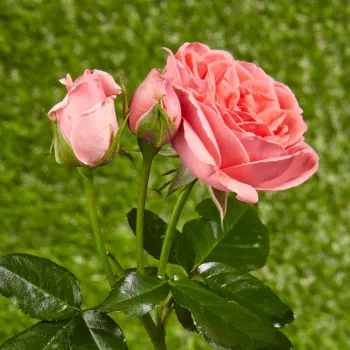
Bushy, upright shrub reaching about 75–105 cm high and 60–90 cm wide, with moderately dense, glossy dark green foliage and almost thornless shoots that are easy to handle and place near paths. |
| Flower morphology |
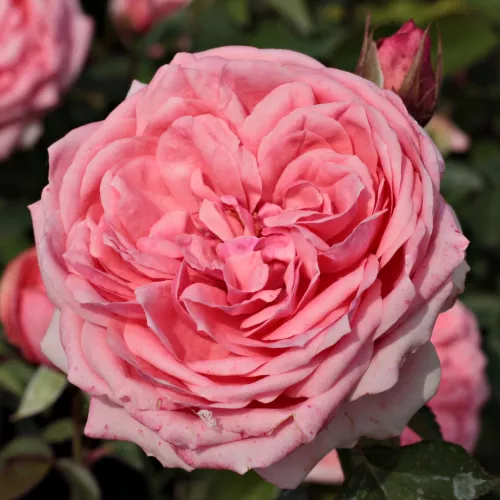
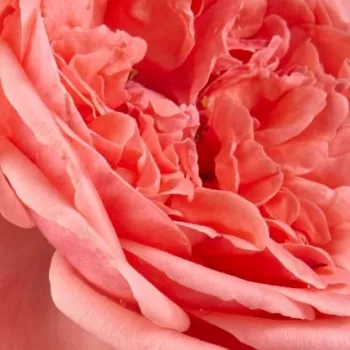
Very full, cup-shaped, medium-sized blooms (about 1.5–2.75 inches) carried in clusters, with more than 40 petals per flower and repeat-flowering habit giving a strong second flush in season. |
| Colour and phenology |
Warm salmon-pink blooms, vivid at opening with deeper inner petals, softening to pastel salmon with creamy tones and slightly paler edges; colour is brightest in cooler, cloudy conditions and may fade in hot sun. |
| Fragrance and aroma |
Classic medium-strength rosy fragrance, pleasantly noticeable at close range without being overpowering, adding sensory interest when planted near paths, doors, seating or frequently used parts of the garden. |
| Rose hip characteristics |
Occasionally forms small, spherical orange-red hips around 8–12 mm in diameter, adding a light decorative touch in late season where some spent blooms are left untrimmed. |
| Resistance and hardiness |
Good resistance to powdery mildew and black spot, medium resistance to rust, with occasional treatment advised; hardy to about −21 to −18 °C (RHS H7, USDA 6b, Swedish zone 3) for dependable overwintering. |
| Horticultural recommendations |
Best in well-prepared soil with improved drainage; suitable for beds, edging, low hedges, parks and cutting. Space at 45–85 cm depending on use; tolerates partial shade and benefits from regular deadheading and feeding. |
KIMONO offers soft salmon-pink clusters, good disease resistance and a compact, almost thornless shape, while its own-root character supports long-term, easy-care growth, so You can plant with confidence and enjoy deciding where it will suit You best