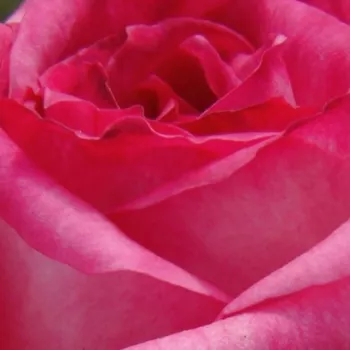
KORDES' PERFECTA® – cream-pink hybrid tea rose - Kordes
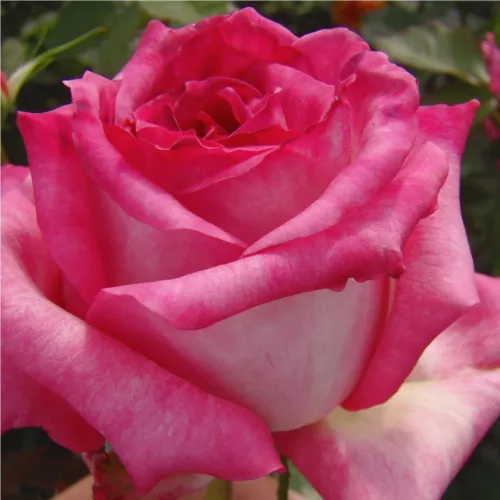
If You love classic hybrid tea roses with flawless, high-centred blooms, KORDES' PERFECTA® is an easy way to bring a touch of elegance to an ordinary Irish front garden. Its creamy petals brushed with carmine-pink edges open in that coveted exhibition form, making every flowering stem fit for a vase on Your kitchen table. This established, own-root plant arrives in a 2-litre pot, ready to settle in and build a long-lived, upright bush with dense, glossy foliage. Chosen for gardens where You prefer reliable beauty over fussy care, it repeats its scented flushes steadily through the season, even in our changeable weather with frequent rain and humidity. With moderate disease resistance and straightforward pruning, it rewards light, regular attention rather than complicated routines. In its first year it focuses on roots, in the second on stronger shoots, and by the third it shows its full flowering potential as a striking specimen or small group along a path or cottage-style border.
Use cases
| Target area |
Reason |
| Front garden specimen by the entrance |
The upright, medium-tall habit and exhibition-style blooms create an immediate focal point beside a doorway or gate, giving a smart, welcoming look with minimal plants to manage for the busy homeowner beginner |
| Cutting-and-enjoyment corner near the patio |
Solitary, high-centred flowers on long stems are perfect for cutting, so a small group by the patio lets You pick perfumed, classic hybrid tea stems for the house without losing the garden’s overall display homeowners |
| Mixed border with perennials and shrubs |
Its refined cream-and-pink colouring combines easily with herbaceous perennials and shrubs, slotting into existing beds without clashing, ideal when You want the rose to blend in rather than dominate gardeners |
| Small rose group in a family lawn border |
Planting 3–5 together forms a neat, repeating block of colour that still stays easy to weed and mow around, giving structure and romance at child-friendly lawn edges with few maintenance tasks families |
| Sunny cottage-style side garden |
Reliable remontant flowering fits the informal cottage look, providing repeated flushes of scented blooms through summer while You keep care simple with basic feeding, deadheading and light seasonal pruning cottage-lovers |
| Feature rose in coastal or exposed gardens |
The dense foliage and robust constitution cope well with breezier, damp locations, suiting gardens that see regular Atlantic showers and salt-laden winds yet still want a tidy, upright, classic hybrid tea look coastal-gardeners |
| Large container on a sunny balcony or terrace |
Grown in a 40–50 litre container with good drainage, it forms a vertical accent with showy, fragrant blooms where soil is limited, ideal for small urban spaces treated more like outdoor rooms than big gardens urban-owners |
| Long-term feature in a family back garden |
As an own-root rose it builds a durable, regenerating framework over the years, giving consistent flowers and shape even after harder winters or pruning changes, so it can anchor a simple, long-lived planting planners |
Decorating ideas
- Classic Entrance Welcome – Plant one on each side of the path and underplant with lavender to frame Your doorway with scent and creamy pink blooms – ideal for homeowners wanting a smart but simple front garden.
- Cottage Border Ribbon – Weave a short row through a border with foxgloves and campanulas for a romantic, layered cottage look – perfect for those who like soft colour and gentle structure without rigid formality.
- Cut-Flower Nook – Combine a small group with clumps of nepeta and hardy geraniums, giving a pretty cutting patch that still looks full when stems are taken indoors – great for people who love arranging home-grown flowers.
- Patio Feature Pot – Grow one plant in a 40–50 litre tub with trailing thyme and lobelia around the rim so the upright rose rises from a soft, flowering skirt – well suited to balcony or terrace gardeners with limited space.
- Soft Screen Planting – Use several plants in a loose row with cornus and ornamental grasses to form a semi-transparent screen, giving privacy mixed with seasonal colour – attractive for families wanting gentle separation, not a hedge.
Technical cultivar profile
| Property |
Data |
| Name and registration |
Hybrid tea rose group; registered as KORalu, marketed as Kordes' Perfecta. Trade name: Kordes' Perfecta® Hybrid tea rose KORalu. ARS exhibition name: Kordes’ Perfecta. Cultivar name refers to its “perfect” flower form. |
| Origin and breeding |
Bred by Reimer Kordes, W. Kordes’ Söhne, Germany, from ‘Golden Scepter’ × ‘Karl Herbst’. Introduced in 1957 by Kordes and Jackson & Perkins. Unregistered variety in registration records but widely established in gardens. |
| Awards and recognitions |
Highly regarded exhibition hybrid tea: Certificate of Merit, Madrid Rose Trials (1957); President’s International Trophy and Gold Medal, Royal National Rose Society, Great Britain (1957); Gold Medal, Portland Rose Trials, USA (1958). |
| Growth and structure |
Upright hybrid tea with dense, dark green, glossy foliage and strong, thorny stems. Typical height 120–160 cm, spread 80–120 cm in average garden soil. Forms a structured, vertical bush suitable for specimen use or small groups. |
| Flower morphology |
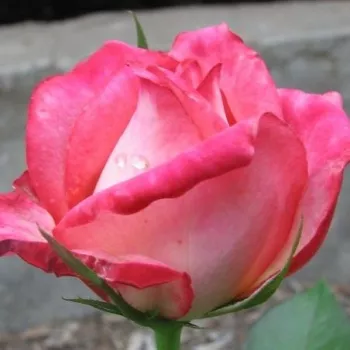
Very double, high-centred, pointed buds with a refined cut-rose profile. Solitary flowers on stems, petal count exceeding 40. Medium flower size around 1.5–2.75 inches, offering classic exhibition form favoured for cutting and showing. |
| Colour and phenology |
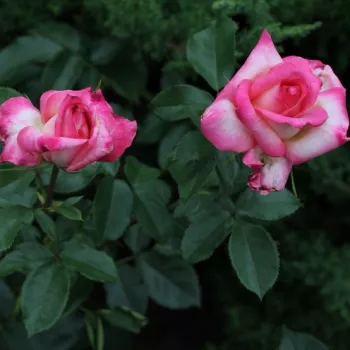
Cream-based blooms with vivid carmine-pink petal edges; buds butter-yellow at base grading to deep pink at tips. Colour lightens in strong sun and edging may fade. Repeat-flowering, with an abundant second flush in good conditions. |
| Fragrance and aroma |
Strong, well-scented hybrid tea perfume, combining slightly sweet, fruity and tea notes. Scent is evident both on the bush and when cut for the vase, adding value in seating areas and for indoor arrangements throughout the season. |
| Rose hip characteristics |
Hip set generally poor because of very double flowers; when present, hips are ellipsoidal, 13–17 mm, orange-red. Primarily grown for its blooms rather than decorative hips, so fruit display is limited and not a key garden feature. |
| Resistance and hardiness |
Hardy to approximately −21 to −18 °C (USDA 6b, RHS H7, Swedish zone 3). Moderate heat and drought tolerance; needs watering in prolonged dry spells. Disease resistance moderate overall, with good resistance to powdery mildew and black spot. |
| Horticultural recommendations |
Best in full sun with well-drained soil; avoid deep shade. Space 70 cm in mass plantings, 60 cm in hedging, 110 cm as specimens. Suggested densities: 2.0 plants/m² (square) or 2.4 plants/m² (hexagonal). Maintenance medium, with some deadheading and plant protection. |
Kordes' Perfecta® offers classic, fragrant hybrid tea blooms, dependable repeat flowering and a long-lived own-root framework, making it a reassuring choice if You want one special rose that will settle in and perform for years.