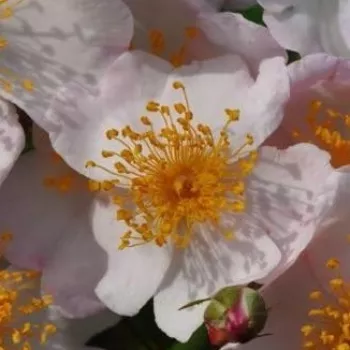
Matchball – LENadbial park shrub rose
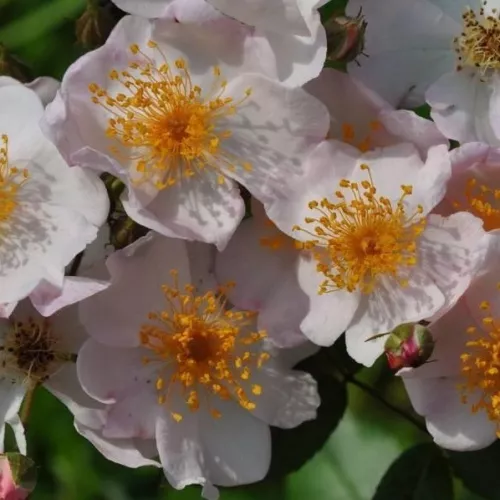
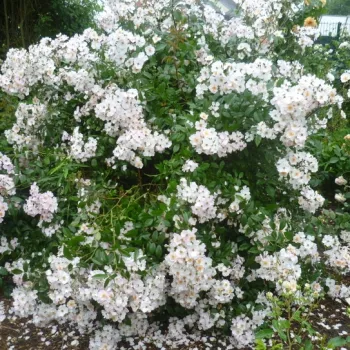
If You would like a rose that simply settles in and performs in Irish gardens, Matchball is a compact Hybrid Musk shrub that offers clouds of porcelain‑white, ball‑like blooms from early summer with a generous repeat. Its neat habit and good self‑cleaning mean less deadheading and tidying, so everyday care stays pleasantly easy. Masses of single flowers with golden stamens form a soft, romantic effect that suits both smart front gardens and relaxed cottage styles, while the open centres are especially inviting for bees and other pollinators, helping local wildlife. Own‑root, container‑grown plants arrive well established and adapt gradually to Your soil and routine, giving a stable shape and long‑term ornamental value. In our climate of frequent rain and heavier soils, Matchball copes well provided basic drainage is in place and the ground does not stay waterlogged. Choose it for low hedges, edging or small groups where You want reliable flowering, moderate maintenance needs and a rose that matures gracefully over many years. In the first year it concentrates on roots, in the second on branching shoots, and by the third season it reveals its full character as a softly rounded, floriferous shrub that looks made for Your garden.
Use cases
| Target area |
Reason |
| Front garden focal shrub |
Matchball’s compact, upright habit and moderate height make it ideal beside drives, paths or entrance gates, giving a clear focal point without overwhelming small front gardens; it settles reliably even where soil is heavy as long as it does not remain waterlogged for long periods, suiting beginners |
| Low flowering hedge |
Planted at around 50 cm intervals, its branching structure and moderate density build into an airy, low hedge that defines boundaries without feeling solid; regular repeat flowering and good self‑cleaning keep the line attractive with just annual pruning, ideal for busy homeowners |
| Edging and mixed borders |
The 80–140 cm height range and 45–80 cm spread fit neatly at the front or middle of borders, allowing it to weave between perennials and herbs; open white clusters light up nearby foliage while the own‑root growth pattern develops steadily into a balanced, long‑lived framework, reassuring for hobby gardeners |
| Pollinator‑friendly cottage style |
Its single flowers with clearly exposed yellow stamens are easy for bees and hoverflies to access, providing regular forage through the season; the gentle, informal look of repeated white clusters suits relaxed, rural cottage gardens and wildlife‑friendly schemes, appealing to nature‑lovers |
| Small groups in family gardens |
Planting 3–5 together at 60–90 cm creates a soft, rounded white “cloud” that reads as one generous shrub; the medium maintenance level and repeat bloom mean dependable colour without complex care, offering reliable results over the years for families |
| Container and patio planting |
In a minimum 40–50 litre container with quality compost and regular watering, Matchball forms a bright, compact shrub for patios, balconies or paved front gardens; own‑root resilience supports long service life in pots when nutrients and moisture are topped up, suiting urban gardeners |
| Flowerbeds with white and pastel schemes |
The porcelain‑white petals with a subtle blush at the throat blend effortlessly with cool pastels and silvers; consistent colour, even as blooms age, keeps schemes calm and unified, complementing lavender, soft pinks and blue perennials for those who enjoy a restrained, elegant palette of whites |
| Seasonal cutting and casual bouquets |
Although the blooms are small and simple, the large clusters on each stem can be harvested as light, airy sprays; their clean white colour and delicate, fresh fragrance mix easily with cottage perennials and herbs for informal indoor arrangements, attractive to relaxed, creative arrangers |
Decorating ideas
- Coastal white welcome – Line a short path or low front wall with Matchball and blue catmint, using gravel mulch to suit breezier, seaside spots – perfect for homeowners wanting a tidy, low‑effort entrance.
- Cottage wildlife strip – Combine Matchball with asters, calamint and alpine catchfly for a bee‑friendly, late‑summer ribbon of white and mauve along a fence – ideal for nature‑minded cottage gardeners.
- Urban patio glow – Plant one Matchball in a 50 litre tub with trailing thyme and soft grasses to brighten a balcony or small terrace – great for city dwellers seeking easy evening colour.
- Calm front bed – Use Matchball with blue lavender and white hydrangeas to create a simple, repeatable planting in a front garden bed – suited to busy families who prefer straightforward, unified schemes.
- Soft hedge divider – Run a loose Matchball hedge between lawn and play area, underplanting with spring bulbs for extra interest – ideal for families wanting gentle structure without heavy pruning work.
Technical cultivar profile
| Parameter |
Data |
| Name and registration |
Hybrid Musk shrub rose registered as LENadbial, marketed as Matchball in the Park – shrub rose group; commercial designation Lenadbial Park – shrub rose LENadbial for garden and landscape use. |
| Origin and breeding |
Bred by Louis Lens in Belgium from Rosa multiflora var. adenochaeta Ohwi × ‘Kathleen’; breeding completed 1987, introduced and registered 1990 by Lens Roses for wider European horticulture. |
| Growth and structure |
Compact, moderately dense shrub, lightly thorny, usually 80–140 cm high and 45–80 cm wide; suitable for low hedges, groups or single specimens, with a naturally bushy, well‑branched habit. |
| Flower morphology |
Small, flat, single blooms with 5–12 petals produced in large clusters of 10–30 flowers per stem; remontant with abundant second flush, giving a light, airy effect across the whole shrub. |
| Colour and phenology |
Porcelain white petals with a very delicate pinkish tint at the centre on opening; colour remains mostly white, only slightly creamy before fading, with bright yellow stamens clearly visible in full bloom. |
| Fragrance and aroma |
Fragrance is very weak but detectable at close range, with a fresh, slightly muscat‑like character; not a strong perfume rose but contributes a light, clean note in the garden or in small arrangements. |
| Rose hip characteristics |
Moderately abundant, small globular rose hips, about 6–10 mm across, ripening to a warm orange‑red; hips follow after many spent flowers fall, adding fine‑textured autumn and winter interest. |
| Resistance and hardiness |
Hardy to approximately −21 to −18 °C (H7, USDA 6b, Swedish zone 3); medium resistance to black spot, powdery mildew and rust, best in fresh, moderately moist soil with basic preventive care. |
| Horticultural recommendations |
Recommended for beds, edging, informal hedges, specimen use, parks and large containers; plant about 50–90 cm apart; prefers moderate feeding, pruning after main bloom and only occasional plant protection. |
Matchball offers compact, easy flowering shrubs, supports pollinators, thrives long term on its own roots and suits small borders, hedges or containers, making it a dependable choice if You would like a straightforward, rewarding rose to plant.