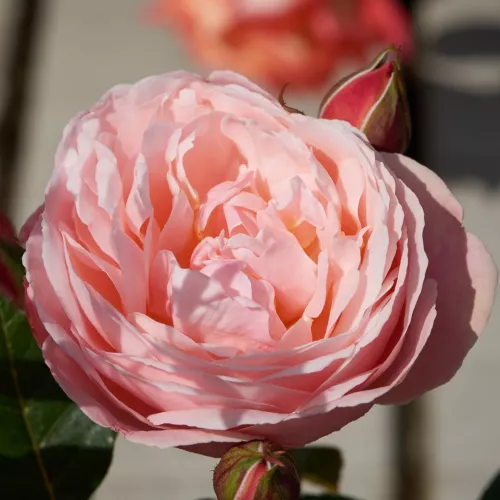
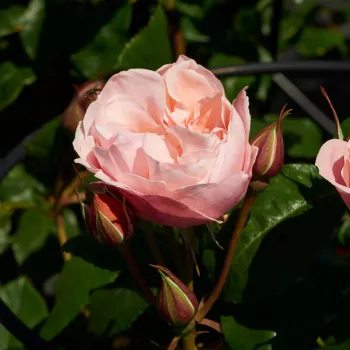
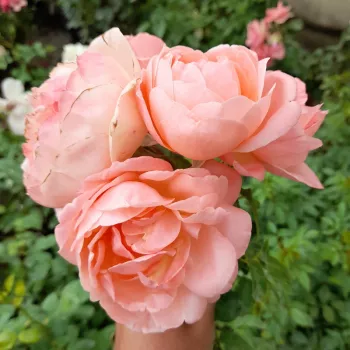
Lilo ™ Renaissance® – pastel pink hybrid tea rose
Lilo brings a touch of romance to smaller Irish gardens with its large, pastel pink, salmon‑and‑apricot blooms and a strong, sweet fragrance that feels at home in both town and country. You get classic hybrid tea flowers on a bushy, upright shrub that fits neatly into front beds and narrow borders, coping well even where soils are heavy and need extra drainage. As an own‑root plant in the pharmaROSA® ORIGINAL 2‑litre pot, it arrives already well established, so you can simply plant, water and let it settle. In year one it concentrates on roots, in year two it builds shoots, and by year three you enjoy its full ornamental display with reliable repeat flowering for many seasons ahead.
Use cases
| Target area | Reason |
|---|
| Front garden focal point by the path |
Extra‑large, pastel hybrid tea blooms on an upright, bushy shrub create an immediate focal point that reads clearly from the street or front gate without needing complex planting schemes for the busy homeowner |
| Small rose group of 3 in a family bed |
Planted 65 cm apart, three plants form a balanced, medium‑sized clump that flowers repeatedly through summer, giving a structured look that stays tidy and easy to manage for the hobby gardener |
| Cutting corner for home bouquets |
Long, straight stems with high‑centred, double blooms make reliable, fragrant cut flowers, so a single bush can supply vases indoors without needing a dedicated cutting garden for the beginner florist |
| Specimen rose beside a seating area |
The strong, sweet perfume carries well in still evening air, while the pastel colours blend comfortably with most garden palettes, adding atmosphere to patios and benches for the evening relaxer |
| Mixed border with perennials and grasses |
Its moderate height and bushy habit sit comfortably amongst perennials such as tall verbena or coneflowers, giving a long‑season backbone without overshadowing neighbouring plants for the cottage‑style fan |
| Neat, low hedge along a driveway |
At 55 cm spacing, the upright shrubs link into a loose flowering line that directs the eye and softens hard edges, while remaining simple to prune once a year for the practical planner |
| Own‑root long‑term planting in a family garden |
The own‑root habit helps the bush recover from winter damage or hard pruning and adapt gradually to local soil and climate, giving a stable planting that can be relied on for many years by the long‑term thinker |
| Border in heavier Irish clay soils |
Once planted into improved clay with good drainage, the bushy root system settles well and supports steady top growth, an advantage where wet spells and heavier ground demand thoughtful soil preparation for the Irish gardener |
Decorating ideas
- Cottage Pastels – combine Lilo with tall verbena and coneflowers for a soft, hovering pastel border – ideal for lovers of relaxed cottage‑garden style
- Front‑Door Welcome – plant one Lilo near the entrance with low lavender and dwarf grasses to frame the doorway – perfect for homeowners wanting a smart but simple welcome
- Romantic Seating Nook – place a specimen behind a bench, underplanted with pale pink geraniums, to enjoy fragrance at sitting height – suited to evening garden users
- Structured Rose Trio – arrange three plants in a triangle in a small lawn bed, edged with box or hardy thyme – great for those who like formal touches without high upkeep
- Pastel Cut‑Flower Patch – mix Lilo with a row of cosmos and annual gypsophila for easy, romantic bouquets – aimed at beginners who want homegrown flowers
Technical cultivar profile
| Property | Data |
|---|
| Name and registration |
Lilo ™ Renaissance® (POUlren029); hybrid tea rose, shrub habit; commercial group Hybrid tea rose; ARS colour pink; feminine given‑name cultivar; exhibition hybrid tea for garden and cutting use. |
| Origin and breeding |
Bred by Mogens Nyegaard Olesen, Poulsen Roser A/S, Denmark, from unnamed seedling × unnamed seedling; bred 2010, introduced 2017 with PBR registration; first distributed by Poulsen Roser A/S. |
| Awards and recognitions |
Holder of six international show medals, including awards from Belfast 2018 and Rome 2018 rose competitions, confirming high exhibition quality and consistent garden performance under trial conditions. |
| Growth and structure |
Medium shrub with upright, bushy habit to around 95–125 cm high and 80–110 cm wide; moderately dense, glossy yellowish‑green foliage; moderately thorny stems give good structure in small beds and borders. |
| Flower morphology |
Large, high‑centred, double blooms with 26–39 petals; cup‑shaped flowers borne mainly in clusters; extra‑large flower size suits exhibition and cutting; remontant with a plentiful second flush in suitable conditions. |
| Colour and phenology |
Pastel pink base overlaid with salmon and apricot tones; buds yellowish‑pink, opening to warm salmon‑pink, then pastel pink, later fading towards soft peach‑yellow with delicate pink edges as the blooms age on the plant. |
| Fragrance and aroma |
Distinct, strong sweet rose fragrance of classic character, noticeable both on the plant and in the vase; well suited for planting near paths, doors or seating areas where the scented blooms can be appreciated at close range. |
| Rose hip characteristics |
Because of the full double flowers, hip set is low; occasional small hips 0–5 mm may develop, but they are generally inconspicuous and do not contribute significantly to ornamental effect or seed collection. |
| Resistance and hardiness |
Rated hardy to about −21 to −18 °C (H7, USDA 6b, Swedish zone 3); moderate resistance to black spot and powdery mildew, resistant to rust; may require occasional preventive care in humid, disease‑prone seasons. |
| Horticultural recommendations |
Best in full sun with well‑drained soil; plant 65 cm apart in beds, 55 cm for low hedging, 105 cm as a specimen; medium maintenance, with regular feeding, deadheading and winter pruning supporting strong repeat flowering. |
Lilo ™ Renaissance® offers large romantic blooms, strong fragrance and dependable repeat flowering, while its own-root form supports long-term regeneration and stable growth; consider it if You’d like a reliable, elegant rose for your garden.