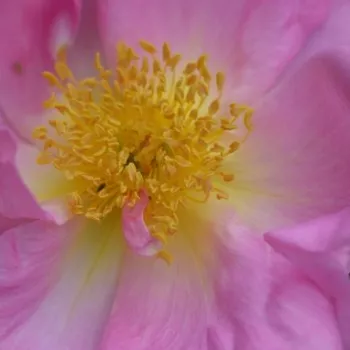
MARGUERITE HILLING – pink park rose – Hilling
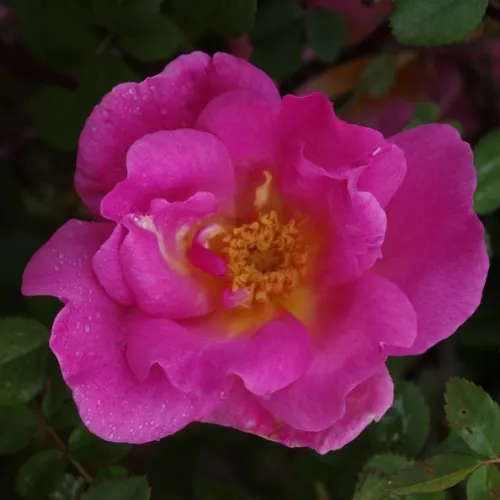
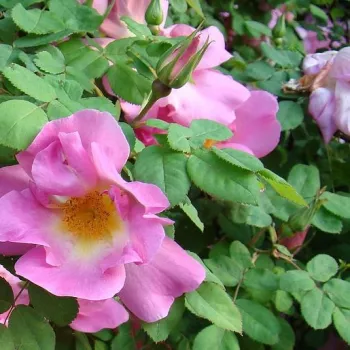
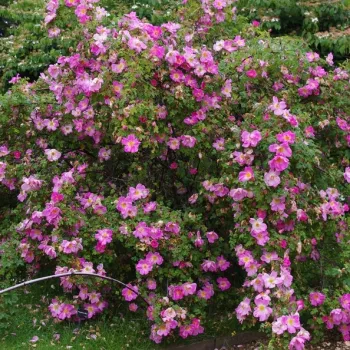
If You dream of a generous, low-effort shrub rose that simply gets on with the job in typical Irish conditions, Marguerite Hilling is made for You. This vigorous, bushy Hybrid Moyesii forms a broad, mid‑green backdrop smothered in semi‑double, mid‑pink flowers that fade to a romantic pastel halo, staying elegant even as the blooms age. Flowering starts early and returns in rich waves, giving months of colour without complicated pruning or pampering, while its mild, rosy fragrance and open centres make it quietly wildlife‑friendly in pollinator‑minded gardens. Own‑root plants settle in steadily, building a deep, resilient framework that shrugs off wind and coastal air and copes reliably with our cool, damp summers. Tall enough for soft, flowering screens yet relaxed enough for cottage‑style borders, it thrives in average family gardens where You want a rose that is both undemanding and long‑lived. In its first year it concentrates on roots, in the second it builds strong shoots, and by the third it reaches full ornamental impact with an easy, natural rhythm that suits busy households.
Use cases
| Target area |
Reason |
| Front garden focal shrub near the entrance |
Tall, bushy habit and months of mid‑pink flowers create a welcoming focus by the front door with only light pruning and some seasonal feeding, ideal if You want a main feature that largely looks after itself for busy homeowners |
| Informal flowering hedge along a boundary or drive |
Height up to 2,8 m and dense foliage allow Marguerite Hilling to form a soft, naturalistic hedge that screens views while still letting light through, offering an easy alternative to hard-clipped evergreens for family gardens |
| Cottage-style mixed border with perennials |
Semi‑double, pastel‑fading pink blooms blend beautifully with cottage plants like foxgloves, hardy geraniums or campanulas, giving a relaxed, romantic feel that fits Irish rural and village gardens for cottage‑garden enthusiasts |
| Pollinator-friendly rose corner or wildlife strip |
Open, semi‑double flowers with visible stamens invite bees and other insects, while repeat flushes keep nectar available over a long season, making it a good structural shrub in small wildlife areas for nature‑minded gardeners |
| Low-maintenance park-style planting in larger plots |
Its vigorous, bushy growth and moderate care needs suit looser, park-like beds where the aim is a full, natural look with only annual shaping and occasional plant protection, simplifying upkeep for hobby gardeners |
| Urban front gardens facing wind and damp |
Own‑root vigour and hardy wood allow the shrub to adapt to exposed, breezy streets where it copes well with cool, moisture‑laden air and typical Irish rain, handling blustery evenings and salt‑tinged gusts near the coast for urban residents |
| Specimen shrub in a large container on patio or terrace |
Works as a statement plant in a minimum 40–50 litre container, where its arching branches and flowing flower flushes dress terraces or balconies; regular watering and feeding keep it thriving for patio gardeners |
| Background structure in natural or meadow-style areas |
Bushy, slightly arching growth and occasional dark red‑black hips give year‑round interest at the back of looser, meadowy plantings, helping transition from lawn or meadow to taller trees and shrubs for landscape‑style spaces |
Decorating ideas
- Romantic cottage gateway – Plant a pair of Marguerite Hilling either side of a path with foxgloves and hardy geraniums at their feet for a soft, country welcome – ideal for cottage-garden lovers
- Soft screening hedge – Create an informal hedge by spacing plants in a gentle curve, underplanting with spring bulbs so flowers appear from early in the year – perfect for families wanting privacy
- Pastel terrace feature – Grow one shrub in a 50‑litre container with trailing lobelia and white bacopa for a relaxed, long-flowering patio display – suited to balcony and terrace owners
- Wildlife corner accent – Combine Marguerite Hilling with lavender, rosemary and a small crab apple to make a pollinator-friendly nook buzzing with life – great for nature-conscious beginners
- Natural park-style group – Plant three shrubs in a loose triangle with ornamental grasses and Italian clematis threading through for movement and texture – for gardeners who enjoy a semi-wild look
Technical cultivar profile
| Characteristic |
Data |
| Name and registration |
Marguerite Hilling is a Hybrid Moyesii shrub rose marketed as a park rose; also listed as MARGUERITE HILLING – pink park rose – Hilling, with American Rose Society exhibition name Marguerite Hilling. |
| Origin and breeding |
Sport of ‘Nevada’ (Pedro Dot, 1927), discovered and introduced by Thomas Hilling of T. Hilling & Co., Chobham, United Kingdom; bred and first marketed around 1959 as an unregistered but well-established garden variety. |
| Growth and structure |
Strong, bushy shrub with slightly arching branches, 200–280 cm high and 170–250 cm wide; dense mid‑green, slightly glossy foliage and only slightly thorny stems create a substantial yet approachable structural plant. |
| Flower morphology |
Semi‑double, flat blooms with 13–16 petals, medium-sized clusters on the stems; remontant, giving abundant first flowering followed by a generous repeat flush, with moderate self‑cleaning that still benefits from occasional deadheading. |
| Colour and phenology |
Flowers open vivid mid‑pink with a delicate silvery sheen, buds deep pink; as blooms age they fade toward pastel pink with a pale, almost whitish edge, creating gentle colour variation across the shrub through the season. |
| Fragrance and aroma |
Fragrance is mild and restrained yet pleasantly rosy, noticeable at close range without overwhelming nearby seating or windows; open, semi‑double flowers also display stamens that help attract pollinating insects into the garden. |
| Rose hip characteristics |
Occasionally forms small, spherical hips 14–22 mm across, coloured dark red to almost black; these can extend interest into autumn and offer a subtle wildlife food source rather than a heavy display. |
| Resistance and hardiness |
Hardy to about −32 to −29 °C (USDA zone 4b, RHS H7, Swedish zone 5); disease resistance moderate overall, with good black spot resistance but some susceptibility to mildew and rust, helped by good air circulation. |
| Horticultural recommendations |
Suited to parks, specimen use, hedging, urban green spaces and natural gardens; prefers sun to partial shade, medium maintenance with some plant protection, spacing from 140–230 cm depending on use and around 0,4–0,5 plants per m² in groups. |
Marguerite Hilling offers generous repeat pink flowering, a tall, bushy presence and pollinator-friendly blooms, while its own-root longevity builds a dependable shrub over the years, making it a reassuring choice if You value lasting beauty.