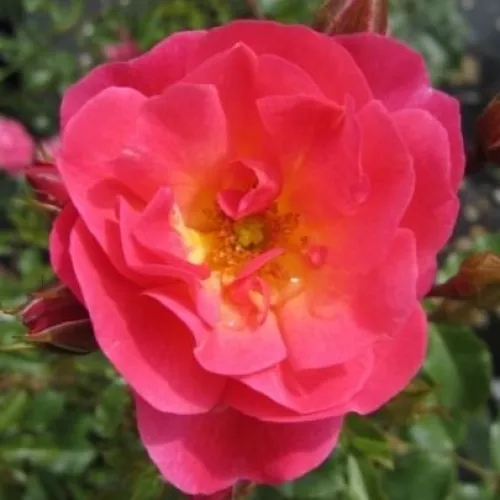
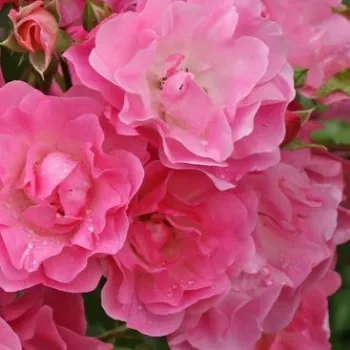
MAXI-VITA® – apricot-pink bedding floribunda rose – Kordes
If You want a reliable, easy-going shrub rose for a busy Irish garden, Maxi-Vita is bred to make life simple. This compact, bushy floribunda fills beds and borders with soft peach-pink clusters from early summer, repeating in generous flushes so Your front garden stays colourful without constant attention. Its ADR-awarded health means strong resistance to common fungal problems, even in a damp climate and heavier soils where good drainage matters more than perfection in the soil. The foliage stays fresh-looking, supporting the long-term lifespan of the plant and keeping maintenance low. As an own-root rose it develops a balanced bush that can regenerate from the base, giving lasting value in small family gardens. Maxi-Vita settles quickly into borders or larger patio containers, forming a neat, bushy shape that suits modern front gardens and relaxed cottage styles alike. Plant, water, feed – and let this floribunda quietly get on with a full garden life.
Use cases
| Target area |
Reason |
| Front garden bed by the entrance |
Compact, bushy growth and medium height keep Maxi-Vita neatly in scale with paths, windows and low walls, while the repeat clusters of peach-pink blooms provide a welcoming focus for visitors and a confident first rose for beginners |
| Small group planting in ornamental borders |
Planted in groups of 3–5, the clustered flowering knits together into a continuous, low bedding effect, giving strong visual impact from a modest space and creating a tidy, floriferous block that suits time-poor gardeners seeking dependable simplicity |
| Low-maintenance family garden with limited care time |
High disease resistance and low maintenance needs mean fewer sprays and interventions, so the rose keeps its leaves and shape with routine pruning only, ideal for busy households wanting flowers but not a demanding hobby |
| Mixed border in cooler, wetter areas |
The robust health and reliable performance help the plant cope with humid, rain-prone conditions, so even less-than-perfect drainage and regular Atlantic showers still allow it to establish and flower well for cautious first-time planters |
| Partially shaded town or village garden |
Good tolerance of partial shade means it will still flower respectably beside taller shrubs, walls or neighbouring houses, keeping colour going where many roses sulk and offering an easy win for urban gardeners with shared-light spaces |
| Large patio container or cottage-style tub |
Its bushy, contained habit works well in a 40–50 litre container, bringing rose-bed charm onto patios and doorsteps; own-root vigour supports steady renewal of shoots, ideal for those wanting a long-lived potted feature with modest upkeep |
| Informal cottage-style border with perennials |
The soft peach-pink clusters blend gently with bellflowers and other cottage plants, creating a relaxed, romantic look; the medium-sized, semi-double blooms avoid harsh blocks of colour, suiting gardeners who prefer gentle harmony over bold contrasts |
| Long-term planting for stable garden structure |
As an own-root rose it builds a resilient framework that regrows reliably from the base, supporting the natural arc of year-one rooting, year-two shaping and year-three full effect, a reassuring choice for planners thinking about future seasons |
Decorating ideas
- Welcoming Pathway – Line a short front path with Maxi-Vita and low Campanula poscharskyana for a peach-and-lilac carpet that stays tidy and inviting – ideal for homeowners wanting a cheerful, low-fuss entrance.
- Cottage Ribbon – Weave Maxi-Vita through a narrow cottage border with Dalmatian bellflower and white daisies to create a soft, storybook edge – perfect for lovers of traditional, romantic garden style.
- Urban Patio Pot – Plant one Maxi-Vita in a 40–50 litre terracotta tub with trailing thyme and compact lavender for colour and scent near the back door – great for balcony or courtyard gardeners with limited soil.
- Family-Friendly Bed – Combine Maxi-Vita with hardy geraniums and small grasses in a simple rectangle bed that looks good from indoors and out – suited to busy families wanting order without elaborate planting plans.
- Soft Slope Cover – Use drifts of Maxi-Vita with Japanese spurge as ground cover on a gentle bank, giving colour and green structure with minimal care – useful for those taming awkward corners of the garden.
Technical cultivar profile
| Property |
Data |
| Name and registration |
Maxi-Vita, registered as KORfeining, a floribunda bed rose from the RigoRosen collection; also traded as Maxi-Vita RigoRosen KORfeining, exhibition category shrub rose, ARS name Maxi Vita. |
| Origin and breeding |
Bred by W. Kordes’ Söhne in Germany (breeding year 1991), introduced 2001, with registration in 2000; parentage not recorded but selected for health, bedding performance and reliable flowering in mass plantings. |
| Awards and recognitions |
Holds ADR certification (2000) for health and garden performance; multiple international merits including Bagatelle, Geneva, Monza, The Hague and Australian trial garden awards, confirming robust, proven landscape value. |
| Growth and structure |
Bushy, compact habit reaching about 50–70 cm in height and 40–60 cm spread; moderately dense, mid-green, slightly glossy foliage and moderate prickliness; forms a low, structured shrub suited to beds and edging. |
| Flower morphology |
Semi-double, cup-shaped clusters on each stem, with around 13–25 petals per bloom; medium-sized flowers (approximately 1.5–2.75 inches) repeat well through the season, providing an abundant second flush after the first. |
| Colour and phenology |
Flowers open in vibrant peach-pink with a gentle yellowish glow, then soften to a mid-toned peach pink and finally a pastel peach-pink before petal drop; colour retention is moderate, giving a soft, ever-changing display. |
| Fragrance and aroma |
Very weak fragrance with a classic rosy character that is barely noticeable in the garden; chosen more for colour, health and bedding effect than for scent, so best combined with fragrant companions if perfume is desired. |
| Rose hip characteristics |
Rose hips form only occasionally; when present they are small, around 6–9 mm in diameter, spherical and orange-red (RHS 34B), adding a light decorative touch without dominating the plant in autumn. |
| Resistance and hardiness |
High resistance to powdery mildew, black spot and rust; reliably hardy to around −21 to −18 °C (H7, USDA 6b, Swedish zone 3); tolerates heat well but still appreciates reasonable moisture for best performance. |
| Horticultural recommendations |
Suited to beds, slopes, ground-cover drifts, urban green spaces, cemeteries and large containers; low maintenance with simple annual pruning; for groups, space around 35 cm, or 55 cm when used as a solitary feature shrub. |
Maxi-Vita offers compact, floriferous bedding colour, strong disease resistance and long-lived own-root reliability for everyday Irish gardens; consider it if You want an attractive rose that quietly earns its place over time.