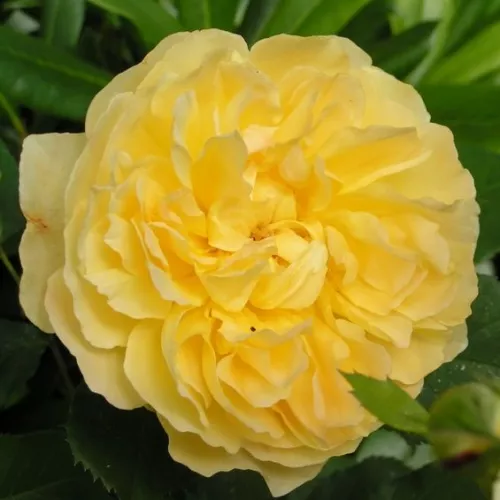
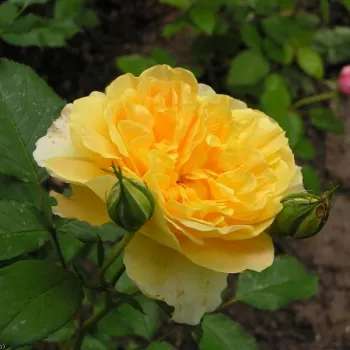
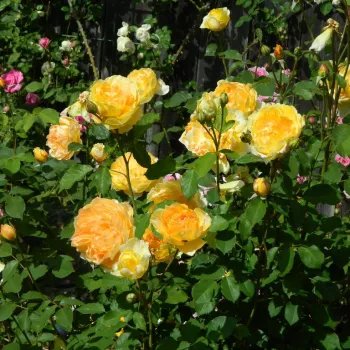
Molineux – yellow English rose (AUSmol)
Bring a touch of English cottage charm to your Irish garden with Molineux, a compact, upright English shrub rose that fits beautifully into front gardens and smaller beds where You want colour without fuss. Its rosette, golden-yellow blooms repeat reliably from early summer to autumn, lighting up borders even in changeable Irish summers with remontant flowering that keeps coming in waves. Bred by David Austin, this premium, own-root shrub establishes steadily, forming a long-lived, well-balanced bush that copes well with our humid seasons and the extra fungus pressure they bring. In its first year it focuses on roots, in year two the framework fills out, and by year three You enjoy its full ornamental value with rich flowering and dense foliage. Molineux tolerates heat once settled, yet simply needs steady watering in longer dry spells, making it a dependable choice for busy gardeners. Its medium maintenance rating means a straightforward care routine: basic feeding, occasional disease checks and light pruning are usually enough to keep the bush neat. The slightly glossy, dark green leaves show off the yellow blooms, while its light thorns make everyday handling and deadheading less of a chore. Planted from our 2‑litre, own-root container, this rose adapts gradually to Your soil and care habits, giving You long-term confidence and a stable display season after season in a typical family garden.
Use cases
| Target area |
Reason |
| Front garden focal shrub |
Molineux’s compact, upright habit and dense foliage make it ideal as a main feature by the front door or along a path, offering romantic English-rose character without taking over the space, perfect for the busy homeowner who wants easy charm for their front‑garden |
| Small border in a family garden |
The medium height and generous repeat flowering build a full, colourful border over 2–3 seasons, starting with root establishment, then framework, then abundant bloom, giving a satisfying sense of progress to beginners who want success without complicated techniques for their family‑garden |
| Low informal hedge along a drive or boundary |
Regular, upright growth and recommended hedge spacing of around 55 cm allow Molineux to form a low, loosely clipped hedge that flowers repeatedly, providing structure and privacy with only light pruning and basic feeding for those seeking soft structure in a low‑hedge |
| Romantic cottage-style mixed bed |
The golden-yellow, rosette blooms combine beautifully with perennials and traditional cottage plants, bringing a relaxed, nostalgic feel that suits rural homes and town gardens alike, especially where You want colour and atmosphere without demanding daily care in a cottage‑bed |
| Container on patio, terrace or balcony |
In a minimum 40–50 litre container with good drainage, Molineux’s moderate size and upright form work well for patios and balconies, particularly near seating areas where its mild tea–musk scent can be enjoyed by those who value low-effort colour in a patio‑container |
| Ornamental bed in humid, changeable climates |
Selected for medium disease resistance and reliable performance, this rose copes steadily with our damp, variable Irish weather and the increased fungal pressure it brings, suiting gardeners who accept occasional treatment but want resilient colour in a wet‑climate |
| Accent planting with aromatic herbs |
Planted with rosemary or lavender, the neat shrub shape and clear yellow blooms stand out against silver-green foliage, creating a simple, stylish combination that looks designed with very little effort, ideal for those who like harmonious, scented schemes in a herb‑border |
| Specimen rose for long-term plantings |
As an own-root David Austin cultivar with a premium garden merit rating, Molineux builds a durable framework over time, able to regenerate from its own wood, making it a sound long-term choice for gardeners planning stable, lasting plantings in a long‑term |
Decorating ideas
- Sunny Cottage Welcome – Plant a pair of Molineux by the front door with lavender and white allysum underplanting for a soft cottage look – ideal for homeowners who want a welcoming entrance without complex upkeep
- Golden Herb Border – Combine Molineux with rosemary and thyme along a path; the dark green foliage and yellow blooms contrast beautifully with aromatic herbs – great for cooks who enjoy ornamental planting that is also useful
- Patio Feature Pot – Use a 40–50 litre terracotta container with Molineux centre stage, surrounded by trailing violas or ivy for a long-flowering patio highlight – perfect for balcony and terrace gardeners with limited soil space
- Warm-Toned Mixed Bed – Mix Molineux with Crocosmia and soft ornamental grasses to create a warm yellow–orange border that glows in evening light – suited to hobby gardeners who like a relaxed but coordinated scheme
- Soft Screening Hedge – Plant a loose hedge of Molineux along a low fence and weave in pale blue perennials such as Nepeta to soften boundaries – a good option for families wanting gentle privacy and colour without formal clipping
Technical cultivar profile
| Parameter |
Data |
| Name and registration |
Trade name Molineux, English shrub rose from the English Rose Collection; registered cultivar name AUSmol, bred by David Austin, exhibition category shrub; verified authenticity for pharmaROSA ORIGINAL own-root production. |
| Origin and breeding |
Raised by David Charles Henshaw Austin in the United Kingdom from ‘Graham Thomas’ (Ausmas) crossed with an unnamed seedling; introduced and registered in 1994 by David Austin Roses Ltd as an English shrub rose. |
| Awards and recognitions |
Holder of multiple international awards including President’s International Trophy (RNRS 1996), Gold Medals at Glasgow and Durbanville trials, Bronze Medal in Australian National Trials, plus the RHS Award of Garden Merit granted in 2001. |
| Growth and structure |
Compact to medium-sized shrub, typically 80–130 cm high and 70–120 cm wide, with an upright habit and lightly thorny stems; dense, dark green, slightly glossy foliage supports a well-filled, bushy outline in borders and hedges. |
| Flower morphology |
Very full, rosette-shaped blooms with more than 40 petals, produced in clusters of medium-sized flowers; remontant flowering with particularly rich second flush, providing an extended display from early summer into autumn under normal garden care. |
| Colour and phenology |
Golden-yellow petals opening from deep yellow buds, with brighter inner petals and paler outer ones; colour lightens slightly in strong sun and stays richer in cooler weather, giving a butter- to lemon-yellow impression as blooms mature and fade. |
| Fragrance and aroma |
Mild, refined fragrance with tea and light musk notes; not overpowering, suited to seating areas and small gardens where a gentle scent is preferred over strong perfume, allowing easy combination with other fragrant shrubs and herbs. |
| Rose hip characteristics |
Hip set is generally low due to very double blooms, but occasional small, spherical hips of about 6–10 mm may form; these are orange-red, contributing subtle late-season interest without significant self-seeding. |
| Resistance and hardiness |
Hardy to approximately −26 to −23 °C (RHS H7, USDA 5b, Swedish zone 4); medium resistance to black spot, powdery mildew and rust, performing well with standard preventive care; needs protection from late spring frosts in colder sites. |
| Horticultural recommendations |
Suitable for borders, low hedges, containers and specimen use; space 65 cm for mass planting, 55 cm in hedges, 100 cm as specimen; thrives in full sun or light partial shade with regular watering, feeding and occasional pest or disease control. |
Molineux (AUSmol) offers repeat golden-yellow flowering, a compact, easy-care habit and the long-term stability of an own-root English rose, making it a dependable choice if You want a beautiful shrub that will quietly establish and perform for years.