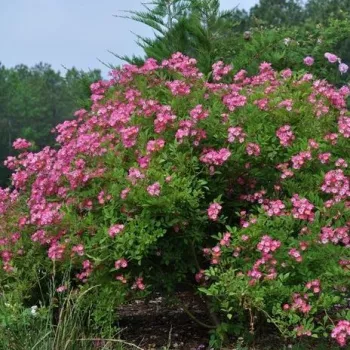
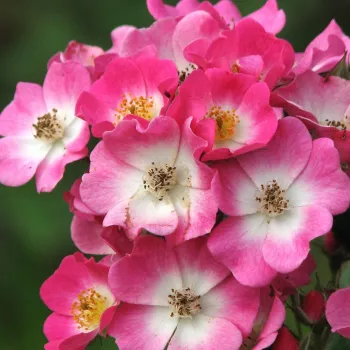
MOZART – pink-white park rose - Lambert
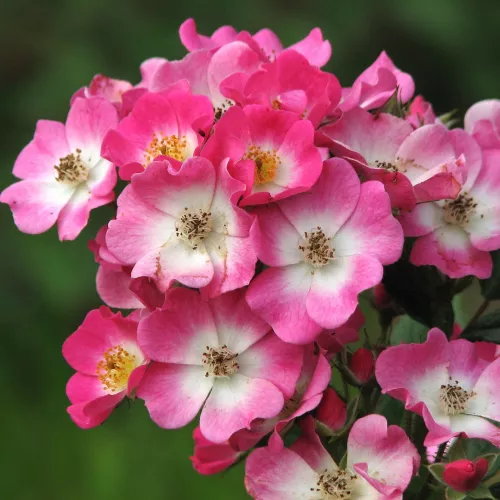
With its charming pink-and-white clusters and airy shrub habit, Mozart is a dependable park rose that settles calmly into Irish family gardens, coping well with humidity-prone conditions and typical mixed-weather summers. The single, open blooms bring a relaxed, cottage feel, while the remontant flushes keep colour returning across the season for a reliably cheerful front garden. As an own-root shrub, it forms its natural shape on site, regenerates well after pruning and offers a genuinely long-lived, stable presence without demanding complicated care. Expect Mozart to build strong roots in year one, expand its branching and flower volume in year two, and by year three deliver its full ornamental value as a mature, balanced shrub. Suitable for partial shade and medium maintenance levels, it fits effortlessly into beds, hedging lines or mixed borders where You want an easy companion for perennials and grasses. The moderate height and spread give pleasing structure and soft screening, while the orange-red hips add a gentle autumn note that keeps the plant interesting beyond flowering and makes it an inviting, wildlife-friendly feature near paths and seating areas.
Use cases
| Target area |
Reason |
| Front garden feature shrub |
Mozart’s upright, moderately tall structure and mid-green, slightly glossy foliage create an instant focal point for small Irish front gardens, giving height without overwhelming the space and remaining visually tidy with only occasional dead‑heading, ideal for the busy homeowner |
| Relaxed cottage-style bed |
The airy clusters of pink-and-white single blooms, followed by neat orange-red hips, suit informal cottage borders, blending easily with herbaceous perennials and ornamental grasses while keeping maintenance at a manageable, medium level for the hobby gardener |
| Pollinator-friendly family border |
The simple, open flowers with readily accessible stamens are particularly attractive to bees, providing a long flowering period and gentle muscat-like fragrance that supports a wildlife-friendly garden atmosphere appreciated by the nature lover |
| Light screening near seating areas |
Reaching around 140–200 cm, Mozart forms a soft, upright screen that defines patios or play areas without feeling heavy, while its own-root growth ensures long-term structure and good regeneration after pruning, reassuring the beginner |
| Mixed rose and perennial border |
The park-shrub character, remontant flowering and harmonious colour palette allow Mozart to knit together roses, clematis and grasses, offering continuity of interest and medium care demands that stay realistic for the small-garden owner |
| Informal flowering hedge |
Planted at around 100 cm intervals, Mozart forms a loose, blooming hedge with decorative hips, providing visual rhythm along driveways or boundaries without strict clipping routines, a practical solution for the time-poor gardener |
| Urban garden with heavy soil |
This own-root shrub adapts gradually to local conditions and copes reliably with our damp, heavy soils and frequent humidity, offering robust performance where drainage is managed reasonably, giving confidence to the city gardener |
| Part-shade side garden |
Suitable for partial shade, Mozart continues to flower and keep its attractive foliage where many roses struggle, so side passages and less-sunny corners can still have colour and structure without intensive care from the novice planter |
Decorating ideas
- Cottage Quartet – Combine Mozart with lavender, catmint and foxgloves for a soft, layered cottage look along a front path – perfect for lovers of romantic, informal gardens.
- Wildlife Walk – Plant a drift of Mozart with echinops and verbena to create a long-season pollinator corridor beside a lawn – ideal for families encouraging children to notice bees and butterflies.
- Soft Screen – Use Mozart in a loose row backed by hydrangeas to form a gentle privacy veil around a seating nook – suited to those wanting screening without a hard hedge line.
- Grass and Rose Weave – Thread Mozart through clumps of fountain grass and low sedums for movement and colour contrast – great for gardeners who like modern, low-fuss mixed borders.
- Side-Garden Glow – Brighten a part-shade side return by pairing Mozart with hostas and ferns, letting the pink-and-white blooms lift the greenery – ideal for owners making the most of narrow spaces.
Technical cultivar profile
| Characteristic |
Data |
| Name and registration |
Mozart is a park-shrub rose traded as Mozart – pink-white park rose – Lambert, a classic shrub exhibition type with unregistered cultivar status but recognised under the Mozart name in show schedules. |
| Origin and breeding |
Bred by Peter Lambert in Germany, 1936, introduced 1937. Parentage is ‘Robin Hood’ (Hybrid Musk, Pemberton 1927) × ‘Rote Pharisäer’ (Hybrid Tea, Lambert 1907), combining shrub vigour with classic flower charm. |
| Awards and recognitions |
Holds the RHS Award of Garden Merit since 1993 for reliable garden performance and ornamental value, plus American Rose Society honours including Best Classic Shrub in 1999 and 2000 and a Pacific Northwest District award. |
| Growth and structure |
Upright shrub rose, typically 140–200 cm high and 130–190 cm wide. Moderately dense, mid-green, slightly glossy foliage with moderate prickliness. Self-cleaning is medium; some dead-heading improves appearance and repeat bloom. |
| Flower morphology |
Single, flat flowers in corymbose clusters, usually 5–12 petals. Small blooms (about 0.5–1.5 inches) produced repeatedly, with an abundant second flush, covering the shrub in colour across the flowering season. |
| Colour and phenology |
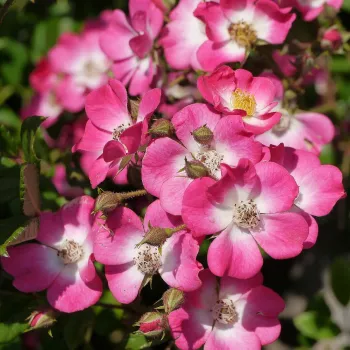
Crimson-pink outer petals with a clear snow-white eye. Colour lightens as flowers age and in strong sun, shifting to soft pale pink-lilac while the white centre remains, giving a lively, ever-changing bicolour effect on the bush. |
| Fragrance and aroma |
Fragrance is mild, with a delicate, muscat-like character rather than a strong classic rose scent. Best appreciated at close range around seating areas or paths, where the light aroma adds a gentle extra dimension. |
| Rose hip characteristics |
Produces moderate quantities of small, spherical rose hips in autumn, about 6–10 mm, coloured orange-red. Hips add seasonal interest and wildlife value, extending decorative appeal beyond the main flowering period. |
| Resistance and hardiness |
Hardy to approximately −26 to −23 °C (RHS H7, USDA 5b, Swedish zone 4). Disease resistance is medium for powdery mildew, black spot and rust, performing well with standard rose care and reasonable air circulation. |
| Horticultural recommendations |
Suited to beds, hedging, specimen planting and urban green spaces. Medium maintenance; occasional pest and disease control advised. Tolerates partial shade and moderate drought but not prolonged dryness; ensure consistent moisture and good drainage. |
MOZART gives you elegant pink-and-white clusters, pollinator-friendly single blooms and a long-lived own-root shrub that settles reliably into Irish gardens; consider it if you would like a graceful, low-fuss park rose.