ORANGE DAWN – orange climbing rose - Warner
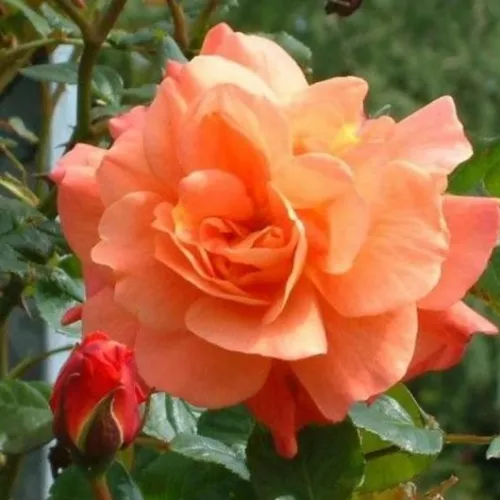
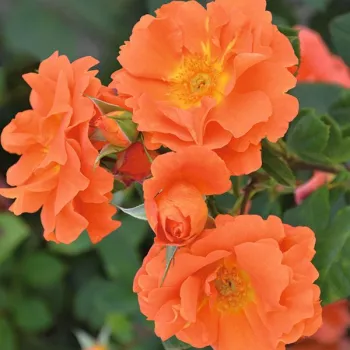
Let ORANGE DAWN bring a soft, orange glow to your garden with repeat-flowering clusters that brighten walls, arches and pergolas from summer into autumn. This reliable climbing rose offers medium maintenance and copes well with Ireland’s climate, even where breezes and rain are frequent, as long as the soil drains reasonably. Its remontant habit means generous flushes of bloom, giving you a colourful vertical accent without complicated care. Own-root plants settle in steadily for a long-lived, balanced framework: year one building roots, year two pushing stronger shoots, and by year three showing full ornamental impact. With moderately dense, mid-green foliage and a manageable 2–3 m height, ORANGE DAWN is easy to train on supports while remaining welcoming in an average family garden. The mild citrus fragrance adds a gentle extra note when you pass an open window, front door or seating area.
Use cases
| Target area |
Reason |
| Front-garden rose arch framing the entrance |
Ideal for creating a welcoming archway, as its 2–3 m height and moderate spread are easy to manage over a doorway or path. Repeat-flowering orange clusters give long-season interest without intricate pruning, suiting busy homeowners |
| Sunny wall or fence beside the family patio |
Trains neatly on trellis or wires, forming a stable, long-lived framework because the own-root plant gradually adapts to your soil, care routine and exposure. This makes it a good choice where you want a dependable backdrop for many years, suiting long-term planners |
| Pergola or seating corner in a small to medium garden |
Its manageable height and medium maintenance needs make it practical for covering a pergola near a sitting area, offering soft shade, colour and a mild citrus fragrance without demanding daily attention, suiting relaxed gardeners |
| Cottage-style side path with mixed planting |
The vivid yet not harsh orange blends well with perennials and shrubs, pairing nicely with box, bupleurum or California lilac to give a traditional, informal look while remaining reasonably easy to keep in shape, suiting cottage-garden fans |
| Feature climber on a sturdy obelisk in a lawn or bed |
Works well as a specimen, its remontant flowering providing repeated waves of interest around a focal structure. Own-root growth ensures that even after harder pruning or wind damage it can regenerate from the base and keep its form, suiting beginner gardeners |
| Partial-shade side wall or narrow boundary |
Performs reliably in full sun or partial shade, so it fits those typical Irish side-return spaces where light shifts through the day, giving you colour where some roses would struggle, suiting urban homeowners |
| Large container on a sheltered balcony or roof terrace |
Can be grown in a minimum 40–50 litre container with a sturdy support, provided regular watering and feeding are given; good heat tolerance helps it cope on warmer, more exposed balconies, suiting apartment gardeners |
| Decorative screen against wind-prone boundaries |
Once established, its climber framework and moderate foliage density help soften wind and views. It fits coastal and exposed gardens where good drainage supports healthy roots in a wet, breezy climate, suiting coastal residents |
Decorating ideas
- Warm Welcome Arch – Train ORANGE DAWN over a metal or wooden arch at the front gate, underplant with dwarf box and soft grasses for a tidy, inviting entrance – ideal for neat, low-fuss front gardens
- Sunset Patio Wall – Cover a sunny back wall by the terrace with ORANGE DAWN and interplant pots of lavender and rosemary to echo its warm orange tones – perfect for relaxed evening seating areas
- Cottage Pathway Sweep – Grow ORANGE DAWN on simple posts and wires along a side path, mixing bupleurum and country-style perennials beneath for an informal cottage feel – great for lovers of traditional Irish gardens
- Balcony Flame Column – Plant ORANGE DAWN in a 40–50 litre container with a tall obelisk, pairing with trailing thyme and compact hydrangeas to soften the base – suited to small balconies that need vertical colour
- Family Pergola Retreat – Let ORANGE DAWN scramble over a pergola above outdoor seating, combining with climbing clematis in softer shades for layered bloom – attractive for families who want a simple, long-lived retreat
Technical cultivar profile
| Parameter |
Data |
| Name and registration |
Climbing garden rose from the pharmaROSA ORIGINAL 2-litre range. Registered cultivar name CHEworangedawn, marketed as ORANGE DAWN – orange climbing rose – Warner, large-flowered climber for garden supports. |
| Origin and breeding |
Bred by Christopher H. Warner (Chris Warner Roses, United Kingdom). Parentage: ‘Dawn Chorus’ × unknown seedling. Bred and registered in 2006, introduced to the trade in 2007 via Rosen-Union e.G. in Germany. |
| Awards and recognitions |
Recognised in New Zealand Rose Trials with a Certificate of Merit in 2006, and later awarded Best Climber in Hamilton trials in 2011, confirming solid garden and display performance under trial conditions. |
| Growth and structure |
Large-flowered climbing rose reaching about 200–300 cm in height with a 120–200 cm spread. Moderately thorny canes with moderately dense, mid-green, slightly glossy foliage. Medium vigour, suited to training on arches, walls and pergolas. |
| Flower morphology |
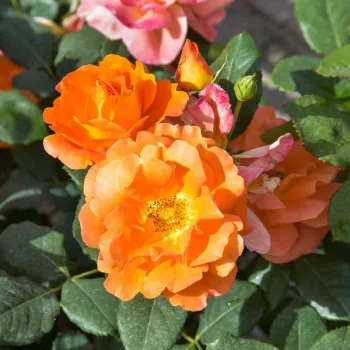
Large, double, cupped flowers with 26–39 petals, produced mainly in clusters. Flower size typically in the large range, approximately 7–10 cm across. Remontant habit with a strong second flush following the main early summer flowering. |
| Colour and phenology |
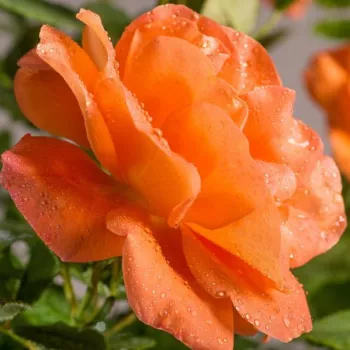
Clear, vivid orange blooms with a warm-toned glow. Buds open from deep orange with reddish tints to bright medium orange, then soften to pastel tones toward full opening; colour may pale slightly in strong sunlight during the season. |
| Fragrance and aroma |
Subtle, mild fragrance with an orange-peel, citrus-like character noticeable at close range rather than at a distance. Not primarily chosen for strong scent but offers a pleasant, light aromatic accent by paths, doors or seating areas. |
| Rose hip characteristics |
Rose-hip production generally limited due to double flowers. When present, hips are small, spherical and orange-red, around 8–12 mm in diameter, contributing occasional seasonal detail rather than being a dominant ornamental feature. |
| Resistance and hardiness |
Hardy to around −26 to −23 °C (RHS H7, USDA zone 5b, Swedish zone 4). Medium resistance to powdery mildew, black spot and rust; benefits from good air flow and occasional protection. Tolerates heat well if watered in prolonged dry spells. |
| Horticultural recommendations |
Use on arches, pergolas, walls, fences and espaliers, or as a specimen climber. Suitable for partial shade. Provide strong support, regular tying-in and occasional pruning. For containers, choose at least 40–50 litres volume with good drainage. |
ORANGE DAWN Climbing rose CHEworangedawn offers long-lasting orange bloom, manageable height for arches and walls, and dependable own-root growth for years of easy enjoyment, making it a reassuring choice if You prefer straightforward planting and care.