ORLÉANS ROSE – pink polyantha bedding rose – Levavasseur
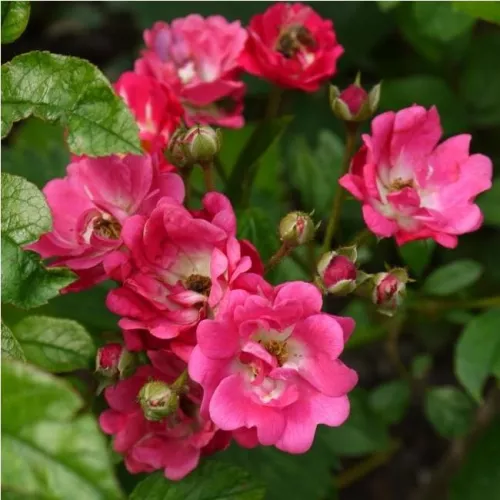
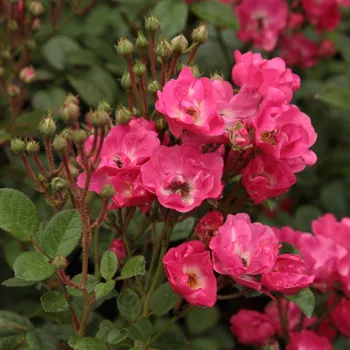
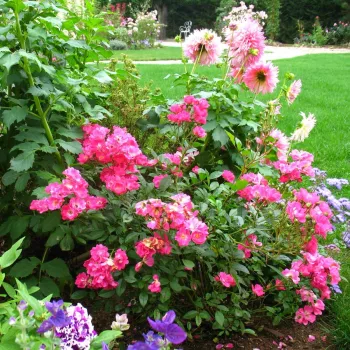
ORLÉANS ROSE is a compact, early 20th‑century classic that still feels perfectly at home in modern Irish gardens, giving You a neat, colourful front bed without demanding fussy care. Its clusters of deep pink blooms open repeatedly from summer into autumn, each spray starting strong and then softening to a powder‑pink and white blend for a long, gentle display. The bush stays compact and evenly rounded, ideal for edging paths or shaping a low hedge along a driveway. Dense, light green foliage keeps the planting looking orderly even between flushes, while its good self‑cleaning habit means most spent flowers drop away on their own, saving You time. Grown on its own roots, it settles in steadily and can regenerate well after pruning or weather damage, offering years of stable garden value. It copes reliably with our cool, damp conditions and the kind of humidity that often encourages leaf problems elsewhere, as long as You give it reasonable air flow and drainage. In a 40–50 litre pot or a small border, it will quietly build up its root system in year one, push stronger shoots and flowering clusters in year two, and by year three reward You with full ornamental impact that fits beautifully into relaxed cottage‑style or tidy urban front‑garden beds.
Use cases
| Target area |
Reason |
| Front garden edging along a path or driveway |
The naturally compact, rounded habit and equal height–spread make it ideal for a low edging row that stays in scale with an average front garden, creating definition without blocking views for beginners |
| Small rose groups in an urban front bed |
Planting 3–5 together at the recommended spacing creates a tight, colourful group with repeating flower clusters that read as one broad mass of pink, keeping a small city bed looking intentional and well filled for busy homeowners |
| Low, informal flowering hedge in a family garden |
Its dense foliage and moderate prickles combine into a soft, lightly defensive strip, useful for gently guiding children and pets while giving a continuous band of colour that fits cottage and suburban styles for family gardeners |
| Mixed border with perennials and cottage plants |
The semi‑double, cluster‑flowering sprays pair easily with asters and coneflowers, the fine flower size weaving through perennials instead of overwhelming them, so a mixed border feels balanced yet romantic for cottage‑garden fans |
| Compact bed in heavier Irish soils |
This variety tolerates our cool, moist climate well when given basic drainage and spacing, so even on heavier ground You can rely on regular flowering without complex soil work, easing worries about persistent damp and fungus for Irish gardeners |
| Large patio container on balcony or terrace |
In a 40–50 litre container it keeps a contained, tidy outline and repeats flowering generously, offering dependable colour where borders are not possible and allowing easier watering and feeding routines for apartment owners |
| Long‑term, low‑input rose planting |
As an own‑root shrub it forms its permanent framework in place and can regrow from its base after hard pruning or winter damage, supporting a longer planting life with fewer replacements for long‑term planners |
| Simple, “plant and enjoy” starter rose bed |
The variety responds well to straightforward care, and with year one focused on rooting, year two on stronger shoots and year three on full display, it lets newcomers see clear progress without advanced techniques for new gardeners |
Decorating ideas
- Rosy Cottage Border – Line a short garden path with ORLÉANS ROSE and underplant with low lavender; the compact clusters and gentle scent make a relaxed, storybook approach – ideal for cottage‑garden admirers
- Pink Frontage Focus – Create a neat group of three bushes beneath a bay window, edging with dwarf asters like ‘Apollo’ for late‑season daisy blooms – suited to homeowners wanting easy kerb appeal
- Family‑Friendly Hedge – Use a loose row along a lawn edge, interspersed with showy coneflowers for summer cheer, giving light structure without looking harsh – perfect for families who like informal order
- Urban Patio Cluster – Plant a single ORLÉANS ROSE in a 50‑litre pot and circle the rim with trailing thyme and violas for soft fragrance and colour – great for balcony and terrace gardeners
- Classic Park Corner – Combine a small block of this rose with low box or rosemary edging for a structured, traditional look that stays compact and manageable – appealing to lovers of formal, historic styles
Technical cultivar profile
| Property |
Data |
| Name and registration |
Trade name ORLÉANS ROSE, a polyantha bedding rose from the Garden rose collection; American Rose Society approved exhibition name Orléans Rose; introduced to gardens under the Levavasseur name. |
| Origin and breeding |
Bred by Ernest Levavasseur in Orléans, France as an open‑pollinated seedling of ‘Madame Norbert Levavasseur’; introduced 1909 in France and 1911 in Australia via Hazlewood Bros. Pty. Ltd. |
| Growth and structure |
Compact, evenly rounded shrub to around 60–85 cm in height and spread, with dense, light green, glossy foliage and moderate prickles, forming a bushy, well‑clothed outline suited to edging and bedding. |
| Flower morphology |
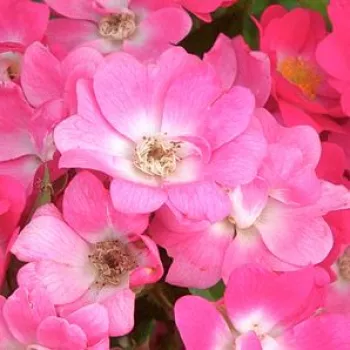
Semi‑double, cup‑shaped blooms with 13–25 petals, produced in tight clusters of small flowers (approximately 0.5–1.5 inches), repeating strongly through the season and dropping spent petals cleanly. |
| Colour and phenology |
Deep pink buds with carmine tint open to radiant pink blooms, lighter towards the centre; colour gradually pales to a powder‑pink and white blend, with moderate fade and a long, showy cluster effect. |
| Fragrance and aroma |
Fragrance is very weak and barely noticeable, so the variety is chosen mainly for its colour effect and neat habit rather than scent; partially attractive to pollinators due to limited stamen accessibility. |
| Rose hip characteristics |
Occasional small, spherical rose hips about 7–10 mm across, ripening orange‑red and adding a discreet seasonal accent late in the year without significantly affecting overall flowering performance. |
| Resistance and hardiness |
Hardy to approximately −21 to −18 °C (H7, USDA 6b, Swedish zone 3); disease resistance is moderate to black spot, powdery mildew and rust, responding well to basic hygiene and, if needed, light treatment. |
| Horticultural recommendations |
Best in sunny sites with decent drainage; medium maintenance with occasional pest or disease checks; space at 40–75 cm depending on use, allowing 4.2–4.8 plants/m² in massed, formally arranged plantings. |
ORLÉANS ROSE offers compact, long‑lasting clusters of pink colour, reliable repeat flowering and a durable own‑root habit that suits easygoing Irish gardens; consider it if You want a straightforward, attractive rose that will settle in for years.