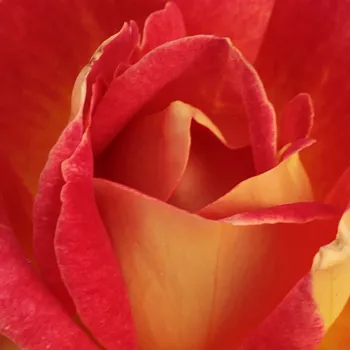
PICCADILLY – yellow-red hybrid tea rose – McGredy
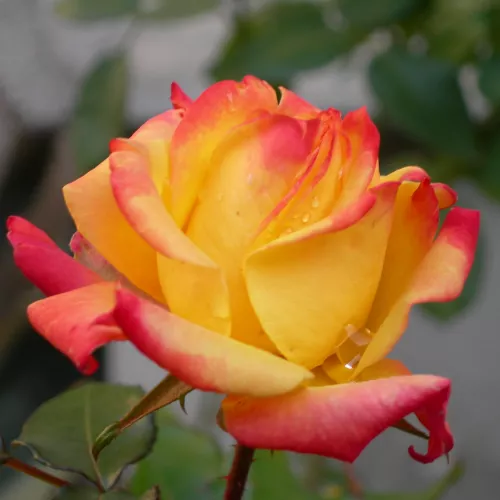
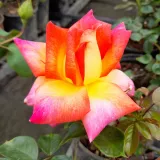
For a front garden that looks instantly more elegant yet stays manageable, PICCADILLY brings classic hybrid tea style in a bright yellow-and-red bicolour that stands out from the street. Its bushy, upright growth and dense, glossy foliage create a tidy structure, while large, high-centred blooms make it ideal if You like to cut a few stems for the house. This own-root plant settles in steadily, forming a long-lived, well-balanced bush with reliable repeat flowering once it has adjusted to Your soil and routine. It copes well with our damp Irish conditions and the challenges of frequent rain and humidity, needing only basic care and good drainage on heavier clay soils. Over the first three years it concentrates on roots, then strong shoots and finally reaches full ornamental impact, so You can expect a rose that improves each season rather than fizzling out. Plant it in the ground or in a generous 40–50 litre container for a colourful, low-fuss feature that suits busy family gardens and smaller urban spaces.
Use cases
| Target area |
Reason |
| Front garden focal bush near the entrance |
The bright yellow-red blooms and upright habit create an instant focal point that reads well from the pavement, giving a cared-for feel without needing complex pruning or specialist knowledge, ideal for a time-pressed homeowner |
| Small group planting in a family flower bed |
Planted in a group of 3–5, PICCADILLY forms a coherent, bushy block of colour with medium maintenance needs, offering repeat flowering through the season for families who want reliable impact without constant replanting, suiting a relaxed beginner |
| Cutting corner for house bouquets |
The large, high-centred hybrid tea blooms sit on strong, straight stems, making it easy to cut impressive, long-stem roses for vases while the bush continues to flower again, a pleasant routine for a creative garden enthusiast |
| Own-root long-term planting in a mixed border |
As an own-root rose it develops its final shape in situ and regenerates from the base, helping the planting stay stable and attractive over many years with normal care, reassuring for anyone planning a lasting garden investment |
| Sunny, well-drained bed in heavier Irish clay |
Given a sunny spot and improved drainage, PICCADILLY performs well in heavier soils and copes with our cool, wet climate, rewarding modest attention with repeat flowers, a practical choice for gardens on typical Irish clay |
| Urban front garden with limited planting depth |
Its relatively compact, upright growth and neat, glossy foliage give structure where space is tight, allowing You to create an elegant street-side display without complicated design, appealing to busy urban residents |
| Large patio pot or container by the doorstep |
In a 40–50 litre container with regular watering, PICCADILLY offers a striking, moveable accent of colour and mild fruity fragrance, letting You enjoy a classic rose close to the house, attractive for balcony or terrace gardeners |
| Cottage-style border with seasonal companions |
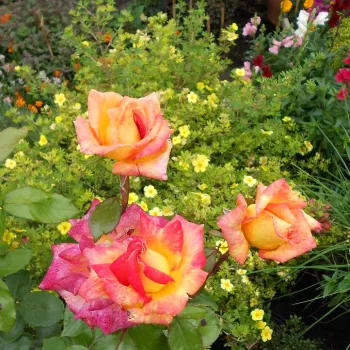
Its clear bicolour flowers stand out against looser perennials like heuchera or knotweed, giving a touch of formality inside an informal cottage mix while requiring only basic deadheading and feeding, perfect for relaxed country gardeners |
Decorating ideas
- Doorstep Welcome – Place a single PICCADILLY in a 40–50 litre terracotta pot by the front door with dwarf heuchera around the base for year-round foliage contrast – ideal for busy urban homeowners.
- Classic Cottage Pairing – Combine a small group of PICCADILLY with soft perennials and low grasses in a mixed border, letting the upright roses give structure among looser shapes – perfect for romantic cottage-garden fans.
- Street-Facing Feature – Plant one rose centrally in a narrow front bed, underplant with low evergreen groundcover, and enjoy its showy blooms as a simple, smart statement – suited to low-maintenance front gardens.
- Cutting Strip – Line a sunny fence with evenly spaced PICCADILLY bushes so You can cut long-stemmed flowers all summer without sacrificing garden display – great for home florists and bouquet lovers.
- Colour-Block Bed – Mass-plant PICCADILLY at recommended spacing to create a bold sweep of yellow-red colour in view of the patio or kitchen window – ideal for families wanting strong impact with simple care.
Technical cultivar profile
| Property |
Data |
| Name and registration |
Hybrid tea rose, registered as MACar. Trade name PICCADILLY – yellow-red hybrid tea rose – McGredy. ARS approved exhibition name: Piccadilly. Belongs to the Hybrid Tea commercial group. |
| Origin and breeding |
Bred by Samuel Darragh McGredy IV from ‘McGredy’s Yellow’ × ‘Karl Herbst’. Introduced in 1959 by Samuel McGredy & Son, Nurserymen, Northern Ireland, as a decorative and exhibition hybrid tea cultivar. |
| Awards and recognitions |
RNRS Certificate of Merit (1959) acknowledging garden and show quality. Gold Medal, Madrid (1960) and Gold Medal, Rome (1960) underline its international ornamental and exhibition value. |
| Growth and structure |
Bushy, upright hybrid tea shrub reaching about 80–110 cm in height and 60–85 cm in spread. Dense, dark green, glossy foliage. Moderately thorny shoots. Medium self-cleaning, occasional deadheading recommended. |
| Flower morphology |
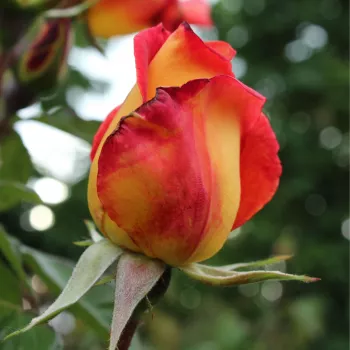
Large, double, high-centred hybrid tea blooms with 26–30 petals, usually borne singly on stems. Extra-large flower size, pointed buds reminiscent of classic cut roses. Repeat flowering with a notably abundant second flush. |
| Colour and phenology |
Vivid bicolour: sunshine yellow centres with scarlet red petal edges on opening. In cooler weather colours are strong; in heat the yellow softens to cream and red to pink, yet overall colour retention remains good. |
| Fragrance and aroma |
Fruity fragrance of mild intensity, giving a pleasant but not overpowering scent in the garden or vase. Suits those who prefer a gentle, refined perfume rather than strongly perfumed roses near seating areas. |
| Rose hip characteristics |
Produces a moderate number of small, spherical hips around 6–10 mm in diameter. Bright red colouring can add late-season interest if spent flowers are not removed, though hips are usually secondary to its floral effect. |
| Resistance and hardiness |
Hardy to approximately −21 to −18 °C (RHS H7, Swedish Zone 3, USDA 6b). Disease resistance medium overall: good black spot resistance with medium susceptibility to powdery mildew and rust; needs standard rose care. |
| Horticultural recommendations |
Best in full sun with fertile, well-drained soil. Moderate heat tolerance, does not like prolonged drought, so regular watering is needed. Spacing around 50 cm for beds or 75 cm as a specimen; suitable for 40–50 litre containers. |
PICCADILLY offers eye-catching yellow-red blooms, repeat flowering and neat, upright growth on a durable own-root plant that settles in for the long term, making it a practical, decorative choice if You are planning a new rose planting.