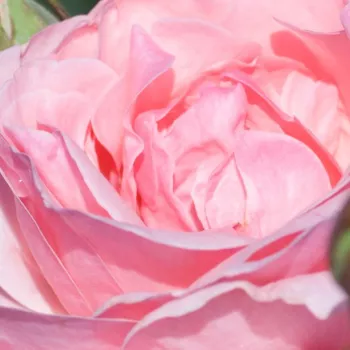
QUEEN ELIZABETH – pink bedding grandiflora rose - Lammerts
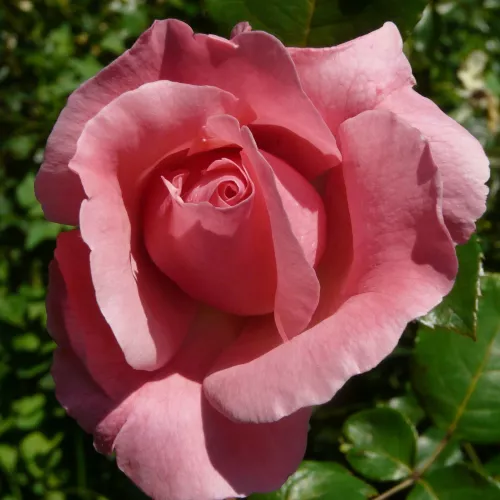
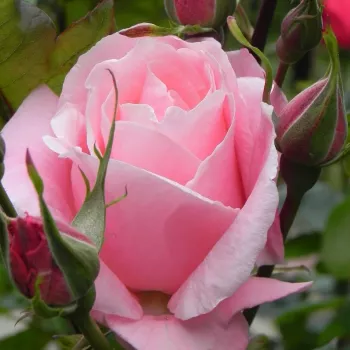
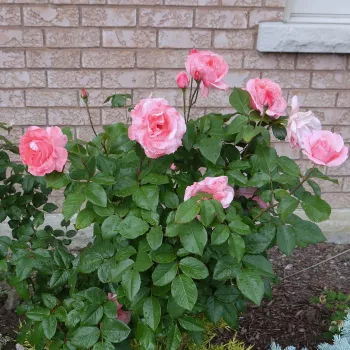
If You would like a tall, elegant bedding rose that feels at home in Irish weather, QUEEN ELIZABETH is an easy way to bring a quietly regal presence to Your garden. This grandiflora forms an upright, leafy hedge or specimen with dense dark foliage that shows off the soft pink blooms beautifully, while coping well with our damp air and heavier soils with appropriate drainage and feeding. Large, cupped flowers appear in generous flushes through the season, giving You armfuls of classic, long-stemmed blooms for the house as well as reliable colour outdoors. Own-root plants build a stable, long-lived structure that regenerates well after pruning, so the bush remains attractive for many years with only moderate maintenance. Planted in a sunny front garden bed, mixed border or spacious container of at least 40–50 litres, it settles steadily: first strengthening its roots, then filling out with new shoots, before reaching full ornamental value over its first few seasons.
Use cases
| Target area |
Reason |
| Front garden statement hedge |
The tall, upright growth makes a refined, semi-formal hedge that screens the front of the house without feeling heavy. Dense, glossy foliage and steady flowering create an elegant boundary that suits neat, low-effort family gardens and beginners |
| Feature rose in mixed border |
Its height lifts soft pink flowers above perennials and shrubs, giving vertical emphasis and gentle colour. Moderate disease resistance and own-root longevity mean You can design once and enjoy a stable, maturing border for many years, ideal for busy homeowners |
| Cut-flower corner near patio |
Long stems and large, cupped flowers are perfect for vases, so one planting can regularly supply the house. Consistent repeat blooming under basic care offers rewarding picking without needing a complicated cutting garden, appealing to home florists |
| Small group planting in front lawn bed |
Groups of 3–5 plants form a high-impact, upright mass of pink that looks impressive from the street. With own-root plants, the clump builds up year by year into a durable, easily pruned feature, reassuring for first-time planters |
| Cottage-style side path border |
The classic pink and slightly old-fashioned flower form blend naturally with cottage favourites. Its moderate maintenance and dependable repeat show make it simple to weave into informal combinations without intensive upkeep, perfect for country gardeners |
| Sunny coastal front garden |
Once established, it tolerates wind and rain, provided the soil drains reasonably, which suits exposed Atlantic-influenced plots where roses must cope with frequent showers and heavy ground. This balance of toughness and beauty supports seaside homeowners |
| Large container on terrace or balcony |
In a 40–50 litre or larger container with good drainage, the upright habit creates height and privacy without taking much footprint. Regular watering and feeding keep flowers coming, yet overall care stays manageable for urban apartment owners |
| Long-lived specimen in lawn or gravel |
Planted alone in a lawn opening or gravel bed, it gradually forms a tall, well-branched rose that matures over the first three seasons into a reliable, long-lived focal point, satisfying those who enjoy watching one plant develop, especially patient gardeners |
Decorating ideas
- Classic cottage trio – Plant QUEEN ELIZABETH with purple coneflower and white sagebrush for a soft pink-and-silver look that feels naturally rural – ideal for lovers of relaxed cottage borders
- Elegant front hedge – Line a front path with a single row, underplanting with low lavender for fragrance and neat edging – suitable for homeowners wanting a tidy, welcoming entrance
- Romantic cutting bed – Combine small groups of this rose with airy grasses and white cosmos in a sunny strip set aside for cut flowers – great for gardeners who like fresh bouquets indoors
- Coastal pastel mix – In exposed gardens, pair with hardy rosemary and low hydrangeas in well-drained soil to create a wind-tolerant, pastel-toned planting – fitting for seaside and west-facing plots
- Formal accent circle – Arrange 5 plants in a ring around a small tree or statue, with simple groundcover at the base, for a structured yet easy-care focal point – good for fans of ordered, traditional layouts
Technical cultivar profile
| Property |
Data |
| Name and registration |
Grandiflora bedding rose QUEEN ELIZABETH, registered by this trade name; ARS exhibition name QUEEN ELIZABETH, part of the bedding rose collection, widely known and grown in gardens worldwide. |
| Origin and breeding |
Raised by Walter Edward Lammerts in the United States in 1951 from ‘Charlotte Armstrong’ × ‘Floradora’; introduced 1954 via Armstrong Nurseries and Jackson & Perkins, becoming a classic grandiflora. |
| Awards and recognitions |
Highly decorated: Portland Gold Medal 1954, AARS 1955, President’s International Trophy 1955, ARS Gold Medal 1957, Golden Rose of The Hague 1968, WFRS Hall of Fame and World’s Favourite Rose 1979. |
| Growth and structure |
Tall, upright grandiflora rose reaching about 180–260 cm high and 70–110 cm wide, with dense, dark green, glossy foliage and moderate prickliness; forms an architectural, columnar shrub when mature. |
| Flower morphology |
Large, double, cupped flowers with 26–39 petals, usually borne in clusters. Remontant habit with generous repeat blooming and a strong second flush, providing long seasonal display and good cutting stems. |
| Colour and phenology |
Uniform mid-pink blooms with a delicate silvery sheen; buds deep pink, opening to silky mid-pink and gradually fading to light, pearly pink in strong sun. Colour holds best in cooler conditions with some air movement. |
| Fragrance and aroma |
Mild, sweet scent with a delicate, restrained character noticeable at close range rather than at a distance; mainly valued for flower form and colour rather than strong perfume, but pleasant near paths and seating. |
| Rose hip characteristics |
Produces ovoid orange-red hips 12–18 mm across, of moderate abundance. Adds quiet ornamental interest in late season if deadheading is reduced, though most gardeners remove spent blooms to encourage rebloom. |
| Resistance and hardiness |
Hardy to about −26 to −23 °C (H7, USDA 5b, Swedish zone 4). Disease resistance moderate overall, notably resistant to black spot, with medium tolerance to heat and drought when watered in extended dry spells. |
| Horticultural recommendations |
Best in full sun with fertile, well-drained soil; prefers regular watering and feeding. Space 55–100 cm depending on hedge or specimen use, around 2.4–2.7 plants/m² for bedding; occasional deadheading and protection advised. |
QUEEN ELIZABETH offers tall, reliable flowering, elegant cutting blooms and long-lived own-root growth that settles steadily into Irish gardens, so You can plant with confidence and simply decide where it will suit You best.