ROSE-MARIE VIAUD – lilac rambler climbing rose – Igoult
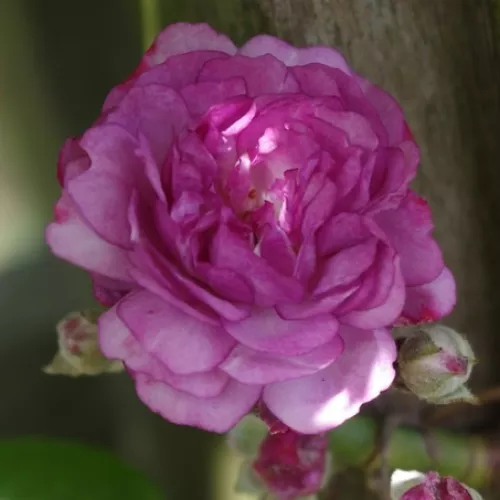
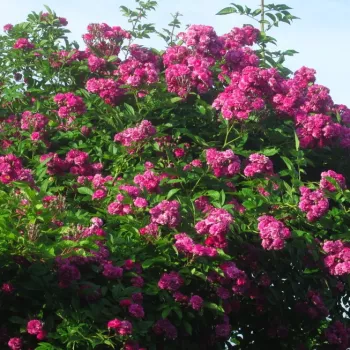
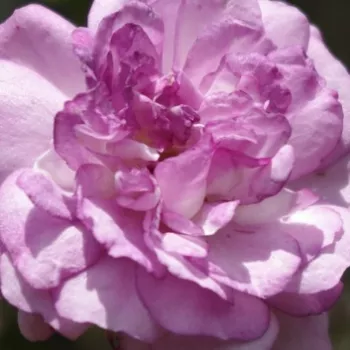
Transform a plain wall, arch or old tree into a cascade of nostalgic lilac with ROSE-MARIE VIAUD, a classic rambler that covers large structures with clouds of small, cup-shaped blooms. This historic variety flowers once with a breathtaking flush, then settles into graceful greenery that needs relatively little attention beyond simple pruning and guidance. Its clusters of semi-double flowers open dark and moody before fading to soft pastel tones, creating a romantic, cottage-style look that suits Irish homes and gardens. The plant is barely-prickly, making it easier to train along a pergola, fence or shed, and its long, flexible canes can be threaded safely around seating areas or narrow side passages. Own-root growth means that, over time, it can regenerate well from the base, building a robust framework for a long-lived planting without complicated graft care. In its first year it concentrates on roots, in the second on shoots, and by the third delivers full ornamental impact with arching, mid-green foliage. It copes reliably with typical Irish humidity when you give it some air movement and drainage, and its once-a-year flowering makes seasonal pruning predictable and easy to schedule. Plant it where you want a dramatic display that works hard for you yet still feels relaxed, natural and in tune with traditional cottage-garden charm.
Use cases
| Target area |
Reason |
| Large pergola over seating or pathway |
Long, flexible canes and moderate foliage density make this rambler ideal for clothing a pergola where you want shade, seasonal drama and an airy, not oppressive, overhead canopy that stays manageable for the average home gardener, including beginners |
| Sunny house wall or garage gable |
The strong, once-a-year flowering flush creates a memorable lilac curtain effect, perfect for adding character to a plain façade; train its climbing growth on sturdy wires to frame windows or soften a tall gable in a typical family garden, appealing to homeowners |
| Fence or boundary in a cottage-style garden |
Rambler growth and the ability to form a long-lived own-root framework make it well suited for softening boundaries; it develops into a stable, leafy screen with seasonal colour that fits relaxed, rural cottage gardens valued by country-gardeners |
| Old tree or mature shrub as a living support |
The variety’s climbing habit and relatively low prickliness let you weave canes gently through the lower branches of an old apple or ornamental tree, creating a romantic “rose in a tree” effect favoured by romantics |
| Feature pillar or tall obelisk near an entrance |
Its semi-double, colour-shifting blooms give striking vertical interest when spiralled around a strong pillar or obelisk, providing a relaxed but impressive welcome in front gardens and driveways, appreciated by visitors |
| Mixed shrub and grass border backdrop |
The moderate foliage density and vigorous height allow it to rise behind perennials and ornamental grasses, giving a textured backdrop without overwhelming smaller plants; its once-flowering habit simplifies planning of the border’s year-round look for planners |
| Large container on balcony or terrace (min. 40–50 litres) |
In a spacious container it can be trained up a trellis or rail to create a vertical screen, provided you water and feed regularly and give support; this suits coastal or urban settings where a planted bed is not available but privacy is desired by balcony-owners |
| Sheltered, airy spot in wetter Irish climates |
Choosing a site with good air movement and drainage helps it cope better in our damp conditions with frequent rain and higher fungal pressure, supporting healthier foliage and easier maintenance for time-pressed gardeners |
Decorating ideas
- Cottage Archway – Train ROSE-MARIE VIAUD over a wooden or metal arch and underplant with catmint and hardy geraniums for a soft, tumbling cottage look – ideal for lovers of informal, storybook-style entrances
- Lilac Curtain Wall – Cover a sunny wall with horizontal wires and let the lilac rambler cascade down, pairing the base with lavender and rosemary to echo its cool tones – perfect for neat yet characterful front gardens
- Romantic Tree Dressing – Thread the supple, barely prickly canes through an old apple or hawthorn tree, with spring bulbs below for layered flowering – great for those who enjoy naturalistic, low-fuss drama
- Grasses and Glow – Use it as a tall backdrop behind fountain grass, bluebeard and white liatris for a modern, breezy border with movement and changing lilac shades – suited to design-conscious family gardens
- Entrance Pillar Pair – Plant two specimens at either side of a gate or path and spiral them up sturdy obelisks, combining with hydrangeas and box for structure – ideal for homeowners wanting a welcoming, traditional feel
Technical cultivar profile
| Parameter |
Data |
| Name and registration |
ROSE-MARIE VIAUD – rambler, climbing rose; trade name Rose-Marie Viaud Climbing rose Igoult. ARS exhibition name Rose-Marie Viaud. Unregistered cultivar; part of the Climbing rose collection, rambler and polyantha group. |
| Origin and breeding |
Bred by M. Igoult, France, introduced 1924. An open-pollinated seedling of ‘Veilchenblau’. Initial distribution by Hazlewood Bros. Pty. Ltd. in Australia (1926). Breeding company data otherwise not recorded. |
| Awards and recognitions |
Certified cultivar in the Longwood Gardens 10-year Rose Trial, indicating long-term garden performance over an extended observation period under trial garden conditions. |
| Growth and structure |
Climbing rambler with arching canes; height approximately 360–550 cm, spread 150–220 cm. Moderately dense, mid-green, slightly glossy foliage. Barely prickly shoots make training and maintenance more comfortable. |
| Flower morphology |
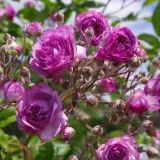
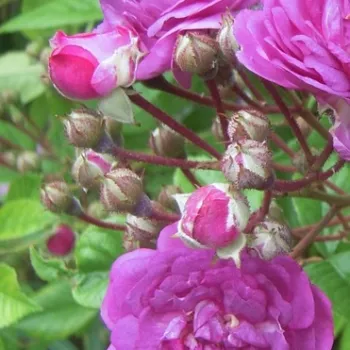
Semi-double, cup-shaped clusters with 13–25 petals per bloom. Small flowers (around 0.5–1.5 inches), borne in large, showy trusses. Non-remontant; produces one main flowering period each season, followed by green structural growth. |
| Colour and phenology |
Overall effect is a cool, muted violet–lilac tone. Buds open dark violet-purple, then intense crimson-purple with greyish-mauve tones, ageing to uniform purple and finally pastel lilac-grey. Colour retention moderate, with gentle, romantic fading. |
| Fragrance and aroma |
Fragrance is very weak and barely noticeable; no detailed scent profile recorded. Chosen mainly for colour effect and rambler habit rather than for strong perfume or use in scented rose collections or cut-flower arrangements. |
| Rose hip characteristics |
Rose hips form sparsely; where present they are small, red, egg-shaped, typically 6–9 mm in diameter. Hips add occasional autumn interest but are not a dominant ornamental feature of this cultivar. |
| Resistance and hardiness |
Hardy to approximately −21 to −18 °C (USDA zone 6b, RHS H7, Swedish zone 3). Moderate tolerance to heat and drought; performance declines in hot, dry spells. Disease resistance is modest, with noted sensitivity to rust. |
| Horticultural recommendations |
Best on pergolas, walls, fences, pillars or as a specimen rambler. Requires regular plant protection and hygiene pruning in damp seasons. Space 170–280 cm depending on use; allow a robust support and guide new canes annually. |
ROSE-MARIE VIAUD offers dramatic lilac summer curtains with relatively comfortable handling, builds a long-lived own-root framework over time, and rewards patient gardeners who would like a romantic climber they can simply guide and enjoy.