ROTILIA® – carmine-red bedding floribunda rose – KORvillade
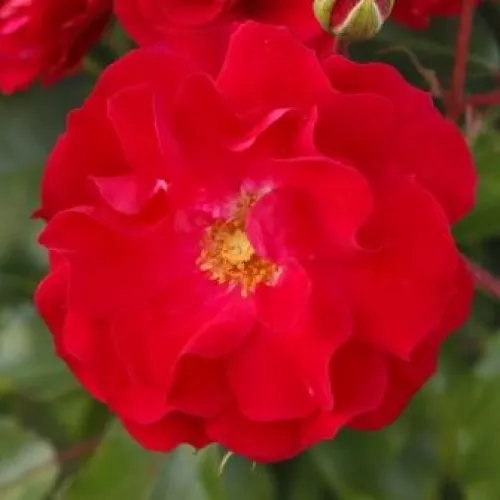
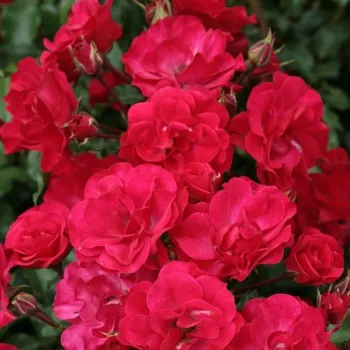
If You want a reliable burst of colour that simply gets on with the job, ROTILIA® is a compact floribunda that covers itself in clusters of carmine-red blooms from early summer onwards with remarkably low effort from You. Bred by Kordes for modern gardens, it shrugs off typical Irish humidity and rain, coping well even where soil stays heavy and needs careful drainage. Its dense, glossy foliage and award‑winning health mean You spend more time enjoying and less time pruning or spraying. In year one it focuses on roots, in year two it fills out its shoots, and by year three it shows its full garden impact, settling into a neat, upright, bushy shape that suits front beds, paths and small groups. Semi‑double, self‑cleaning flowers drop cleanly, so the plant stays tidy without deadheading marathons, while the open blooms offer partially accessible stamens that visiting bees can still find. ROTILIA® is equally at home in a well‑prepared border or a large patio container, forming a long‑lived, own‑root shrub that regenerates from its base and maintains its shape for years. Heat‑tolerant once established and happy even in partial shade, it is an easy, confidence‑building choice when You want to plant a rose that simply works in a family garden.
Use cases
| Target area |
Reason |
| Front garden bedding along paths or driveways |
Compact, upright bushes stay within 60–85 cm, creating a well-behaved edging that does not sprawl across paths, ideal for neat front gardens where You want structure without constant clipping, especially for beginners |
| Low-maintenance family flower beds around the home |
Outstanding disease resistance and ADR certification mean very little spraying or special care is needed, giving reliable flowering even in busy households that only have time for basic watering and feeding, suiting time-poor gardeners |
| Coastal and exposed Irish gardens |
Tough foliage and strong garden performance cope well where rain, wind and heavier soils are common, giving dependable colour in sites that can be challenging for fussier roses, reassuring coastal owners |
| Small groups of 3–5 plants as a carmine-red focal point |
Cluster-flowered, semi-double heads repeat through the season, creating a bold but tidy block of colour that ties together cottage-style plantings without needing complex design skills, perfect for first-time planters |
| Mixed borders with shrubs and perennials |
Moderate height and bushy, dark green foliage blend easily with grasses, salvias or daylilies, adding structure and long-season flower interest without overwhelming neighbouring plants, ideal for style-conscious gardeners |
| Large patio containers and small paved spaces |
Performs well in a minimum 40–50 litre pot, where its compact habit and self-cleaning blooms keep the display fresh with straightforward watering and feeding, an excellent choice for balcony or terrace owners |
| Partial shade spots near walls or low hedges |
Tolerant of partial shade, it still flowers generously where many roses sulk, making awkward side returns or north-east facing front beds into reliable features for practical homeowners |
| Pollinator-friendly sections of decorative beds |
Semi-double, open flowers offer partially accessible stamens that attract bees, while the plant remains compact and smart, fitting nicely into wildlife-friendly borders that must also look cared-for for nature-loving families |
Decorating ideas
- Cottage Edge Glow – Plant ROTILIA® in a loose line along a cottage-style path and weave between clumps of Agastache 'Blue Fortune' for soft blue spires and friendly, low-care charm – for relaxed, romantic gardeners
- Red and Gold Ribbon – Combine short drifts of ROTILIA® with daylilies in warm yellows and ambers to create a glowing summer ribbon along a driveway or front border – for families who enjoy bold colour
- Urban Patio Accent – Place a single ROTILIA® in a 40–50 litre terracotta pot, underplant with trailing thyme and white alyssum for a clean, fragrant accent on balconies or paved yards – for compact-city spaces
- Grassy Contrast Curve – Use a crescent of ROTILIA® in front of Panicum virgatum 'Sangria', letting the upright grasses sway behind the dense red flower cushions for movement and structure – for design-focused home gardeners
- Part-Shade Welcome Bed – In a north-east facing front bed, mix ROTILIA® with blue geraniums and dwarf hydrangeas to keep colour and form going from early summer to autumn – for busy owners seeking reliable front-door appeal
Technical cultivar profile
| Parameter |
Data |
| Name and registration |
Floribunda bed rose, registered as KORvillade, marketed as Rotilia® in the RigoRosen® collection; ARS exhibition name Rotilia®, commercial type flowerbed floribunda for garden and landscaping use. |
| Origin and breeding |
Bred by Wilhelm Kordes III in Germany in 1992, introduced commercially after 2006 by W. Kordes’ Söhne, with parentage officially unknown but selected for garden performance and health in varied conditions. |
| Awards and recognitions |
Highly decorated: multiple Gold and Silver Medals in Dublin, Kortrijk, Geneva, Madrid, Monza and Potsdam (2001–2002); Gold Rose at Den Haag (2003); ADR certification in 2002 and Gold Standard recognition in 2008. |
| Growth and structure |
Compact, upright, bushy shrub typically 60–85 cm tall and 40–60 cm wide, with dense, dark green, glossy foliage and moderate prickles; self-cleaning habit keeps plants neat with minimal deadheading in normal garden use. |
| Flower morphology |
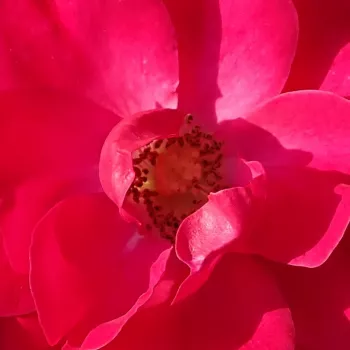
Semi-double, flat blooms with 9–16 petals, produced in clusters of medium-sized flowers about 4–7 cm across; remontant, with an abundant second flush and good self-cleaning as most spent blooms drop away naturally. |
| Colour and phenology |
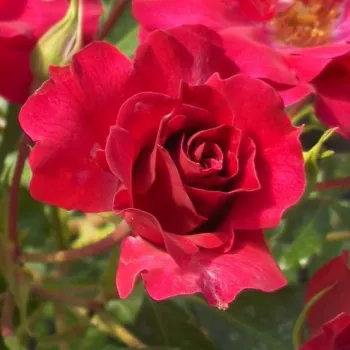
Vibrant, cool-toned carmine-red flowers; buds deep glossy carmine, opening fiery red, then lightening slightly to raspberry red with a subtle silvery edge, overall holding colour well even in strong sun without severe fading. |
| Fragrance and aroma |
Very faint scent with a brief wild-rose character close to the bloom; fragrance is not the main feature, making it suitable near windows or seating where powerful perfume is not desired or may be overwhelming. |
| Rose hip characteristics |
Produces moderate numbers of small, spherical hips, typically 7–10 mm across, in a bright scarlet-red shade (RHS 46A), adding quiet seasonal interest in late summer and autumn where flowers have been left uncut. |
| Resistance and hardiness |
Excellent resistance to powdery mildew, black spot and rust; hardy to about −21 to −18 °C (RHS H7, USDA zone 6b, Swedish zone 3) and tolerates heat and moderate drought, needing watering only in prolonged dry spells. |
| Horticultural recommendations |
Suited to flower beds, edging, groundcover and urban plantings; plant 30–55 cm apart, 8.2–9.4 plants/m² for massing; thrives in full sun to partial shade with well-drained soil and routine watering and feeding. |
ROTILIA® offers compact, healthy colour with minimal care, long-lived own-root growth that regrows from the base, and reliable repeat flowering, making it a sensible, confidence-building choice when You are selecting a rose.