ROZÁLIA – orange climbing rose – Márk
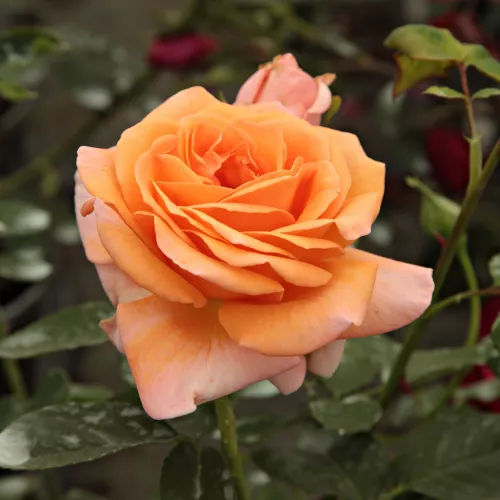
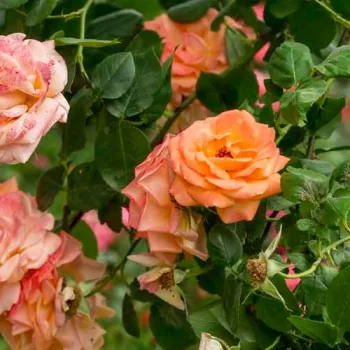
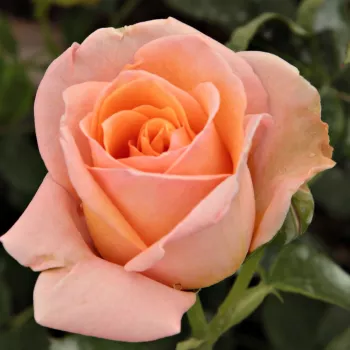
With its warm orange‑to‑pink blooms and generous scent, ROZÁLIA is an inviting climbing rose for pergolas, arches and fences in Irish family gardens. Bred for balanced growth and medium care needs, it settles well even where humidity and rainfall are frequent, provided You give it reasonable drainage. This own‑root climber forms a long‑lived framework of shoots that can be renewed from the base, so Your pergola or retaining wall keeps its charm for many years with modest pruning and feeding. In the first year it focuses on roots, in the second on stronger shoots, and by the third year it delivers full ornamental value with tall, arching stems and plentiful repeats of cupped, very double flowers. The medium disease resistance suits average front gardens where You want a rose that “just works” rather than demanding constant spraying. ROZÁLIA’s height makes it excellent for screening or softening boundaries while leaving ground space free for low‑maintenance planting at the base. Its flowers open in a rich mid‑orange with a peachy undertone, then gently soften to pinkish tones, giving long‑season colour changes that stay harmonious with rustic brick, painted walls and timber structures. The strong, aromatic fragrance adds a romantic cottage‑garden feel near seating areas or paths, rewarding anyone who passes with a noticeable scented wave. In coastal or exposed situations it performs best where the base is sheltered and the soil is not waterlogged, giving You a dependable, medium‑tall climber that feels both robust and welcoming. For busy gardeners who prefer easy structures over tricky pruning techniques, ROZÁLIA offers an attractive way to bring vertical interest into smaller spaces around the home.
Use cases
| Target area |
Reason |
| Front‑garden rose arch over a path |
Climbing height around 2,4–3,6 m lets ROZÁLIA comfortably cover a standard rose arch, giving welcoming mid‑orange, strongly scented blooms at face level without taking up much ground space – ideal for a busy, style‑conscious beginner |
| Pergola beside a patio or seating area |
The combination of strong fragrance and repeat flowering provides a long season of scented colour above garden furniture, with medium maintenance needs that suit casual summer care rather than intensive routines – reassuring for time‑pressed homeowners |
| Clothed retaining wall in a sloping garden |
Arching, climbing growth trains readily along wires or trellis, softening hard retaining walls and steps while leaving planting room at the foot; own‑root resilience means the framework can be renewed if cut back – practical for long‑term planning families |
| Fence or boundary screen in a narrow side garden |
Tall, moderately dense foliage creates a vertical curtain of leaves and flowers, giving privacy and colour where ground space is limited, and the plant’s medium disease resistance fits typical Irish side‑garden conditions – helpful for urban‑plot gardeners |
| Cottage‑style mixed border backdrop |
The warm orange to pink tones blend easily with perennials such as Rudbeckia and lavender, while the climber’s framework sits at the back, letting smaller plants shine in front; repeat flowering keeps the border lively for relaxed cottage‑garden enthusiasts |
| Small group of 2–3 climbers on a long pergola run |
Planting a short row at 1,5–2,0 m intervals creates a continuous tunnel of colour and scent; own‑root plants gradually sync their growth, giving a unified, long‑lasting structure with fairly straightforward training for social‑space‑loving garden‑owners |
| Large container on a sheltered balcony or terrace |
In a 40–50 litre container with good drainage, ROZÁLIA can be trained up a trellis to bring vertical colour where borders are impossible; its medium care needs mean watering and feeding are manageable across a normal season for container‑friendly residents |
| Coastal or exposed rural front garden pergola |
Good heat and moderate drought tolerance help it cope with drying winds, provided the root area has shelter and free‑draining soil, making it suitable for sites that often experience wind‑driven rain and high air moisture – reassuring for Atlantic‑coast gardeners |
Decorating ideas
- Cottage Archway – Train ROZÁLIA over a simple metal arch and underplant with lavender and catmint for a soft, romantic entrance that looks good with minimal shaping – ideal for country‑lane and village‑style front‑garden lovers
- Warm Patio Pergola – Let its orange blooms climb a wooden pergola above outdoor seating, paired with terracotta pots of rosemary and thyme to echo its sunset tones – perfect for families who entertain outdoors in summer
- Retaining‑Wall Veil – Fix horizontal wires along a retaining wall and fan the canes out, then edge the base with low Rudbeckia for golden daisies beneath the pink‑tinged flowers – suited to sloping plots needing gentle softening
- Narrow‑Side Garden Screen – Grow ROZÁLIA along a side‑path fence with a gravel strip and a simple line of hardy grasses, creating privacy and colour without crowding the walkway – good for compact urban gardens
- Balcony Feature Pot – Plant a single rose in a 40–50 litre half‑barrel with a slim trellis, adding trailing ivy and seasonal bedding at the rim for an instant vertical focal point – great for renters or balcony gardeners wanting impact
Technical cultivar profile
| Property |
Data |
| Name and registration |
Trade name ROZÁLIA – orange climbing rose – Márk; large‑flowered climbing rose in the climbing rose collection, exhibition category climber; registered cultivar name not published, female given‑name theme. |
| Origin and breeding |
Bred by Márk Gergely at the Horticultural Research Institute, Budatétény, Hungary. Parentage ‘Kõrösi Csoma Sándor emléke’ × ‘Sutter’s Gold (Cl)’. Introduced by PharmaRosa Ltd. in 1998; breeding work completed around 2000. |
| Growth and structure |
Vigorous climbing habit reaching about 2,4–3,6 m high with a spread of 1,2–2,0 m. Moderately dense, slightly glossy light‑green foliage on moderately thorny canes; suited to training on arches, pergolas, fences and walls. |
| Flower morphology |
Large, cupped, very double blooms with 40+ petals, borne mainly solitary on the stems. Flower size classified as large (approximately 7–10 cm). Remontant habit with a strong main flush and a plentiful second flowering later in the season. |
| Colour and phenology |
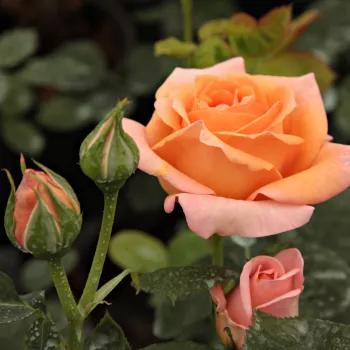
Bud deep orange‑red with silky sheen; opening to rich mid‑orange with peachy undertone, then softening to pinkish tones as the blooms age. Colour retention is good, with gradual lightening rather than harsh fading in typical garden exposure. |
| Fragrance and aroma |
Strong, clearly perceptible fragrance with a rich, aromatic rose character. Scent is easily noticed at close quarters and can drift around arches or pergolas in still conditions, enhancing seating areas and frequently used garden paths. |
| Rose hip characteristics |
Occasional ovoid, egg‑shaped hips, about 8–12 mm in diameter, in orange‑red shades. Decorative in small numbers late in the season but not a dominant ornamental feature; may be removed during deadheading if preferred. |
| Resistance and hardiness |
Hardy to approximately −21 to −18 °C (RHS H7, Swedish zone 3, USDA 6b). Disease resistance rated medium for black spot, powdery mildew and rust; benefits from good air flow and standard preventive care in wetter, high‑pressure seasons. |
| Horticultural recommendations |
Best on supports such as arbours, pergolas, arches, fences or park structures. Space at 1,4–2,4 m depending on use. Maintenance medium: basic pruning, feeding and occasional plant protection recommended for long‑term, tidy performance. |
ROZÁLIA offers fragrant, repeat‑flowering orange blooms on a space‑saving climber that clothes arches and pergolas for years, with own‑root durability supporting easy renewal and giving You a dependable choice if You would like a graceful vertical feature.