WHITE JACQUES CARTIER – white historic perpetual hybrid rose - Pedersen
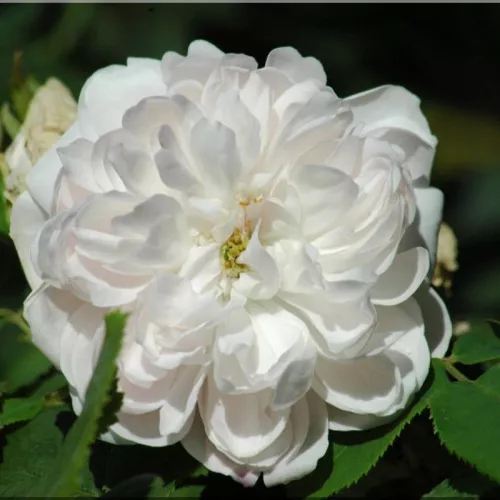
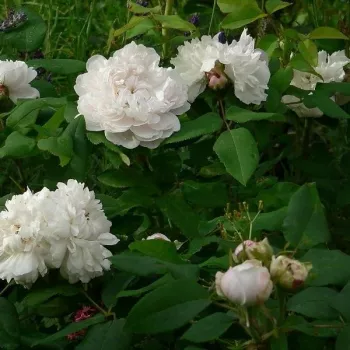
If You dream of a romantic, historic shrub rose that looks at home in an Irish cottage-style front garden, WHITE JACQUES CARTIER offers richly filled, snow-white rosettes and a luxurious old-rose perfume on a bushy, upright shrub that suits smaller beds and paths. This own-root, 2-litre plant arrives well established, so You can simply plant it and let it grow, even where humidity and cool summers are usual. Over time it forms a stable, long-lived shrub that regenerates from its own roots, giving lasting structure and character to the garden. With medium height and dense, matte dark foliage, it tucks neatly into flower borders and front-garden beds while its large, very double blooms bring a soft, romantic look. Expect the plant to invest first in roots, then in strong shoots, and by the third year to reach full ornamental value. In partial shade or light, dappled sites it still flowers reliably, and with regular care You can enjoy its classic heritage presence and generous fragrance for many years.
Use cases
| Target area |
Reason |
| Front garden focal shrub |
Bushy, upright habit and moderate height create an elegant focal point beside a gate, path or bay window, giving structure without overwhelming a small Irish front garden, suitable for style-conscious homeowners |
| Cottage-style flower border |
Large, very double white rosettes and dense foliage suit mixed borders with traditional perennials, echoing classic cottage gardens and providing romantic summer colour for nostalgic gardeners |
| Partial-shade side beds |
Performs reliably in partial shade, so it can brighten side passages and north-east aspects where sunlight is limited, bringing flowers and scent to otherwise difficult spots for practical planners |
| Near seating areas and patios |
The very strong, garden-filling old-rose fragrance is best appreciated close by, so planting near a bench, patio or terrace turns everyday sitting areas into scented retreats for relaxed families |
| Small specimen group of 3 roses |
Own-root plants adapt gradually to local soil and care, forming a stable, harmonious group that matures together over the years, ideal for long-term planting plans for thoughtful beginners |
| Edging for formal or informal beds |
Medium height and dense, matte dark foliage line paths or lawn edges neatly, giving a defined but soft boundary that works in both formal and relaxed layouts for organised gardeners |
| Large containers on sheltered patios |
Can be grown in a minimum 40–50 litre container with good drainage, allowing renters and balcony owners to enjoy historic roses where borders are not possible, perfect for flexible city-dwellers |
| Coastal and rural cottage frontages |
Own-root form and sturdy bush habit cope well in exposed, breezy sites where Atlantic winds and frequent rain demand resilient, easily maintained shrubs for practical coastal gardeners |
Decorating ideas
- COTTAGE BORDER DUO – Combine White Jacques Cartier with garden pinks and creeping thyme for a low, fragrant underplanting that softens path edges – ideal for lovers of traditional cottage borders
- ROMANTIC WHITE BED – Plant 3–5 shrubs together with white Lychnis viscaria ‘Alba’ for layered white tones and old-rose scent – suited to those seeking a calm, monochrome garden corner
- SCENTED SEATING NOOK – Position a single shrub beside a south- or west-facing bench, underplant with thyme and low herbs, to create an intimate, perfumed rest spot – perfect for evening relaxers
- FORMAL-LOOK EDGING – Use evenly spaced plants along a front lawn edge, interplanted with lavender or rosemary, to echo traditional rose walks – good for fans of tidy, structured gardens
- CONTAINER SHOWPIECE – Grow one plant in a 50-litre terracotta pot with trailing thyme at the rim for a movable historic accent – attractive for balcony and patio gardeners with limited soil
Technical cultivar profile
| Property |
Data |
| Name and registration |
White Jacques Cartier is a historical, perpetual hybrid rose marketed as a historic shrub rose. Belongs to the Hybrid Perpetual and Damask group; ARS exhibition name: White Jacques Cartier. |
| Origin and breeding |
White sport of the old rose ‘Jacques Cartier’, a Portland type. Discovered and introduced in Denmark in 2001 by Knud Pedersen; exact breeding institution and registration year not documented. |
| Growth and structure |
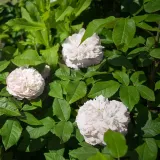
Bushy, upright shrub reaching about 80–130 cm in height and 70–120 cm spread. Foliage is dense, with matte, dark green leaves and moderate prickliness; poor self-cleaning, so deadheading improves appearance. |
| Flower morphology |
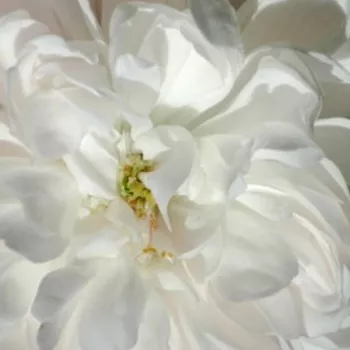
Large, very double rosette blooms with more than 40 petals. Flowers are usually solitary on the stems. Remontant, with a good main flush and lighter repeat later in the season under suitable care. |
| Colour and phenology |
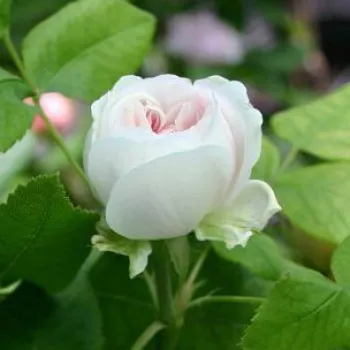
Flowers open from cream-white buds with a pink flush to snow-white outer petals and ivory-shaded centres. Colour holds well; in heat may turn creamy and petal edges can brown slightly in strong sun. |
| Fragrance and aroma |
Very strongly scented, classic old-rose perfume that easily fills the surrounding garden space in still weather. Best enjoyed near paths, doors or seating. Suitable for those prioritising scent in plant choice. |
| Rose hip characteristics |
Produces moderately abundant, spherical red hips about 12–19 mm in diameter. Decorative in late season if spent blooms are not removed, but heavy deadheading will reduce hip formation. |
| Resistance and hardiness |
Fully hardy to about −32 to −29 °C (H7, USDA 4b, Swedish zone 5). Disease resistance is modest, with sensitivity to rust and moderate susceptibility to powdery mildew and black spot; regular protection is advised. |
| Horticultural recommendations |
Suited to borders, hedging, specimen and park use. Prefers moist but well-drained soil; dislikes prolonged drought. Space 55–100 cm depending on use; around 2.5–2.9 plants/m² for mass planting or low hedges. |
WHITE JACQUES CARTIER offers richly scented, romantic white blooms, a bushy, structured shrub and adaptable, long-lived own-root growth that settles into your garden over the years, making it a thoughtful choice if You want lasting beauty with manageable care.